Eilean Therapeutics LLC has announced clearance by the Human Research Ethics Committee in Australia for a first-in-human phase I trial of balamenib (ZE63-0302), an oral small-molecule inhibitor of the menin-KMT2A interaction.
Reflecting the evolving scientific understanding of Alzheimer’s disease, the U.S. FDA revised its 2018 draft guidance on developing drugs to treat early Alzheimer’s.
South Korean biopharmaceutical company Celltrion Inc. submitted a BLA to the U.S. FDA on March 10 to gain approval for its Xolair (omalizumab; Novartis AG) biosimilar, CT-P39, across major indications of asthma, food allergy and chronic spontaneous urticaria.
This year’s annual meeting of the International Medical Device Regulators Forum (IMDRF) revolves around regulatory reliance, a notion that approaches but does not quite stray into the realm of the mutual recognition agreement.
U.S. deputy attorney general Lisa Monaco recently outlined some new programs related to federal enforcement across the economy, including some novel elements related to artificial intelligence (AI).
A first-quarter 2024 launch for Alzheimer’s drug donanemab appears to be off the table as Eli Lilly and Co. disclosed a last-minute decision by the U.S. FDA to convene an advisory committee to review data from the phase III Trailblazer-ALZ 2 trial.
In what was more of a campaign speech accompanied by frequent chants of “four more years,” U.S. President Joe Biden loaded the annual State of the Union address March 7 with what sounded like campaign promises for a second term. Among those promises were calls to Congress to expand the prescription drug price provisions of the 2022 Inflation Reduction Act.
Superhuman soldiers. Designer babies. Genetically tailored weapons. Mind-control. A foreign database containing the DNA of every person on the planet. The list reads like the plot of a science fiction horror story, but there’s no fiction involved. These are real threats from China raised by members of the U.S. House Select Committee on the CCP (Chinese Communist Party) at a March 7 hearing on the growing stakes of the bioeconomy and American national security.
As geopolitical tensions mount, bipartisan legislation introduced in both the U.S. Senate and the House is calling to prohibit government contracts with certain Chinese biotechs such as BGI (formerly known as Beijing Genomic Institute) and Wuxi Apptec, because they are increasingly seen as national security threats.
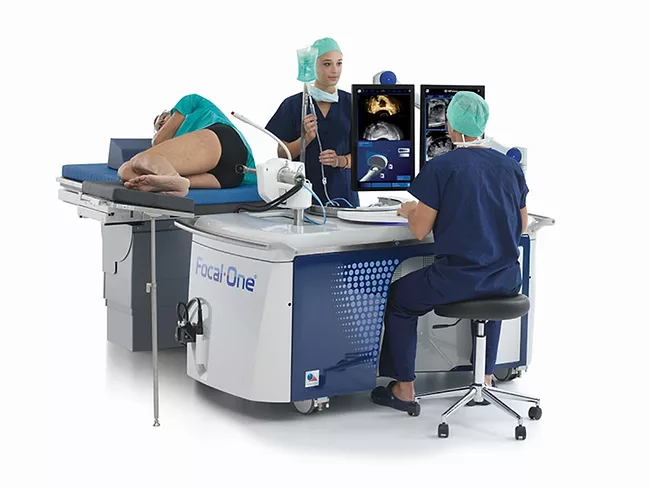
The U.S. FDA granted Edap Tms SA breakthrough device designation for its Focal One system to treat deep infiltrating rectal endometriosis. The company believes that the Focal One high intensity focused ultrasound technology can offer relief to the thousands of women suffering from the debilitating condition.
 RSS
RSS