After a delay in November that resulted in a new PDUFA date, Apellis Pharmaceuticals Inc.’s Syfovre (pegcetacoplan injection) received U.S. FDA approval for treating geographic atrophy (GA) secondary to age-related macular degeneration. While this is the first and only FDA-approved treatment for GA, there is competition afoot from Belite Bio Inc. and Iveric Bio Inc. The intravitreal targeted C3 therapy’s Feb. 17 approval of the priority NDA came more than a week ahead of its Feb. 26 PDUFA.
San Diego-based Travere Therapeutics Inc. gained U.S. FDA accelerated approval for its dual endothelin angiotensin receptor antagonist, Filspari (sparsentan), to reduce proteinuria in adults with primary IgA nephropathy, or Berger’s disease.
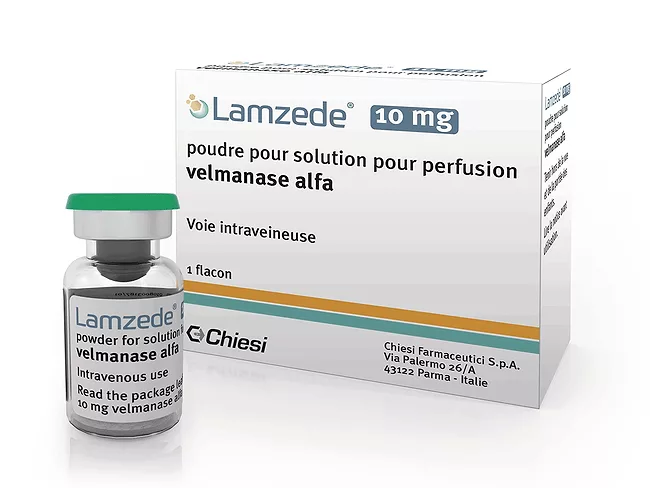
Chiesi Farmaceutici SpA scored U.S. FDA clearance of the enzyme replacement therapy (ERT) Lamzede (velmanase alfa-tycv) for non-central nervous system manifestations of alpha-mannosidosis (AM) in adult and pediatric patients. An ultra-rare, progressive lysosomal storage disorder, AM is caused by deficiency in the enzyme alpha-mannosidase. Lamzede is the first ERT to win approval in the indication, characterized by an inability to properly break down certain groups of complex sugars in the body’s cells.
The U.S. FDA granted Nanjing Iaso Biotherapeutics Co. Ltd. both regenerative medicine advanced therapy and fast track designations for its new drug, BCMA CAR T-cell therapy CT-103A (equecabtagene autoleucel), allowing it to speed up development and commercialization in the U.S. for the treatment of relapsed/refractory multiple myeloma.
A trio of proposed Medicare drug payment models that made a Feb. 14 debut in the U.S. is playing to mixed reviews. Two of the models to be tested by the U.S. Centers for Medicare & Medicaid Services (CMS) Innovation Center seem to “address the real problems underlying prescription drug pricing – patient out-of-pocket expenses and better payment systems that reward the value a medicine brings to the patient and the overall health care system,” said John Murphy, chief policy officer for the Biotechnology Innovation Organization. But he called the third model, which is expected to restrict Medicare payment for some Part B drugs that have indications with accelerated approval, “an attack on the accelerated approval pathway,” which Congress mandated to spur investment and innovation in areas of unmet medical need.
Soligenix Inc. is scratching its chin as it decides how to react to the U.S. FDA’s refusal to file letter regarding Hybryte (synthetic hypericin) for treating early stage cutaneous T-cell lymphoma. The letter means the FDA won’t review the application, which was submitted in December, because there are deficiencies that cannot promptly be resolved, rendering the application essentially incomplete.
To increase transparency at its advisory committee (adcom) meetings, the U.S. FDA is proposing asking guest speakers to voluntarily disclose their financial interests and professional relationships to determine their eligibility to give a presentation at an adcom meeting.
To increase transparency at its advisory committee (adcom) meetings, the U.S. FDA is proposing asking guest speakers to voluntarily disclose their financial interests and professional relationships to determine their eligibility to give a presentation at an adcom meeting.
 RSS
RSS