The U.S. FDA often has difficulty turning around draft guidances into final guidances in a timely manner, but that hasn’t impeded the agency’s appetite for fast turnaround of industry responses to FDA mandated postmarket surveillance studies. Nonetheless, the Medical Device Manufacturers Association (MDMA) said in comments to the docket for the May 2021 draft guidance for Section 522 postmarket surveillance studies that a requirement that such a study be fully enrolled within 24 months should be aspirational rather than compulsory.
Shares of TG Therapeutics Inc. fell 40% Jan. 27 after the firm disclosed in a U.S. SEC filing that the FDA had put a partial clinical hold on certain studies testing Ukoniq (umbralisib) and ublituximab, or the combination, for chronic lymphocytic leukemia and non-Hodgkin lymphoma.
In keeping with its Drug Competition Action Plan released in 2017, the U.S. FDA finalized two guidances this week focused on the submission and review of generic drugs.
With COVID-19 taking a toll on the U.S. FDA’s inspection program, warning letters stemming from drug facility inspections have been few and far between for the past two years. Aurobindo Pharmaceutical Ltd., of Hyderabad, India, was one of the exceptions.
Nearly two years after Gilead Sciences Inc. spent $4.9 billion to buy Forty Seven Inc. and its lead candidate, magrolimab, the FDA clamped a partial clinical hold on five of Gilead’s clinical trials combining the therapy with azacitidine. The cause, according to Gilead’s management, is “an apparent imbalance in investigator-reported suspected unexpected serious adverse reactions between study arms.” The company said it has not identified a clear trend in the adverse reactions or new safety signals.
Touting a series of firsts and a premium price tag to match, Immunocore Holdings plc is poised to launch the uveal melanoma drug tebentafusp in the U.S. following FDA approval for the medicine. The regulatory nod makes the drug, branded Kimmtrak, the first T-cell receptor-based therapy to reach the market, the first approval for a drug targeting gp100, and the first drug approved in 40 years for the cancer, which is the most common eye cancer in adults, though still rare.
The FDA’s device center has published two guidances dealing with patient engagement in relation to the conduct of clinical trials, including a final guidance for patient input into clinical trial design. The final guidance is mum, however, as to whether consultations with patient representatives constitutes a violation of the Anti-Kickback Statute (AKS), a predicament the Advanced Medical Technology Association (AdvaMed) said may represent a serious legal hazard for device makers.
Neurometrix Inc. secured breakthrough device designation from the FDA for its Quell technology for chemotherapy-induced peripheral neuropathy (CIPN) just six months after receiving the designation for fibromyalgia in July 2021. Quell is a wearable, credit card-sized transcutaneous electrical nerve stimulation (TENS) device worn on the upper calf that delivers self-adjusting, high-power nerve stimulation that disrupts pain signals sent to the brain.
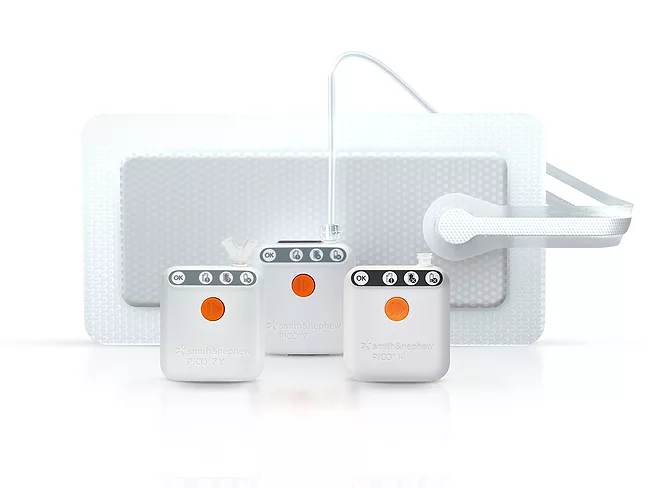
Smith & Nephew plc added new indications for use of its Pico 7 and Pico 14 single-use negative pressure wound therapy (sNPWT) systems. The FDA cleared the London-based device maker’s systems for reducing the incidence of both deep and superficial incisional surgical sites and dehiscence. Smith & Nephew’s Pico 7Y system, which treats two wounds simultaneously, was also cleared to aid in the reduction of the incidence of superficial incisional SSIs for high-risk patients in class I wounds, post-operative seroma and dehiscence.
More than three years after tossing a controversial proposal to allow manufacturers of generic drugs to update their labeling independent of the reference list drug (RLD) and promises that it would take a more proactive role in identifying and facilitating labeling updates, the U.S. FDA issued a draft guidance Jan. 25 intended to help holders of abbreviated new drug applications (ANDAs) keep their labels up to date with that of the RLD.
 RSS
RSS