The process of reauthorizing critical U.S. FDA user fee agreements (UFAs) for drugs, generics and biosimilars took its first step forward in Congress Feb. 3 as the House Energy & Commerce Subcommittee on Health dipped its feet into the new enhancements included in the agreements the FDA negotiated with stakeholders over the past two years.
Amid pressure to get a COVID-19 vaccine authorized for infants and toddlers sooner than later, Pfizer Inc. and Biontech SE initiated a rolling submission seeking to amend the U.S. FDA’s emergency use authorization for their mRNA vaccine to include children 6 months through 4 years of age.
The FDA has placed Logicbio Therapeutics Inc.’s phase I/II clinical trial of LB-001, an investigational AAV genome-editing therapy for treating pediatric patients with methylmalonic acidemia (MMA), on a clinical hold. So far, four patients have been dosed in the study and two have had serious adverse events related to the candidate, the company’s lead asset.
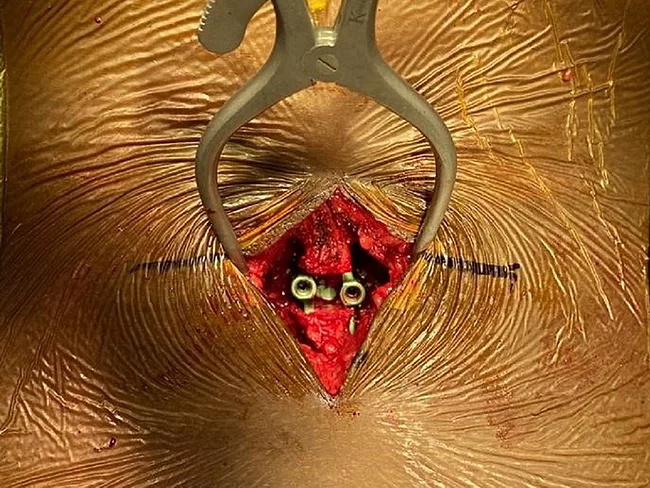
Inspan LLC has won FDA 510(k) clearance for an interspinous fixation system that can now be used to treat lumbar spinal stenosis in non-cervical spine cases of spondylolisthesis, trauma, tumor and degenerative disc disease. According to Aditya Humad, co-founder and CFO of Kicventures Group which counts Inspan among its portfolio companies, FDA clearance represents an expansion in the use of Inspan’s interspinous system into the “highly competitive space” of interventional pain management.
Applaud Medical Inc. has secured breakthrough device designation from the FDA for its acoustic enhancer technology to be used in conjunction with ureteroscopy with laser lithotripsy (URS-LL) for the fragmentation of calcium-based urinary stones. The San Francisco-based company is currently enrolling subjects in an FDA-approved pivotal trial evaluating the technology’s safety and efficacy.
More than a year into U.S. President Joe Biden’s four-year term, the FDA commissioner seat remains open. While Robert Califf secured a critical endorsement Jan. 31 in his quest for a second term in the post, his hope for a sequel may still be up in the air.
U.S. FDA regulation of combination products has always been complicated, and a new final guidance takes up the long-standing controversy over FDA review of these applications. The final guidance makes explicit the possibility that the individual components of a cross-labeled combination product will be reviewed separately, a concession that industry saw as critical to ensure that these applications can make it through the FDA gauntlet without undue delay.
The quinquennial user fee process for medical devices has always proven controversial, but the FDA and industry have missed a Jan. 15 deadline for an agreement to be presented to Congress. Recently, several members of the House and Senate inked a letter to the FDA about the missed deadline, a signal that the agency’s aspirations for a $2.5 billion user fee deal are in jeopardy.
Moderna Inc. reached a milestone of sorts Jan. 31 as the U.S. FDA fully approved its COVID-19 vaccine, Spikevax (elasomeran), for use in adults. Meanwhile, the Moderna and Pfizer Inc.-Biontech SE vaccines are in the sights of the U.S. Congressional Progressive Caucus, which is pushing the Biden administration to do more to ensure global vaccination.
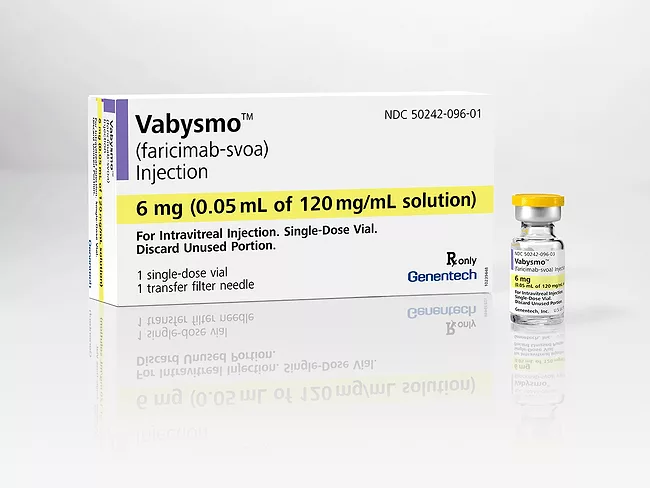
After showing power in its frequency of dosing and efficacy, Vabysmo (faricimab) has been approved by the FDA for treating wet, or neovascular, age-related macular degeneration and diabetic macular edema. The bispecific monoclonal antibody was developed by Roche Holding AG units, Chugai Pharmaceutical Co. Ltd. and Genentech Inc.
 RSS
RSS