The COVID-19 pandemic has spurred a considerable amount of testing innovation, including more extensive use of saliva as a medium for detection of pathogens. The U.S. FDA has announced an emergency use authorization (EUA) to Yale School of Public Health for the Salivadirect testing protocol that requires no extraction of the SARS-CoV-2 virus’s RNA, a feature that Assistant Secretary for Health Brett Giroir said is “yet another testing innovation game changer that will reduce demand for scarce testing resources.”
The FDA’s go-ahead for Roche Holding AG’s Enspryng (satralizumab-mwge) in anti-aquaporin-4 antibody-positive neuromyelitis optica spectrum disorder had watchers of the space weighing its market odds against two therapies approved earlier: Soliris (eculizumab) from Boston-based Alexion Pharmaceuticals Inc., and the more recently cleared Uplizna (inebilizumab-cdon) from Viela Bio Inc., of Gaithersburg, Md.
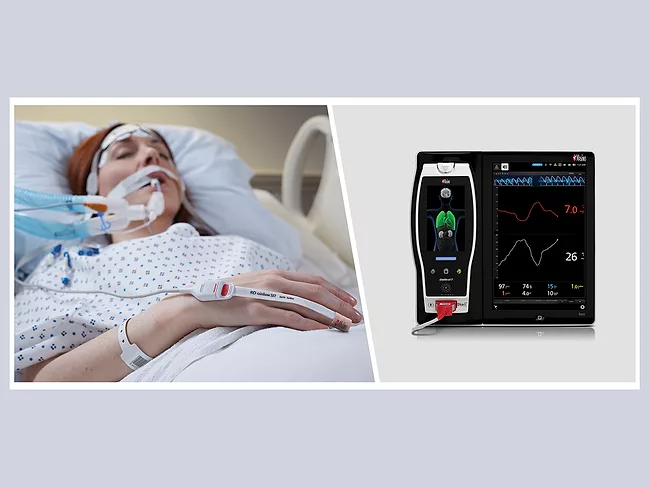
The U.S. FDA has granted 510(k) clearance to Masimo Corp. for its PVi software tool as a continuous, noninvasive, real-time indicator of fluid responsiveness in select populations of mechanically ventilated adults. PVi, which is an acronym for pleth variability index, quantifies the dynamic changes in perfusion index that occur in a patient during the respiratory cycle.
Two decades after the federal government jumpstarted U.S. R&D investment in its understanding and control of nanoscale matter, funding for the efforts across the government reached about $1.4 billion in fiscal 2020, part of a total cumulative investment of about $29 billion. Though FDA-budgeted nanotech research has accounted for just a fraction of that, at a modest $133 million since 2009, substantial advances have still been made, according to a presentation on the state of nanotech progress and innovation issued this summer.
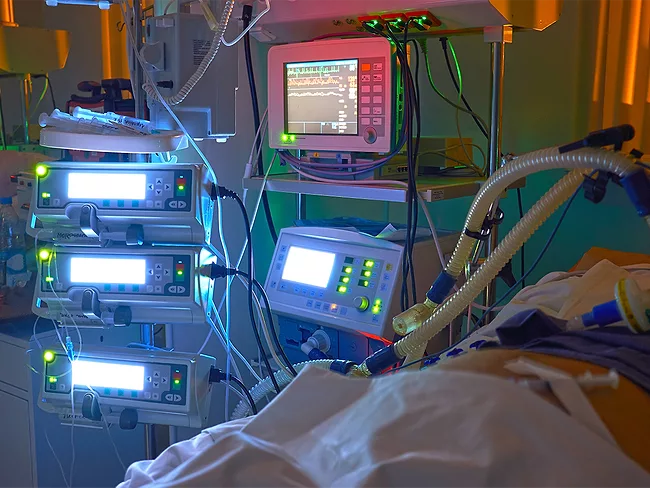
The U.S. FDA has granted emergency use authorizations (EUAs) to Baxter International Inc. for its HF20 Set and ST Set used in continuous renal replacement therapy (CRRT) during the COVID-19 pandemic. The two sets are intended for use with the company’s Prismaflex or Prismax CRRT monitors.
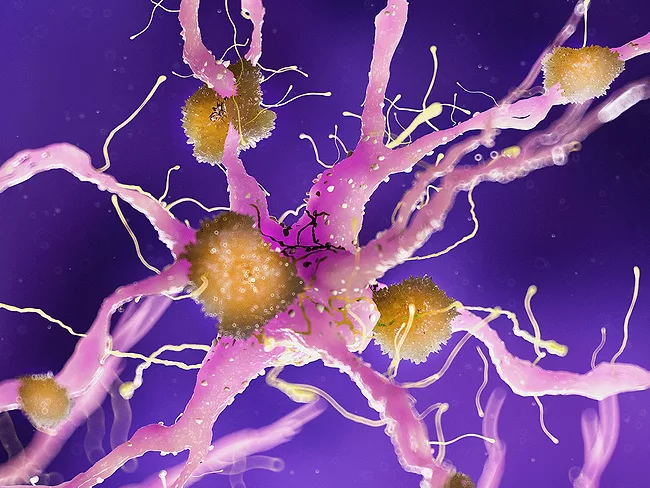
News from Biogen Inc. and partner Eisai Co. Ltd. that U.S. regulators accepted the BLA related to aducanumab for Alzheimer’s disease (AD) – and assigned it priority review, no less – set Wall Street abuzz.
The Medical Device Innovation Consortium (MDIC) has worked diligently to stand up the National Evaluation System for health Technologies (NEST) as a functioning program, and the first iteration, known of course as NEST 1.0, is now up and running.
The U.S. FDA revealed good news for Guardant Health Inc. Specifically, the agency has given a thumbs up for Guardant360 CDx for tumor mutation profiling, also known as comprehensive genomic profiling (CGP), in patients with any solid malignant neoplasm. The Redwood City, Calif.-based company noted that this marked the first approval to combine next-generation sequencing (NGS) and liquid biopsy in one diagnostic test to guide treatment decisions. The assay previously was granted a breakthrough device designation.
More than two weeks ahead of its expected PDUFA date, PTC Therapeutics Inc.’s spinal muscular atrophy (SM) drug, risdiplam, gained FDA approval, making it the first at-home, oral treatment intended for use in adults and children 2 months and older.
 RSS
RSS