Amid speculation that the White House had killed it, the FDA issued a promised guidance Oct. 6 on what it will take to get an emergency use authorization (EUA) for a COVID-19 vaccine.
Exploring new regulatory territory, Iovance Biotherapeutics Inc. hit a snag that will delay the submission of the BLA for its tumor-infiltrating lymphocyte (TIL) therapy, lifileucel (LN-144), in metastatic melanoma.
Device makers have wondered in the past whether they like the idea of the Centers for Medicare & Medicaid Services (CMS) peering over the U.S. FDA’s shoulders in premarket applications, which might be a concern as well for the Medicare program for coverage of breakthrough devices. Tamara Syrek Jensen, director of the Coverage and Analysis Group at CMS, declined to say whether her office has any influence over what would be designated as a breakthrough device by FDA, stating little more than that “we will constantly be talking with the FDA” about breakthrough devices.
In a fireside chat at the Advanced Medical Technology Association (Advamed)-sponsored Virtual Medtech Conference on Oct. 5, U.S. FDA Commissioner Stephen Hahn addressed questions that have been circulating for months about the political pressure that the agency is facing to quickly approve a vaccine for COVID-19 by reiterating that any decisions will be “completely dependent on when data is mature” from phase III trials.
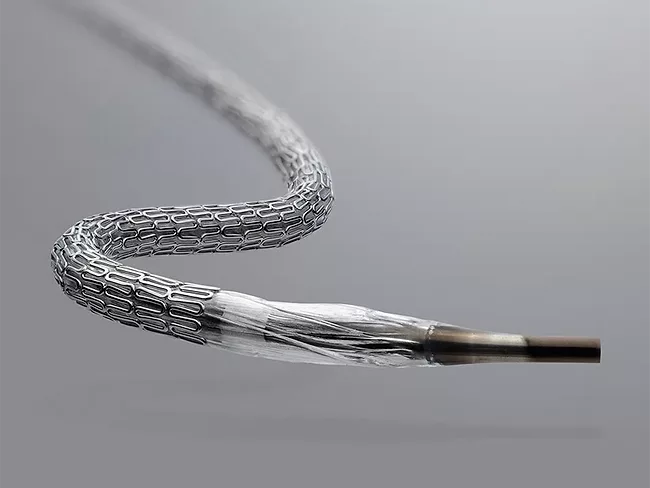
Medtronic plc’s winning streak continued this week with the announcement that the U.S. FDA had given its nod for new one-month of dual-antiplatelet therapy (DAPT) labeling with an expanded indication for high bleeding risk (HBR) patients implanted with the Resolute Onyx drug-eluting stent (DES). The approval is based on results from the Onyx ONE Clear Study that evaluated about 1,500 complex HBR patients on one-month DAPT treated with Resolute Onyx.
Pharmacyte Biotech Inc. is now in a series of 30-day cycles with the FDA as a planned phase IIb study of its lead candidate has been placed on hold. On Sept. 2, Pharmacyte submitted its IND for a phase IIb trial of its product, known as Cypcap, in locally advanced, inoperable pancreatic cancer and, on Oct. 2, the company said the FDA placed the application on hold.
Genetron Holdings Ltd., a Beijing-based precision oncology company, has gained breakthrough device designation status from the U.S. FDA for its blood-based, next-generation sequencing test for the early detection of hepatocellular carcinoma (HCC). The test, called HCCscreen, is intended for individuals at high risk for HCC due to chronic hepatitis B virus infection or liver cirrhosis.
PERTH, Australia – Regenerative medicine company Mesoblast Ltd. saw its stock drop 37% on the news that it received an FDA complete response letter to its BLA for Ryoncil (remestemcel-L) for the treatment of pediatric steroid-refractory acute graft-vs.-host disease.
Both Solid Biosciences Inc. and Pfizer Inc. got lifts to their Duchenne muscular dystrophy (DMD) programs from the FDA as the agency released a clinical hold and awarded a fast track designation to their respective adeno-associated viral (AAV) programs.
PERTH, Australia – Antisense Therapeutics Ltd. saw its stock bounce 26% following the news that the FDA has granted rare pediatric disease designation for ATL-1102 for the treatment of Duchenne muscular dystrophy (DMD), following submission of phase II data that showed its immunomodulatory therapy met primary disease progression endpoints.
 RSS
RSS