Magstim Co. Ltd. reported that the U.S. FDA cleared its Magstim Rapid magnetic stimulation system for the treatment of chronic pain. The clearance provides a clinically validated therapy that directly targets neural pathways involved in pain processing to deliver a non-invasive, drug-free treatment for chronic pain.
Evotec SE has received a $5 million milestone payment from Bristol Myers Squibb Co. (BMS), following the acceptance of an IND application by the FDA in the companies’ strategic protein degradation partnership.
The U.S. FDA is turning the clock back more than 20 years to advance women’s health by narrowing the boxed warning on hormone replacement therapies (HRTs) for menopause. The agency announced at a Nov. 10 news conference that it’s working with companies to update their HRT labeling to remove references to risks of cardiovascular disease, breast cancer and probable dementia.
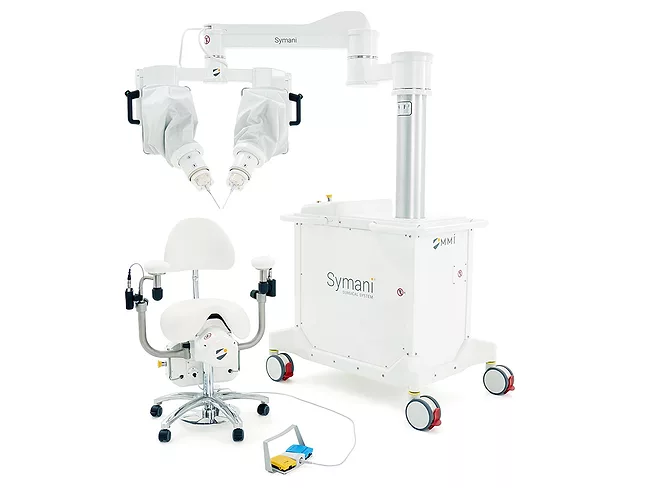
Medical Microinstruments Inc., reported the U.S. FDA approval of an investigational device exemption for a study using its Symani surgical system for treating Alzheimer’s disease, one of its earliest forays into the brain.
Industry watchers were surprised when Eli Lilly and Co.’s oral GLP-1 candidate, orforglipron, did not appear among the first nine recipients of the U.S. FDA’s commissioner’s national priority voucher (CNPV) program aimed at shortening regulatory review times, boosting domestic manufacturing and improving affordability. But orforglipron, which recently nailed endpoints in a second phase III trial and has been hailed a potentially best-in-class compound, was among the second batch of six drugs added to the CNPV list.
The U.S. FDA’s attempts to harmonize with other nations on quality management received a dose of good news recently when the International Organization for Standards decided to stand pat on ISO 13485, which also leaves the FDA’s Quality Management System Regulation intact.
The U.S. FDA’s complete response letter (CRL) for Biohaven Ltd.’s lead asset, troriluzole, to treat spinocerebellar ataxia has prompted a wave of downstream changes at the company. There will be a roughly 60% cutback in annual R&D spending, not including personnel, as Biohaven focuses on three other late-stage clinical programs.
Leukogene Therapeutics Inc.’s lead product candidate LTI-214 (M2T-CD33) has been awarded orphan drug designation by the FDA for the treatment of acute myeloid leukemia (AML).
Tulyp Medical Inc. has emerged from stealth mode with a pressure-driven perfusion system designed to improve vascular procedures. The company, born out of Sofinnova Partners' medical device accelerator, has submitted the technology to the U.S. FDA for 510(k) clearance following initial clinical results that demonstrated safety and functionality.
Nexgel Biotech Co. Ltd. and CG Bio Co. Ltd. agreed to co-develop a thermosensitive polyphosphazene hydrogel-based long-acting drug delivery platform through a new collaboration agreement signed Oct. 31.
 RSS
RSS