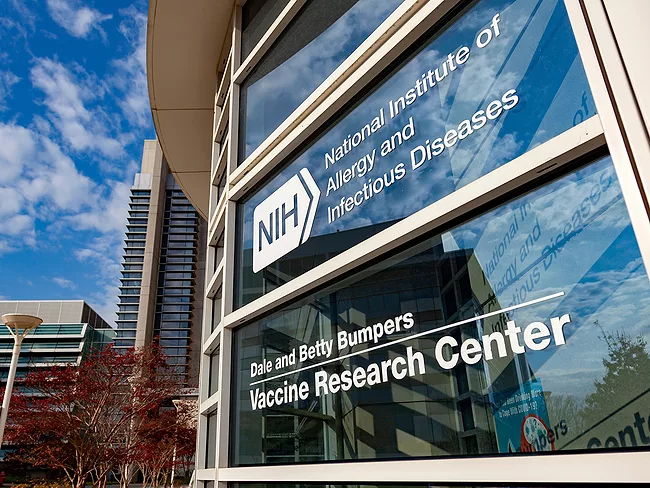
On Thursday, the Supreme Court handed the Trump administration another significant victory in its attempts to defund NIH-sponsored research. In a 5-4 decision, the justices paused the June 16 order of U.S. District Judge William Young to restore funding for hundreds of canceled NIH research grants focusing on gender and diversity, equity and inclusion (DEI). The funding had first been cut through a series of executive orders shortly after President Donald Trump resumed power in January.
On Thursday, the Supreme Court handed the Trump administration another significant victory in its attempts to defund NIH-sponsored research. In a 5-4 decision, the justices paused the June 16 order of U.S. District Judge William Young to restore funding for hundreds of canceled NIH research grants focusing on gender and diversity, equity and inclusion (DEI). The funding had first been cut through a series of executive orders shortly after President Donald Trump resumed power in January.
Trethera Corp. has been awarded a $3 million Small Business Innovation Research (SBIR) grant from the National Institute of Health (NIH) to support evaluation of Trethera’s lead candidate, TRE-515, for the treatment of systemic lupus erythematosus (lupus).
In the wake of a lawsuit from the anti-vaccine nonprofit group U.S. Health and Human Services (HHS) Secretary Robert Kennedy founded, HHS is reviving a vaccine safety task force that’s been lifeless for nearly three decades.
Billing it as a necessary reform to protect tax dollars from frivolous government spending, redundancy and waste, U.S. President Donald Trump issued a new executive order (EO) requiring his political appointees to sign off on grants and awards from agencies such as the NIH and to monitor those awards over time to ensure they’re being used properly.
Nonprofit dealmaking in biopharma has been limited in 2025, with total disclosed value reaching just $99.7 million through July. Nearly all of that came in January, when deals totaled $96.9 million. After a quiet first quarter, modest activity resumed with $1.4 million in April and $1.6 million in July, while the other months saw no reported nonprofit partnerships.
The Senate Appropriations Committee met July 31 to markup legislation that would fund the Department of Health and Human Services – including an additional $400 million for the National Institutes of Health. The increase in NIH funding repudiates the Trump administration’s efforts to drastically cut those appropriations, which is an outcome marking a clear win for companies in the life sciences.
Understanding neurological disease requires several things, including a clear view of the connectome, and the U.S. National Institutes of Health may have a solution in the form of a new MRI system that allows the user to examine neural connections at the mesoscopic and microscopic scales.
While U.S. government cost-cutting seems to be the Trump administration’s priority that consumes all others, some Republican senators are pushing back – at least when it comes to the NIH. Fourteen senators wrote to Russell Vought, head of the White House Office of Management and Budget, to voice their concerns about the administration’s slow disbursement rate of the NIH’s fiscal 2025 funds.
The National Institutes of Health has opened another front in its cost cutting drive, saying it will cap the fees science journals charge for publishing papers authored by researchers it funds.
 RSS
RSS