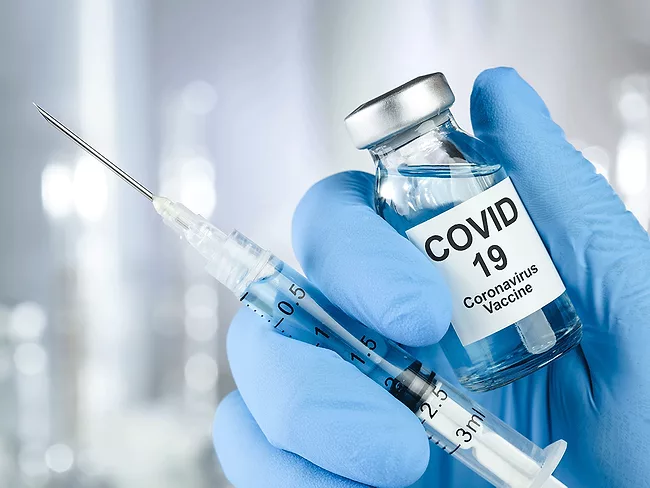
The Coalition for Epidemic Preparedness Innovations (CEPI) has expanded its partnership with VBI Vaccines Inc. to advance the development of multivalent coronavirus vaccines that could be deployed against COVID-19 and possible future coronaviruses with pandemic potential, referred to as coronavirus X.
Quantbiores A/S has discovered peptides acting as spike glycoprotein (S) (SARS-CoV-2)/ACE2 interaction inhibitors reported to be useful for the treatment of severe acute respiratory syndrome coronavirus 2 (SARS-CoV-2) infection (COVID-19).
Texas A&M University System has discovered 3C-like proteinase (3CLpro) (SARS-CoV-2; COVID-19 virus) and cytochrome P450 3A4 (CYP3A4) inhibitors reported to be useful for the treatment of SARS-CoV-2 infection.
Biondvax Pharmaceuticals Ltd. has reported statistically significant efficacy results from an in vivo proof-of-concept study of its innovative inhaled nanosized antibody (NanoAb) COVID-19 therapy.
Investigators at the University of Bristol and Biognos AB have identified a structural feature that distinguished the deadly coronavirus strains from harmless, common cold-causing variants. The findings, which were published in the Nov. 23, 2022, issue of Science Advances, could form the basis of universal COVID antivirals, putting an end to the endless race to deal with new variants that has so far been a necessity.
The researchers showed that the same pocket, a binding site for linoleic acid (LA), was present in all variants of concern (VOCs) that have emerged since 2020. “Intriguingly, all SARS-CoV-2 VOCs stringently maintain this pocket, notably including Omicron, which accumulated a wide range of mutations in [the spike protein] elsewhere, suggesting that the pocket provides a selective advantage for the virus,” they wrote in their paper.
Pfizer Inc. and Biontech SE have initiated a phase I study to evaluate the safety, tolerability and immunogenicity of BNT-162b4, a next-generation COVID-19 vaccine candidate that aims to enhance SARS-CoV-2 T-cell responses and potentially broaden protection against COVID-19.
An in-depth investigation of the underlying causes of pulmonary symptoms that in some cases persist for months following recovery from the acute stage of COVID-19 has found a distinctive proinflammatory signature in the plasma and airways of affected patients. The research could provide an explanation for the ongoing interstitial lung disease and fibrosis seen in patients who were hospitalized with severe COVID-19, and also point to neutrophils as a specific therapeutic target.
Novartis AG has described 3C-like proteinase (3CLpro) (SARS-CoV-2; COVID-19 virus) inhibitors reported to be useful for the treatment of SARS-CoV-2 infection (COVID-19).
The soluble form of human angiotensin-converting enzyme 2 (hsACE2) could prevent SARS-CoV-2 from binding to the host cell receptors through competitive inhibition, which may avoid viral infection. However, the relatively short half-life of the recombinant hsACE2 limits its clinical application.
 RSS
RSS