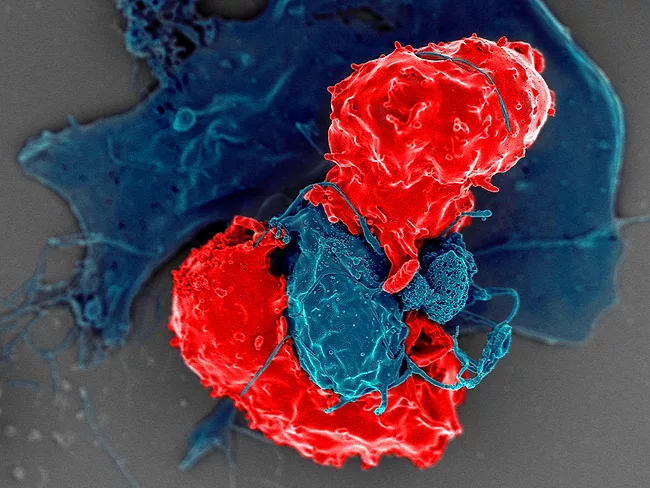
At the ongoing International Society for Stem Cell Research meeting, Chinese researchers reported they demonstrated that SPT6 homolog, histone chaperone and transcription elongation factor (SPT6) promotes epidermal stem/progenitor cells differentiation by facilitating transcriptional elongation, but its role in vivo in skin homeostasis is not well defined.
IgA nephropathy is a progressive kidney disease characterized by the deposition of immune complexes containing IgA, where a proliferation-inducing ligand (APRIL) drives the production of pathogenic IgA. Jade Biosciences Inc. has developed a novel APRIL-binding therapeutic, JADE-101, for the treatment of IgA nephropathy.
Regulatory T cells (Tregs) maintain immune homeostasis by inhibiting excessive immune responses. Dysregulation of Tregs, characterized by reduced cell numbers or impaired suppressive function, is implicated in the pathogenesis of autoimmune diseases. Low-dose interleukin-2 (IL-2) therapy expands Tregs and enhances their suppressive capacity while minimizing the activation of T cells and natural killer (NK) cells.
The ionic and metabolic impairment observed in chronic kidney disease (CKD) leads to vascular calcification, which can induce cardiovascular events and mortality. Several factors may impact the progression of vascular calcification, where inorganic pyrophosphate plays a crucial inhibitory role.
The use of tyrosine kinase inhibitors (TKIs) in the treatment of epidermal growth factor receptor (EGFR)-mutant non-small-cell lung cancer (NSCLC) has not produced the same durable clinical benefits observed with next-generation targeted therapies in ALK- and ROS1-rearranged NSCLC. Given the molecular heterogeneity of EGFR-mutant NSCLC, which includes over 100 distinct mutations, there is a continued need for more effective and mutation-specific therapeutic strategies.
LIN28 is a family of RNA-binding proteins that regulate stem cell biology and pluripotency and are involved in oncogenesis through the interaction with tumor suppressor microRNA let-7. The expression of LIN28 leads to the loss of function of let-7, leading to tumorigenesis, and has been tied to tumor aggressiveness and poor survival in children with brain tumors.
The systemic virotherapy strategy involves not only the direct delivery of therapeutic payloads encoded by viruses to tumors, but also the modification of the tumor microenvironment, aiming to target both primary and metastatic lesions. At the ongoing American Society of Clinical Oncology (ASCO) meeting, researchers from Calidi Biotherapeutics Inc. reported the development of a novel approach using a selected and engineered tumor-selective strain of vaccinia virus.
Preclinical findings have shown matrix metalloproteinase 7 (MMP-7) inhibition confers antifibrotic effects and thus, is a promising therapeutic strategy to treat idiopathic pulmonary fibrosis (IPF). Changchun Genescience Pharmaceutical Co. Ltd. has presented data on the siRNA technology-based MMP-7 inhibitor GenSciP117 for treating IPF.
Inclusion body myositis (IBM) is the most common acquired myopathy in people over 50 years of age, characterized by chronic and progressive muscle weakness, where its pathogenesis involves inflammatory and degenerative pathways that are not well understood to date.
 RSS
RSS