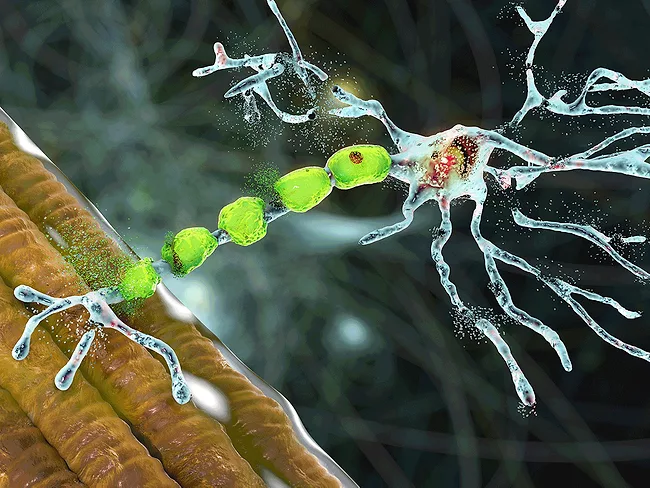
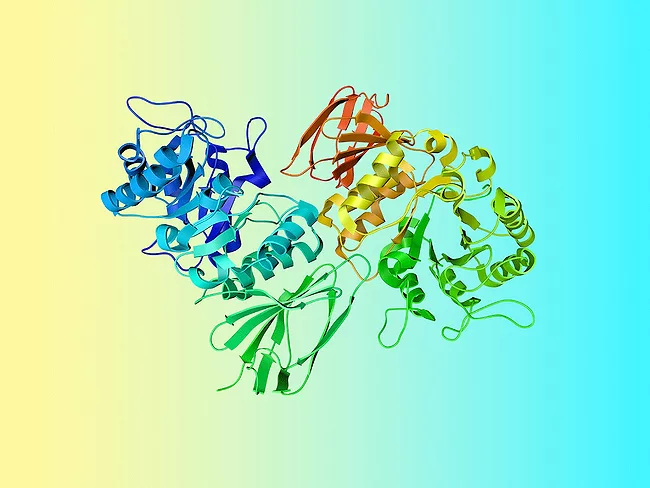
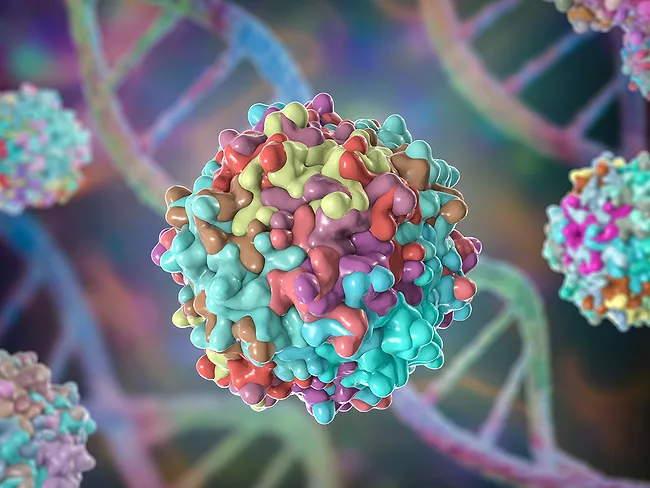
Spinal muscular atrophy (SMA) is caused by mutations in the SMN1 gene, which encodes survival motor neuron 1, leading to reduced protein expression levels and degeneration of motor neurons in the spinal cord, with the consequent muscle atrophy. There is thus a need for new AAV gene therapies for SMA that confer better safety and efficacy.
Researchers from Skyline Therapeutics (Shanghai) Co. Ltd. presented preclinical data for the new recombinant AAV vector therapeutic SKG-0106, being developed for the treatment of neovascular (wet) age-related macular degeneration (AMD).
Fabry disease is a metabolic disease characterized by a deficiency in the lysosomal α-galactosidase enzyme caused by mutations in the GLA gene. This leads to substrate accumulation in the lysosomes, cellular dysfunction and organ damage.
Patients with irritable bowel syndrome (IBS) have chronic abdominal pain as a result of visceral hypersensitivity. Voltage-gated sodium channels control cellular excitability and are involved in the pathophysiology of several functional gastrointestinal disorders. Researchers from Nocion Therapeutics Inc. and the University of Oklahoma recently reported on the preclinical testing of NTX-1175, a sodium-channel blocker, in rat models of acute colonic hypersensitivity to distension.
At the recent ASPET meeting, University of Minnesota and University of Montana researchers presented data from studies to determine the ability of the Toll-like receptor 7 (TLR7) and TLR8 agonist INI-4001 to enhance the efficacy of the heroin vaccine M-sKLH for the treatment of opioid use disorder.
Researchers from Kyungpook National University presented data from a study that aimed to investigate the endogenous mechanisms involved in granule cell dispersion (GCD) and its role in epileptic seizures in temporal lobe epilepsy (TLE).
Researchers from the University of Maryland presented preclinical data for YA-6060, a novel small molecule showing dual activities of Wnt inhibition and AMPK activation via the mechanism of AXIN stabilization. Since both Wnt/β-catenin and AMPK signaling pathways have been previously shown to play a key role in liver fibrosis, this study aimed to assess the potential of YA-6060 as an antifibrosis agent.
Chronic myeloid leukemia (CML) is a myeloproliferative neoplasm characterized by a chromosomal translocation that results in the generation of the BCR-ABL1 oncogene, which encodes the chimeric BCR-ABL1 protein with tyrosine kinase activity. Allosteric tyrosine kinase inhibitors (TKIs) represent an improvement of 2-fold in efficacy over standard inhibitors and are better tolerated.
 RSS
RSS