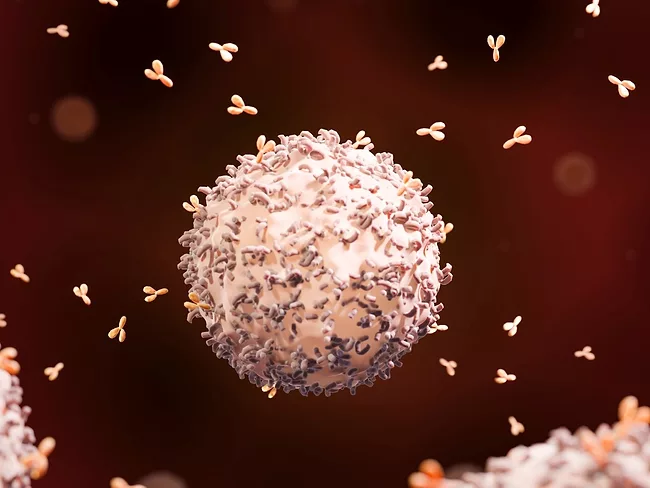
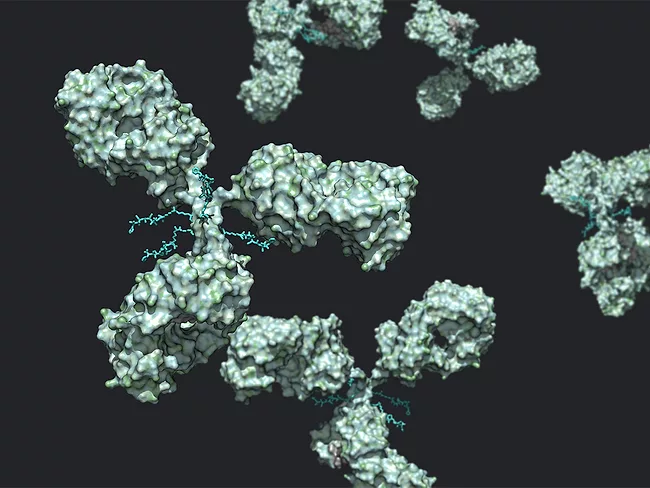
Broadly neutralizing antibodies (bNAbs) target conserved HIV envelope regions to neutralize diverse strains, eliminate infected cells and reduce viral reservoirs, complementing antiretroviral therapy and supporting prevention and functional cure strategies.
Autoantibodies and B cells are drivers of progressive autoimmune diseases, but targeting B cells or plasma cells alone is not sufficient to address them. Earendil Labs has presented data on HXN-1031, a novel T-cell engager targeting both CD19 and B-cell maturation protein (BCMA).
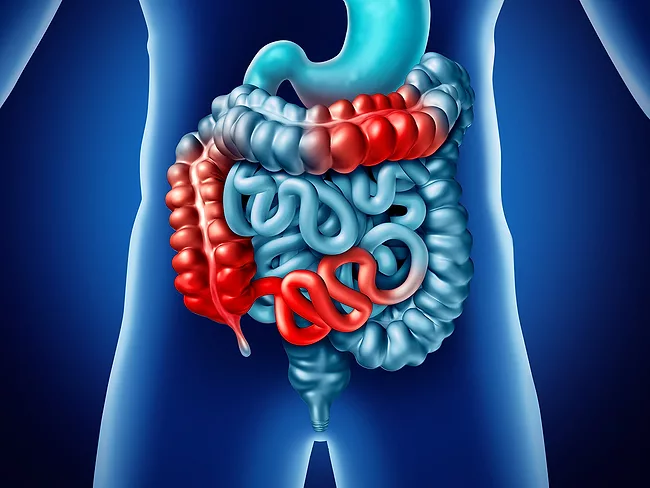
G-protein coupled receptor 68 (GPR68) is an acid-sensing protein receptor that has been implicated in inflammatory bowel disease (IBD) pathogenesis by its modulation of the inflammatory response and fibrosis.
Researchers from Promatix Biosciences Ltd. presented preclinical data on PBS29301A, a first-in-class bispecific ADC developed using Promatix’s proprietary proteomics-based discovery platform.
Salt-inducible kinase 2 (SIK2) is a serine/threonine kinase that regulates transcriptional programs in myeloid cells by phosphorylating transcriptional coregulators. In macrophages, SIK2 promotes the expression of proinflammatory cytokines and contributes to the balance between inflammatory and regulatory responses. Researchers from Nimbus Therapeutics LLC presented the preclinical efficacy of NTX-147, a SIK2 selective inhibitor, in ex vivo models of ulcerative colitis (UC).
The massive cuts to science, global health, and HIV programs that unfolded in 2025 triggered a crisis with worldwide repercussions. The dissolution of USAID, the shutdown of PEPFAR, and the suspension of thousands of NIH research projects led to an immediate collapse of essential services, from HIV prevention to access to treatment. At the 33rd Conference on Retroviruses and Opportunistic Infections (CROI) held Feb. 22-25, 2026, in Denver, scientists, activists, and health professionals presented data illustrating the scale of the damage and warned of a historic setback in the global HIV response.
The effects of aging pose an additional challenge for people with HIV due to the neurological and psychological consequences that persist despite antiretroviral therapy. At the Conference on Retroviruses and Opportunistic Infections (CROI) held Feb. 22-25, 2026, in Denver, the scientific community examined how the virus affects the brain, how the reservoir is established in the CNS, and which genetic, immunological or treatment-related factors influence cognitive health.
Researchers from Spyre Therapeutics Inc. reported on the therapeutic efficacy of combining anti-TL1A and anti-IL-23 antibodies in preclinical models of colitis.
The farnesoid X receptor (FXR) is a nuclear receptor that plays a central role in bile acid regulation, intestinal barrier integrity, immune modulation and microbiome balance, all key factors involved in the development of inflammatory bowel disease (IBD). Researchers from Gilead Sciences Inc. reported the effects of GS-8670, an FXR agonist, in models of colitis.
Researchers from Model Medicines Inc. have presented preclinical efficacy data for MDL-001, a first-in-class, oral non-nucleoside inhibitor that targets an allosteric site in the Thumb-1 domain of the viral polymerase.
 RSS
RSS