Mansonone E is a type of plant toxin with various pharmacological properties, including antimicrobial, anti-MRSA and antitumor activities. In the current study, researchers from Sun Yat-Sen University presented the discovery of novel mansonone E analogue, MSN-8C, being developed as a potential anticancer agent.
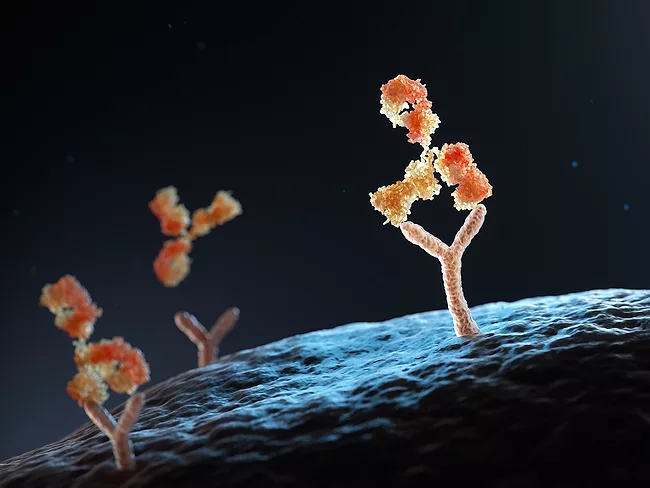
Biocity Biopharma announced that the U.S. FDA has accepted its investigational new drug (IND) application for BC-3448, a bispecific antibody that targets the T cell marker CD3 and epidermal growth factor receptor (EGFR), bringing antitumor T cells in proximity to EGFR-expressing cells. To reduce the risk of cytokine release syndrome (CRS), a known risk of CD3-targeting antibodies, the bispecific has a higher affinity for EGFR than CD3.
Most lung adenocarcinoma tumors with EGFR mutations respond to tyrosine kinase inhibitors (TKIs, e.g., osimertinib). Accordingly, there are now >50 different FDA-approved TKIs. Still, acquired resistance remains as the major limitation preventing long-term efficacy.
Despite continual investment in research focused on high-grade serous ovarian cancer (HGSOC), the 5-year survival rate of ∼30% for most patients has remained unchanged for decades. While ≤20% of HGSOC patients present with treatment-refractory disease, therapeutic strategies have not changed outcomes for these patients in 40 years.
A newly described small molecule inhibitor called AOH-1996 targets a cancer-associated isoform of PCNA (caPCNA), leading to a very broad therapeutic window. Researchers at City of Hope, a cancer research and treatment organization in California, reported on AOH-1996 in the Aug. 1, 2023, online edition of Cell Chemical Biology. Genes involved in replication and repair pathways are essential for the growth and survival of cancer cells. Proliferating cell nuclear antigen (PCNA) is a key player in DNA replication via a homotrimer formation that acts as a molecular sliding clamp around the DNA double helix.
Oncternal Therapeutics Inc. has received a study may proceed letter from the FDA for a phase I/II dose-escalation study of ONCT-534, a novel dual-action androgen receptor inhibitor (DAARI), in patients with metastatic castration-resistant prostate cancer (mCRPC) who have relapsed or are refractory to approved androgen receptor signaling inhibitors (ARSIs). The letter was received prior to the 30-day review date.
Fudan University and Shanghaitech University have developed proteolysis targeting chimeras (PROTACs) comprising an E3 ubiquitin ligase binding agent coupled to Bcl-2-like protein 1 (Bcl-xl; Bcl-X; BCL2L1) targeting moiety via linker. They are reported to be useful for the treatment of cancer, autoimmune disease, myelofibrosis, neurodegeneration, kidney fibrosis, transplant rejection, diabetes and cardiovascular disorders, among others.
Pyrrole fused-ring pyrazole compounds have been prepared by Hangzhou Zhongmei Huadong Pharmaceutical Co. Ltd. and characterized as mitogen-activated protein kinase kinase kinase kinase 1 (MAP4K1; HPK1; MEKKK1) inhibitors reported to be useful for the treatment of cancer.
Research at Merck KGaA has led to the development of substituted heterocycles acting as kinesin-like protein KIFC1 (HSET) inhibitors reported to be useful for the treatment of cancer.
CAR T-cell immunotherapy is designed with different targets depending on the receptors they will bind to. CARs can also contain different tools, like the concept of a Swiss army knife, with several utensils for different tasks. The goal is to make them more effective and durable. During the second session of the Spotlight on Immuno-Oncology conference, “Novel CAR designs and approaches,” Robbie Majzner, of Stanford University, described expanding the main components of CAR T cells to acquire new functions and act on different cell pathways.
 RSS
RSS

.webp?height=488&t=1677877909&width=650 "Epidermal growth factor receptor (EGFR)")


