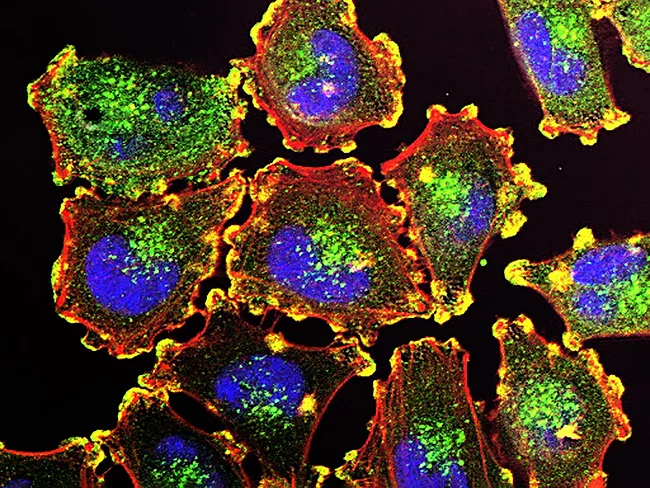
A new experimental drug, QN-302, has shown high antiproliferative activity in pancreatic cancer cells and antitumor activity in experimental pancreatic cancer models.
Research at Friedrich-Alexander-Universität Erlangen-Nürnberg and Johannes Gutenberg Universität Mainz has led to the development of quinazoline-thiohydantoin fused heterocycles reported to be useful for the treatment of leukemia.
Hepatocellular carcinoma (HCC) is one of the leading causes of cancer deaths among men and its rate of incidence is rapidly increasing in women. The development of new therapeutics targeting hepatic cancer stem cells using herbal medicine could shed light on the treatment of HCC.
The mTORC2 complex plays an important role in the PI3K/AKT/mTOR pathway, allowing activation of AKT and contributing to the development of BRAF-mutated (BRAFm) melanomas and their resistance to treatments. Researchers from Inserm aimed to identify new candidates for targeting the mTORC2 complex in melanoma, with focus on one principal protein of this complex, MAPKAP1 (also known as SIN1).
The Hallmarks of Cancer are a core set of processes that are broadly deregulated in many types of cancer. Douglas Hanahan and Douglas Weinberg first introduced the concept, with six candidate hallmarks, in 2000. Since then, two additional hallmarks have been added. And the hallmarks have also been complemented by the description of enabling characteristics, which are prerequisites necessary for cells to acquire the hallmarks themselves.
 RSS
RSS