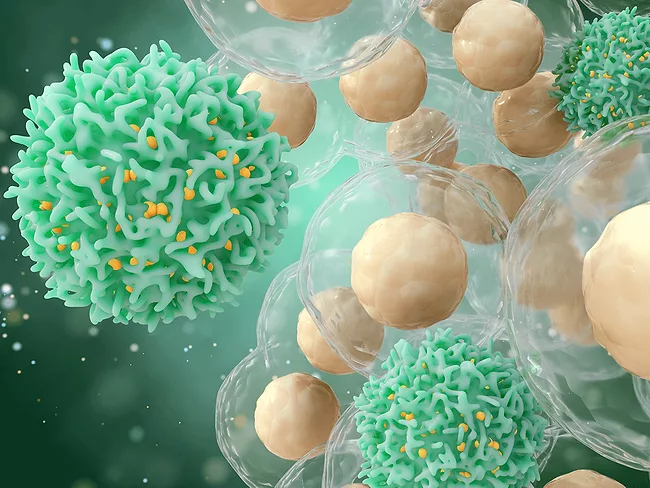
The State University of New York has presented new antibody-drug conjugates (ADCs) consisting of trastuzumab antibody targeting human epidermal growth factor receptor 2 (HER2) covalently linked to Toll-like receptor 7 (TLR7) and/or TLR8 agonists through a linker reported to be useful for the treatment of cancer and infections.
Hillstream Biopharma Inc. has described new salinomycin derivatives acting as angiogenesis inhibitors reported to be useful for the treatment of cancer.
Cleara Biotech BV has closed a $2.5 million seed financing round, the proceeds of which will be used to progress its compounds toward clinical development and build the company's developmental pipeline.
Kupando GmbH has closed a series A funding round raising €13 million. The funds will be used to complete IND-enabling work and to initiate the clinical development of Kupando's lead candidate KUP-101 in a solid tumor indication.
Researchers from Chongqing Medical University have discovered novel anaplastic lymphoma kinase (ALK) and histone deacetylase (HDAC) dual inhibitors for the treatment of ALK-positive cancer.
A Mayo Clinic study demonstrated how the deficiency of the enzyme CDK12 or its regulation by cyclin K causes the expression of mutations related to resistance to endocrine therapy in prostate cancer. Prostate tumors with CDK12 deficiency are more aggressive, recurrent, produce metastases and are associated with castration-resistant prostate cancer (CRPC). CDK12 deficiency impairs DNA repair and increases genomic instability, causing an effect known as homologous recombination deficiency or BRCAness.
Researchers at the Walter and Eliza Hall Institute of Medical Research (WEHI) in Melbourne, Australia, have developed a new genome editing technique than can activate any gene, including those that have been silenced, allowing new drug targets and causes of drug resistance to be explored.
Researchers from Queensland University of Technology and Princess Alexandra Hospital in Australia have shown nucleic acid binding protein 2 (hSSB1), a DNA repair protein, to have prognostic significance for non-small-cell lung cancer (NSCLC). In an analysis of hSSB1 mRNA levels in NSCLC in online databases, higher levels were associated with poor prognosis.
Seagen Inc. and Lava Therapeutics NV have entered into an exclusive license agreement under which Seagen will work to develop, manufacture and commercialize LAVA-1223, a bispecific T-cell engager designed to target and activate Vγ9Vδ2 T cells in the presence of epidermal growth factor receptor (EGFR)-expressing solid tumors.

 RSS
RSS