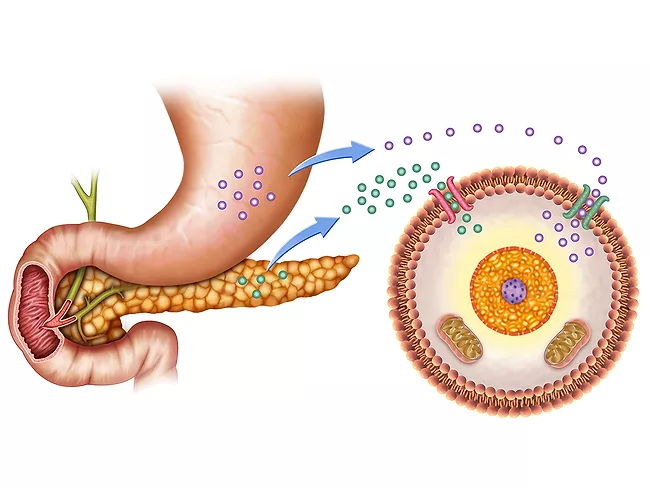
Helicore Biopharma Inc. has emerged from stealth with $65 million in series A financing and a focus on first-in-class glucose-dependent insulinotropic peptide (GIP) antagonists for obesity and related conditions. The company’s portfolio includes GIP antibody conjugates designed to address specific obesity subpopulations.
Genzyme Corp. (Sanofi Genzyme) has disclosed sodium-dependent neutral amino acid transporter B(0)AT1 (SLC6A19) inhibitors reported to be useful for the treatment of phenylketonuria, among others.
Tyrosine-protein phosphatase non-receptor type 1 (PTP1B) acts as a negative regulator of the insulin signaling pathway by dephosphorylating both the insulin receptor (IR) and the insulin receptor substrate, leading to insulin resistance, the most significant characteristic of type 2 diabetes.
The liver and pancreas are the main actors in glucose metabolism, but not the only ones. Muscles, adipose tissue and the brain play different roles. However, the prize for the best new actor in glucagon production goes to the innate lymphoid cells (ILCs), which, according to a study published in Science, respond to intestine neuron signals traveling to the pancreas to control glucose.
Kexing Biopharm Co. Ltd. has outlined progress in its cachexia and autoimmune pipelines, built upon its Kx-Body antibody technology platform and Kx-Fusion fusion protein technology platform.
Immunoprecise Antibodies Ltd. (IPA) has developed a new class of GLP-1 therapies entirely through AI, designed to enhance efficacy, safety, therapy longevity and patient satisfaction for the treatment of diabetes.
A paracrine hormone of skeletal muscle acts as an endocrine signal for the synthesis of a sex hormone. Scientists at McGill University have observed in mice how myostatin, which inhibits the development of muscle mass to control its growth, also stimulated the production of the pituitary follicle-stimulating hormone (FSH), modulating ovarian function. The hypothalamus-pituitary-gonadal axis could include an additional element through a yet unknown role in muscles.
The largest analysis to date of patients taking GLP-1 receptor agonists (GLP-1RAs) has investigated their effects on nearly 175 diseases, and found that compared to three other classes of diabetes medications, individuals with a prescription for GLP-1RAs had a reduced risk of 42 diseases, and an increased risk of 19. The findings, which were published Jan. 20, 2025, in Nature Medicine, provide a comprehensive overview of GLP-1RAs’ effects.
A global commission has proposed a fundamental change to the way obesity is defined and diagnosed. If the change is implemented, obesity would be considered a health risk in some contexts, and a disease in others. “The commission is reframing obesity... in a way that allows for the nuanced reality of obesity,” Robert Eckel told reporters at a press briefing announcing the proposal, which was published online in The Lancet Diabetes & Endocrinology on Jan. 14, 2025.

 RSS
RSS