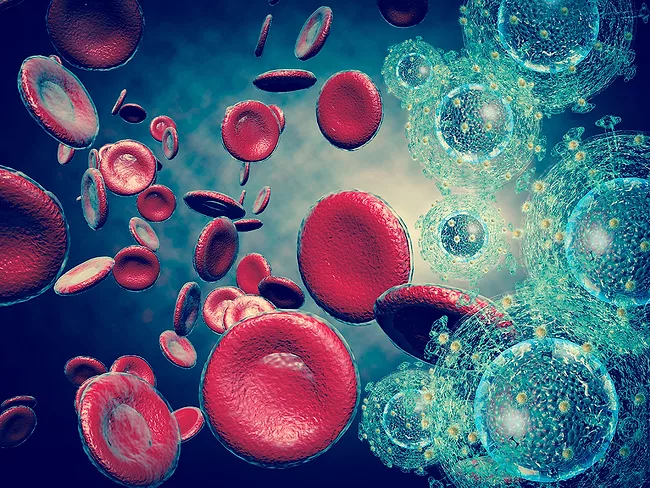
2025 has been the most challenging year in the efforts to fight HIV since at least the advent of antiretroviral therapy. In a report on “Overcoming disruption, transforming the AIDS response,” released last week ahead of World AIDS Day on Dec. 1, the Joint United Nations Program on HIV/AIDS (UNAIDS) described “a global system in shock” by sharply reduced funding from the U.S. and other wealthy nations. Scientifically, for now, progress is ongoing. To mark World AIDS Day, Nature published three independent studies on HIV.
A 24‑week pregnant woman fears for her unborn baby, who is developing with a sacrococcygeal teratoma so large and vascularized that it nearly surpasses the size of the fetus itself. Faced with this threat, surgeons operate inside the uterus in an open procedure that partially exposes the baby to remove the tumor and give the baby a chance to survive until birth. According to scientists presenting at the American Society of Gene & Cell Therapy's special meeting on Breakthroughs in Targeted In Vivo Gene Editing, this could be avoided.
The field of gene therapy is experiencing major advances driven by precise editing technologies, such as base and prime editing, and by the design of increasingly sophisticated vectors to deliver payloads that could reverse the effects of diseases. However, in the transition to in vivo applications many approaches still fail in their attempt to effectively reach target tissues or cells.
Metagenomi Inc. has reported new dose-range-finding data from its MGX-001 hemophilia A program. MGX-001 is designed to provide curative, life-long protection from bleeding events and joint damage in adults and children with hemophilia A.
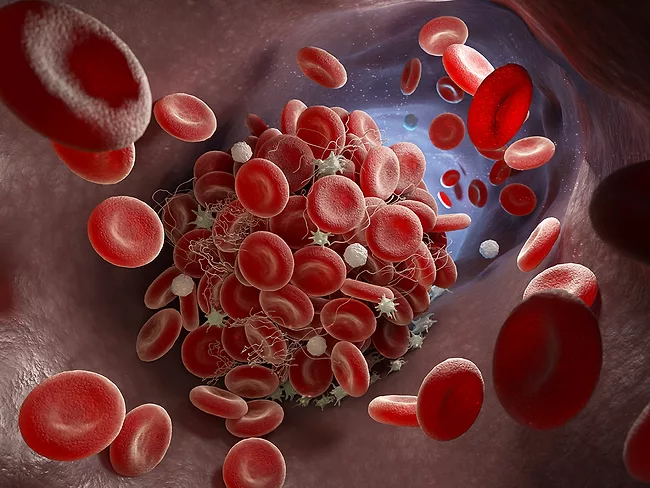
City Therapeutics Inc. has submitted a clinical trial application (CTA) to the U.K. Medicines and Healthcare Products Regulatory Agency (MHRA) to initiate a phase I study of CITY-FXI, an investigational RNAi therapeutic targeting factor XI (FXI) for the treatment of thromboembolic diseases.
Simcere Pharmaceutical Co. Ltd. has described stachybotrys microspore triprenyl phenols (SMTPs) acting as plasminogen activators reported to be useful for the treatment of thromboembolism.
Alethio Therapeutics (formerly known as Alethiomics Ltd.) has emerged from stealth with two antibody-drug conjugate (ADC) programs for the treatment of myeloproliferative neoplasms (MPNs).
A technology that combines transcriptomic data and AI enables a novel approach to drug discovery based on the state of cells, how they behave and which genes they express. The Drugreflector model, developed by scientists at Cellarity Inc., learns from gene expression profiles and predicts which compounds could induce beneficial changes in that cellular state to develop a treatment.
Sickle cell disease (SCD) is a genetic disorder caused by a single point mutation in the β-globin gene, leading to the production of abnormal hemoglobin. Patients with SCD lacking a compatible donor for allogeneic hematopoietic stem/progenitor cell transplantation can benefit from gene therapy approaches.
Entasis Therapeutics Holdings Inc. has described mannan-binding lectin serine protease 2 (MASP2) and/or mannan-binding lectin serine protease 3 (MASP3) inhibitors reported to be useful for the treatment of thrombotic microangiopathy, ischemia-reperfusion injury, disseminated intravascular coagulation, graft-versus-host disease, diffuse alveolar hemorrhage syndrome, and renal, eye and cardiovascular disorders, among others.
 RSS
RSS