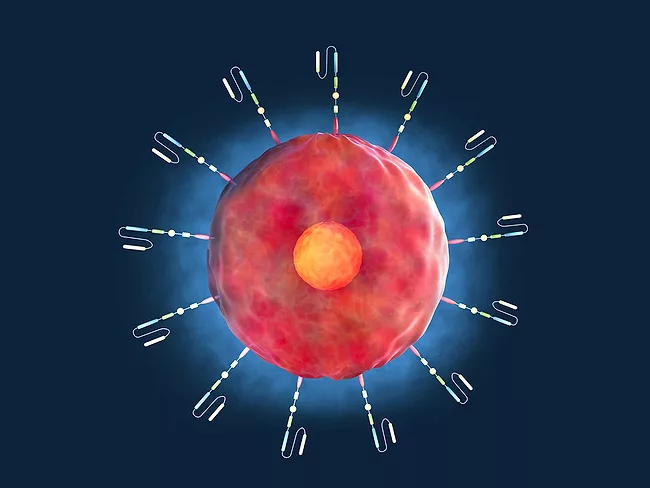
The transition from complex and costly ex vivo strategies to platforms that enable direct cellular intervention within the body, known as in vivo therapies, is marking a paradigm change in the field of gene and cell therapies by simplifying manufacturing, improving tissue targeting and expanding clinical access to treatments.
As the many challenges facing cell therapies are being addressed, the CAR T field continues to evolve beyond its original design of T cells engineered to target hematological malignancies. During the 32nd Annual Congress of the European Society of Gene and Cell Therapy (ESGCT), held in Seville Oct. 7-10, several studies showed how this technology is being redefined as programmable and adaptable immune cells with expanded functional versatility.
Domain Therapeutics SA has prepared and tested new azine-based compounds acting as proteinase-activated receptor 2 (F2RL1; PAR2) inhibitors reported to be useful for the treatment of allergy, autoimmune, metabolic diseases, cardiovascular, dermatological, inflammatory disorders, pain and cancer.
Arcus Biosciences Inc. has announced five new research programs for autoimmune and inflammatory diseases, and is targeting initiation of the first clinical studies next year.
Researchers from Onco3r Therapeutics BV presented preclinical data on O3R-5671, a novel salt-inducible kinase 3 (SIK3) inhibitor developed for the treatment of inflammatory bowel disease and other autoimmune diseases.
The Nobel Committee announced today that it has awarded the 2025 Nobel Prize in Physiology or Medicine to three scientists for their discovery of regulatory T cells, which are a critical part of the way the body prevents autoimmune attacks.
Vanqua Bio Inc. has synthesized C5a anaphylatoxin chemotactic receptor 1 (C5aR; CD88) antagonists reported to be useful for the treatment of autoimmune disease, cancer, infections, and cardiovascular, inflammatory and neurological disorders.
Vitiligo is caused by autoreactive CD8+ T cells that react against skin melanocytes, where IL-15 has been shown to activate these T cells. Innovent Biologics (Suzhou) Co. Ltd. recently presented data on their monoclonal antibody (mAb) – IBI-3013 – that targets IL-15. IBI-3013 was evaluated in vitro in immune cell expansion and CD8 T-cell activation assays, as well as in vivo in a skin inflammation model and in a graft-vs.-host disease (GVHD) model.

 RSS
RSS