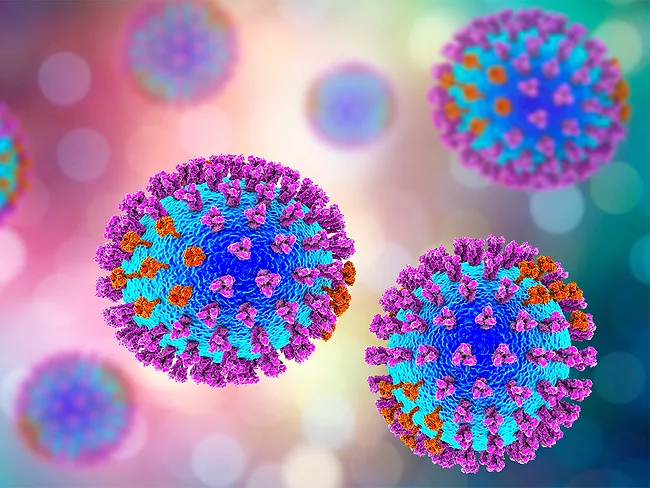
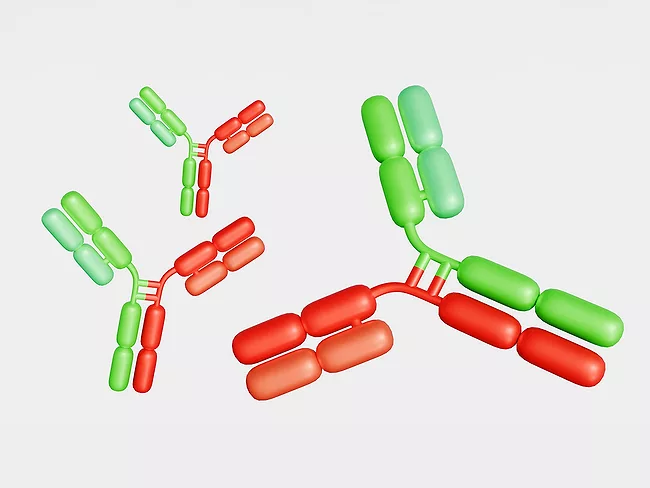
Although influenza virus infection can be particularly life-threatening among young infants, approved vaccines are lacking for infants under 6 months. Aiming to overcome the required annual updates to the influenza vaccine, recent efforts have focused on generating vaccines that promote broadly reactive antibodies (Abs) targeting conserved regions of viral proteins, such as the stem domain of hemagglutinin (HA).
Biotle has received a clinical trial notice from China’s National Medical Products Administration (NMPA) for its IND application for BTL-203, the company’s bispecific FcRn inhibitor being developed for the treatment of multiple autoimmune diseases.
Nextgen Bioscience Co. Ltd. has identified new sphingosine 1-phosphate S1P1 and S1P4 receptor antagonists potentially useful for the treatment of autoimmune diseases, ulcerative colitis and Crohn’s disease.
Recludix Pharma Inc. recently presented data on their new STAT1/3 inhibitors REX-6553 and REX-6547 for treating dermatological inflammatory skin diseases.
Hangzhou Qihan Biotech Co. Ltd. has obtained IND clearance from the FDA for QT-019C, a universal allogeneic CAR T-cell therapy for autoimmune diseases. QT-019C cell injection is an off-the-shelf allogeneic CAR T-cell therapy engineered from healthy donor leukapheresis products to stably express two distinct CARs targeting CD19 and BCMA.
Genescience Pharmaceutical Co. Ltd. has presented data on a new STAT6 PROTAC degrader – GenSciP166 – which selectively targets STAT6 for proteasomal degradation. GenSciP166 was assayed in vitro as well as in vivo in the MC903 atopic dermatitis murine model.
Re-Aim Therapeutics Ltd. has launched with £7 million (US$9.4 million) in seed investment backing and a focus on developing functional cures for T-cell-mediated autoimmune diseases.
Create Medicines Inc. has closed a $122 million series B funding round to support progression of its pipeline of in vivo CAR therapies across autoimmune disease and oncology. The company’s proprietary mRNA-LNP platform directly engineers T cells, NK cells and myeloid cells inside the body to enable scalable, repeat-dose, off-the-shelf immunotherapies.
Directed evolution has become a central pillar in gene therapy. This engineering strategy enables the generation of more efficient variants of genetic editors and delivery vectors. Molecular diversification methods are increasingly sophisticated and are now accelerated by machine learning and AI tools, as showcased at the 29th Annual Meeting of the American Society of Gene and Cell Therapy (ASGCT) held in Boston this week.
In a deal potentially worth up to $15.2 billion, Jiangsu Hengrui Pharmaceuticals Co. Ltd. is joining efforts with Bristol Myers Squibb Co. to advance 13 early development programs in the fields of oncology, hematology and immunology. Shanghai-based Hengrui will hold exclusive rights in mainland China, Hong Kong and Macau, while Princeton, N.J.-based BMS will hold exclusive rights in the rest of the world.
 RSS
RSS