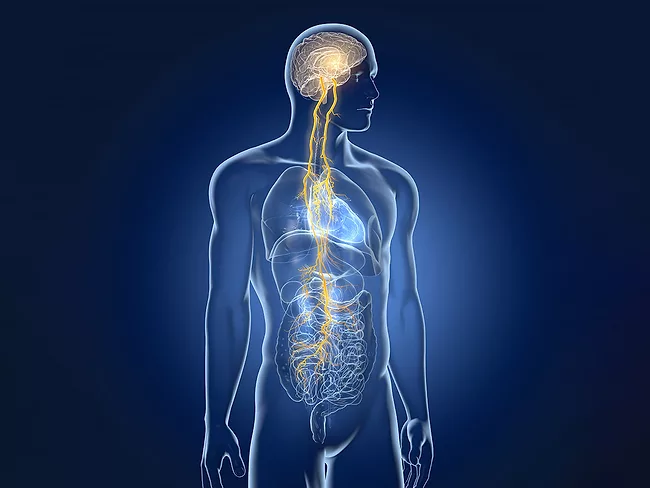
A pill that delivers electrical stimulation to the vagus nerve from inside the stomach was able to trigger the release of appetite-controlling neurohormones, specifically the “hunger hormone” ghrelin. The work, which was described in the April 26, 2023, issue of Science Robotics, could pave the way for treating “metabolic, [gastrointestinal], and neuropsychiatric disorders noninvasively with minimal off-target effects,” the authors wrote in their paper.
Leucine-rich repeat kinase 2 (LRRK2; Dardarin) inhibitors have been detailed in a recent Merck Sharp & Dohme Corp. patent and reported to be useful for the treatment of Parkinson’s disease, among others.
Grünenthal Gmbh and King’s College London have entered into a 24-month collaboration to develop microfluidic culture (MFC) models based on human induced pluripotent stem cells (iPSCs) for pain research.
The brain is plastic throughout life, but never more so than from birth to young adulthood. It increases its volume by developing dendrites and axons that connect neurons in to each other, forming new pathways to process the information that it will store. Those connections require maintenance. And if a connection is unsuccessful, better to delete it than to keep it. This is known as synaptic pruning and occurs from childhood to the age of 20. Now, a group of scientists from the University of Cambridge and Fudan University has described a neuropsychopathological (NP) factor that explains why inappropriate pruning in adolescence is related to mental health disorders.
A recent Hanmi Holdings Co. Ltd. patent describes 1-phosphatidylinositol 3-phosphate 5-kinase (PIKfyve) inhibitors reported to be useful for the treatment of amyotrophic lateral sclerosis, rheumatoid arthritis and Crohn’s disease.
Humanwell Healthcare (Group) Co. Ltd. researchers have prepared and tested AP2-associated protein kinase 1 (AAK1) inhibitors that are reported to be useful for the treatment of bipolar disorder, pain, schizophrenia, Alzheimer’s and Parkinson’s disease.
F. Hoffmann-La Roche Ltd. and Hoffmann-La Roche Inc. have patented benzodiazepine derivatives acting as GABA(A) receptor subunit α2β2γ1 positive allosteric modulators and reported to be useful for the treatment of neurological disorders.
 RSS
RSS