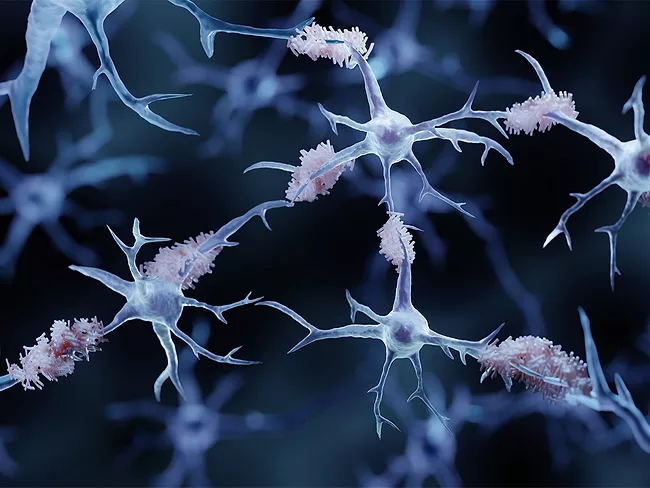
University of Health Sciences and Pharmacy in St. Louis has described estrogen-related receptor α (ERR) modulators reported to be useful for the treatment of diabetes, amyotrophic lateral sclerosis, heart failure, breast cancer, renal disorders, metabolic diseases, Alzheimer’s disease and Parkinson’s disease, among others.
Otsuka Pharmaceutical Co. Ltd. has described macrophage colony-stimulating factor 1 receptor (CSF1R; CD115; c-Fms) inhibitors reported to be useful for diagnosis and treatment of pain, infections, amyotrophic lateral sclerosis, multiple sclerosis, cardiovascular disorders, Alzheimer’s disease and Parkinson’s disease, among others.
Researchers at North China Electric Power University and collaborators have developed novel radiolabels for the membrane-bound monoamine oxidase-B that feature a coumarin core.
Autism spectrum disorder, which affects around 1% of children worldwide, is as complex as the range of genetic and environmental factors that may contribute to it. Its complexity has made it difficult to identify effective treatments. Now researchers at Jazz Pharmaceuticals plc and Berand Neuropharmacology have demonstrated that a complex mixture extracted from Cannabis sativa shows therapeutic potential in one of the few preclinical models that mimics several characteristics of the disorder.
Aquinnah Pharmaceuticals Inc. has identified microtubule-associated protein tau (PHF-tau; MAPT) aggregation inhibitors reported to be useful for the treatment of Alzheimer's disease and frontotemporal dementia.
Vertex Pharmaceuticals Inc. has synthesized sodium channel protein type 10 subunit α (SCN10A; Nav1.8) blockers reported to be useful for the treatment of pain.
The third most significant genetic risk factor for late-onset Alzheimer’s disease is a mutation in the clusterin (CLU) gene that disrupts the expression of sCLU, a cytoprotective protein involved in preventing protein aggregation and promoting the clearance of misfolded proteins.
Latus Bio Inc. is developing a new gene therapy, LTS-101, for the treatment of neuronal ceroid lipofuscinosis type 2 (CLN2), a form of Batten disease characterized by deficiency in the tripeptidyl peptidase 1 (TPP1) protein that leads to lysosomal dysfunction and neurodegeneration.