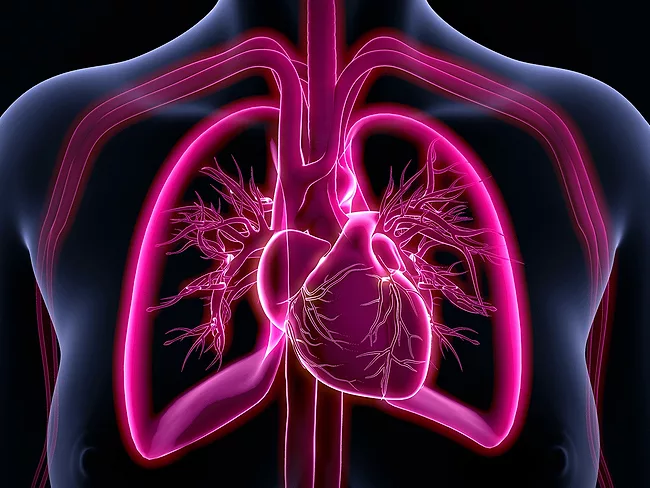
Another brick in the ambitious Human Cell Atlas initiative has been put into place with the publication of the largest and most comprehensive cell map of the human lung. The open and freely available atlas catalogs the diversity of cells in the lung, including rare and previously undescribed cell types.
Bronchiectasis is an irreversible chronic respiratory condition arising from secondary infections that presents as chronic cough with daily purulent sputum due to a permanent abnormal widening of bronchi.
Researchers from Structure Therapeutics Inc. recently presented details on the discovery and preclinical evaluation of two new apelin receptor (APJ, APLNR) agonists – ANPA-0073 and ANPA-0137 – being developed for the treatment of pulmonary diseases.
Liminal Biosciences Inc. has nominated a lead preclinical candidate, LMNL-6326, from its oxoeicosanoid receptor 1 (OXER1) antagonist program, targeting the treatment of eosinophil-driven diseases such as eosinophilic asthma and atopic dermatitis.
With age, senescent cells become detrimental to tissues. Mayo Clinic scientists have observed this phenomenon in the lung alveoli, where senescent macrophages accumulated in aging tissue and in early stages of non-small-cell lung cancer (NSCLC) driven by the Kras oncogene. “We found that the macrophages were present in the earliest stages of the disease. Strategies targeting these cells for elimination or preventing their accumulation would be worthwhile to test in other conditions (assuming we find they occur),” Darren Baker, a Mayo Clinic senescent cell biologist and senior author of the study, told BioWorld.
Researchers from Atux Iskay LLC assessed whether reactivation of protein phosphatase 2A (PP2A) using a small-molecule PP2A activator, ATUX-1215, could counter TGF-β signaling in preclinical models of idiopathic pulmonary fibrosis (IPF).
At the recent ATS meeting, Tavanta Therapeutics Inc. introduced TAVT-135, a cell-penetrating peptide (CPP) conjugate that acts as a chloride ion (Cl-) transporter. The product is currently being investigated for cystic fibrosis (CF), regardless of CF transmembrane conductance regulatory (CFTR) gene mutation status.
Idiopathic pulmonary fibrosis (IPF) is a rare, progressive and chronic lung disease that causes scarring of the lung tissue and leads to an irreversible decline in lung function. Several studies have linked the p53 tumor suppressor gene to pulmonary fibrosis.
A Hansoh Bio LLC, Jiangsu Hansoh Pharmaceutical Group Co. Ltd. and Shanghai Hansoh Biomedical Co. Ltd. patent details piperidinyl indole derivatives acting as complement factor B (CFB) inhibitors.
 RSS
RSS