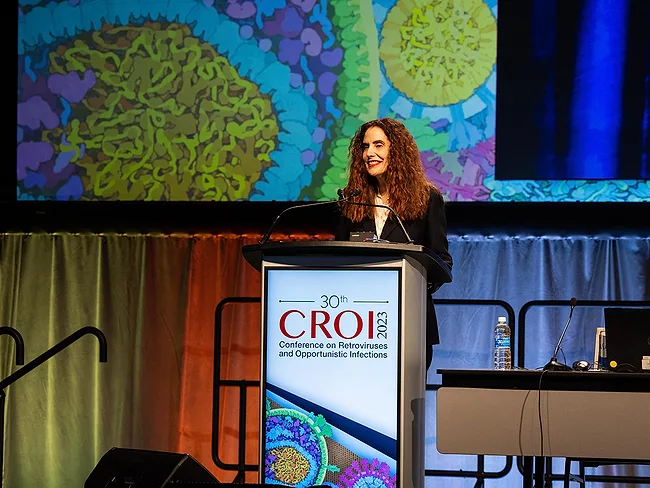
The intestinal microbiota could protect against HIV infection. At the 30th Conference on Retroviruses and Opportunistic Infections (CROI) last week, a group of scientists from Duke University presented data showing a preventive effect of two bacteria from the Lachnospiraceae family, the species Clostridium immunis and Ruminococcus gnavus against HIV. These microorganisms strongly inhibited HIV replication in vitro through the metabolic pathway of tryptophan and the aryl hydrocarbon receptor.
A ‘guilt by association’ study linking disease-associated proteins to proteins for which there was no evidence of any role in pathology, has identified groups of proteins interacting with genes that genome-wide association studies (GWAS) have previously implicated in 21 disease areas. Revealing these interactions has thrown up new drug targets.
HIV research is a winding road where one obstacle leads to another, slowing down success. The first barrier to getting the cure starts before one can even talk about it. “Cure may be too powerful and promising a term. Remission is probably better,” said John Mellors, whose work led to the universal use of plasma HIV-1 RNA and CD4+ T-cell counts in HIV-1 infection.
“Cure means maintaining an undetectable viral load off antiretroviral treatment. That means you cannot transmit it to people. Within that definition, there are people that have complete eradication of every single virus. And then, you have people that have a low level of virus that are able to keep under control without drugs,” Sharon Lewin told BioWorld. “Remission is maintaining a viral load less than 50 copies per milliliter in the absence of any retroviral. But there is still virus detectable,” she explained. Lewin is the director of The Peter Doherty Institute for Infection and Immunity in Melbourne, and the president of the International AIDS Society (IAS).
Actelion Pharmaceuticals Ltd. has disclosed platelet-derived growth factor receptor beta (PDGFR-β) inhibitors reported to be useful for the treatment of pulmonary arterial hypertension.
Shanghai Huilun Pharmaceutical Co. Ltd. has identified thiazle derivatives acting as dihydroorotate dehydrogenase (DHODH) inhibitors reported to be useful for the treatment of cancer, viral infections and autoimmune diseases.

 RSS
RSS