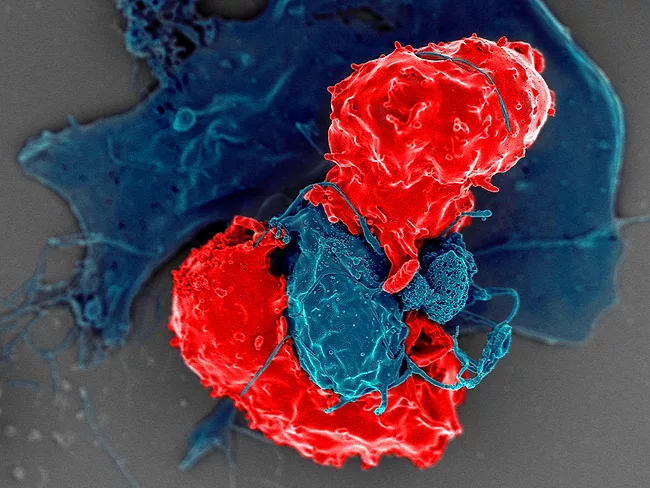
A metabolic vulnerability of pancreatic ductal adenocarcinoma (PDAC) could be used to address this type of cancer that often resists treatments. Scientists at the University of Michigan have discovered that inhibiting the PIKfyve enzyme prevented tumor development and reduced tumor growth by altering the lipid synthesis these cells rely on. The KRAS-MAPK pathway is involved in this process, leading the researchers to suggest that dual inhibitors of PIKfyve and KRAS-MAPK could be an effective therapeutic strategy.
Hepaitech (Beijing) Biopharma Technology Co. Ltd. has described Mas-related G-protein coupled receptor member X4 (MRGPRX4; SNSR5; SNSR6) antagonists reported to be useful for the treatment of anemia, fungal infections, HIV infections, renal disorders, liver diseases, psoriasis, pruritus and urticaria, among others.
Hangzhou Polymed Biopharmaceuticals Inc. has divulged molecular glue degraders comprising cereblon (CRBN) binding agents covalently bound to a zinc finger protein Helios (IKZF2)-targeting moiety acting as IKZF2 degradation and IKZF2/CRBN interaction inducers.
Bristol Myers Squibb Co. has identified serum/glucocorticoid-regulated kinase 1 (SGK1) inhibitors reported to be useful for the treatment of fibrosis, cancer, cardiovascular, cerebrovascular, metabolic, inflammatory, neurological and immunological disorders, among others.
Isosterix Inc. has synthesized histone acetyltransferase KAT6A (monocytic leukemia zinc finger protein; MOZ; MYST-3) inhibitors reported to be useful for the treatment of cancer.
Hangzhou Synrx Therapeutics Technology Co. Ltd. has disclosed poly(ADP-ribose) glycohydrolase (PARG) inhibitors reported to be useful for the treatment of triple-negative breast cancer.
Mesenchymal stem cells (MSCs) have long been recognized for their potential in cancer therapy. However, the effectiveness of MSCs in cancer treatment has been hampered by their limited tumor-homing ability and the heterogeneity of tissue-derived MSCs. To address these challenges, researchers have focused on induced pluripotent stem cell (iPSC)-derived MSCs, which offer improved homogeneity and expansion potential.
A recently published study has identified collagen type X α 1 chain (CoL10A1) as a promising target for treating brain metastasis in breast cancer patients. The research, conducted by a team at First Affiliated Hospital of Xinxiang Medical University and collaborators, sheds light on the regulatory role of CoL10A1 in the progression of breast cancer brain metastasis (BMBC).
Researchers from Guilin Medical University and collaborators investigated the potential role of ubiquitin-specific protease 4 (USP4) in the occurrence and development of lung adenocarcinoma.
Abtherx Inc. has signed a technology license agreement with Rondo Therapeutics with the aim of accelerating Rondo’s pipeline of bispecific antibodies. Rondo aims to advance the field of immuno-oncology, with a focus on treating solid tumors that fail to respond to current therapies.