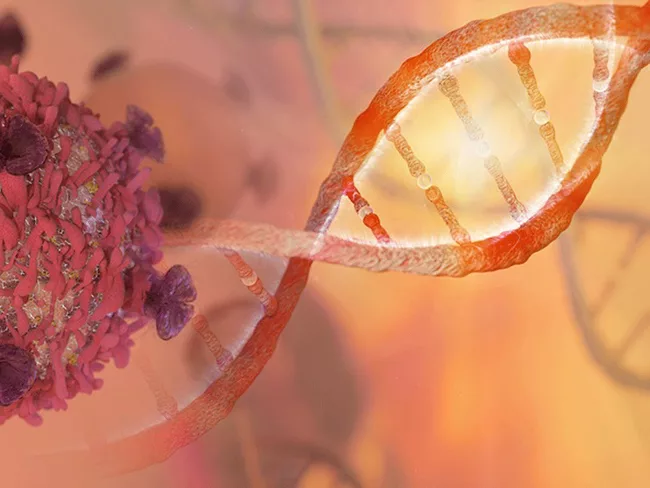
Chicken ovalbumin upstream promoter transcription factor 2 (COUP-TFII, aka NR2F2) is dysregulated in different cancer types. However, its exact role remains controversial because it acts as an oncosuppressor in some tumors and as an oncogene in others. In glioma progression, the role of COUP-TFII is still unclear.
Researchers from the University of Miami and Harvard Medical School have published data from a study that assessed the role of recessive variants in the HBS1L gene, which encodes for HBS1-like translational GTPase crucial for ribosomal rescue, in inherited retinal disease.
Artelo Biosciences Inc.’s IND application for ART-26.12, for the treatment of chemotherapy-induced peripheral neuropathy, has been granted clearance by the FDA allowing the company to initiate a first-in-human phase I study. Results are expected in the first half of next year.
The targeted delivery of radionucleotides into tumors, known as radioimmunotherapy (RIT), has proven effective mainly in hematological cancer treatment, but its usefulness in solid tumors needs further exploration. Researchers from Oncoone Research & Development GmbH described the use of Pretarg-it, a novel pre-targeted RIT strategy that consists of ON-105 and the radioactively labeled DOTA-di-HSG peptide.
Scinai Immunotherapeutics Ltd. has reported successful in vivo preclinical study results for its anti-IL-17A/F VHH antibody fragment (NanoAb) as a local intralesional biological treatment for mild to moderate plaque psoriasis. The NanoAb targets the two isoforms of the cytokine IL-17 (A and F) implicated in plaque psoriasis.
Combining multiple kinase inhibitors may present off-target risks or unbalanced inhibition among different targets, that may be solved using rationally designed small molecules. Researchers from Mekanistic Therapeutics Inc. and collaborators described the in vitro and in vivo profile of MTX-531.
Transcriptome-wide gene expression analyses revealed that oncogenic forms of NRAS, KRAS and HRAS (HRAS V12, KRAS V12 and NRAS Q61K) activated the expression of several genes, including IκBα.
Researchers in Japan have discovered that a phage-derived enzyme called endolysin, which targets highly resistant biofilm-forming bacteria, could help restore the gut microbiota to mitigate acute graft-vs.-host disease. Acute graft-vs.-host disease (aGVHD) is a common complication for patients who undergo allogeneic hematopoietic cell transplantation (allo-HCT). Recent studies have highlighted the significant role of the microbiome in aGVHD, with dysbiosis contributing to its pathogenesis.
Korea Institute of Science and Technology has described diosgenin derivatives reported to be useful for the treatment of depression, multiple sclerosis, ischemic stroke, schizophrenia, amyotrophic lateral sclerosis, neuroblastoma, Alzheimer’s disease and post-traumatic stress disorders.
 RSS
RSS