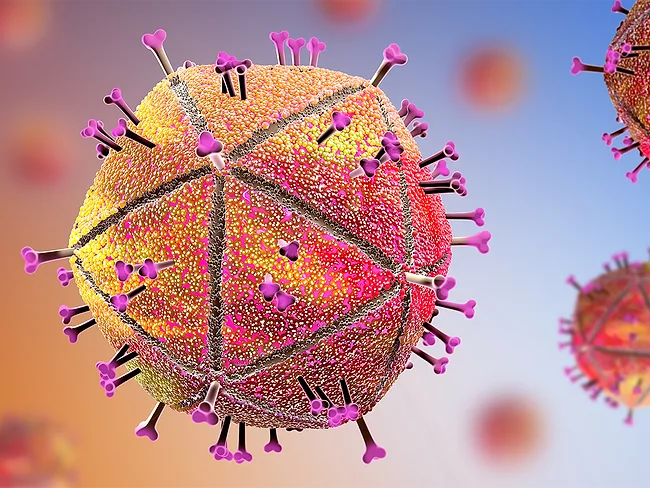
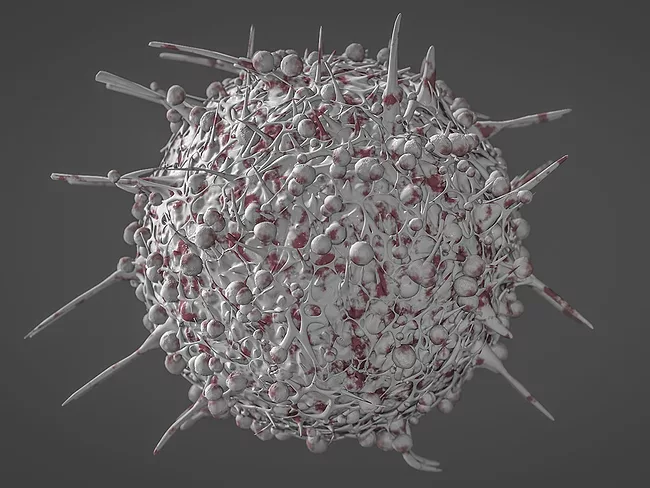
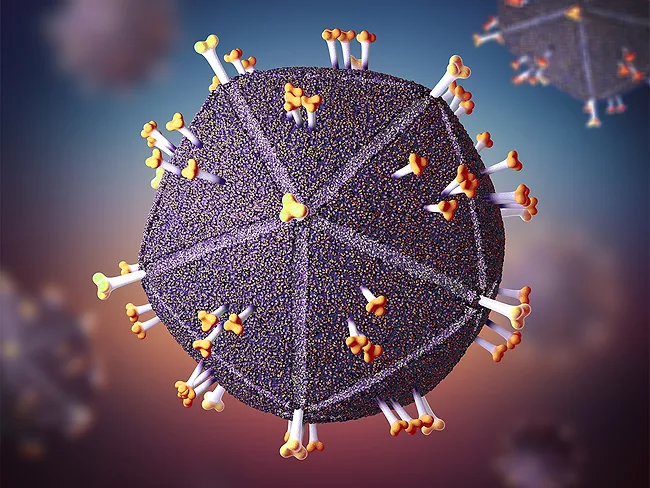
A designed chimeric virus induced broadly neutralizing antibodies against the macaque equivalent of HIV. The strategy works in two steps: first it uses an envelope protein with a mutation that reduces the glycan shield that makes it invisible to the immune system, and then it exposes the part of the protein most likely to generate these antibodies capable of blocking many variants of the virus. The macaques developed potent and diverse antibodies with this approach, which pave the way for the development of an HIV-1 vaccine.
A new mRNA and lipid nanoparticle (mRNA-LNP) platform could selectively reprogram in vivo cytotoxic effector T cells (Teff), the cells responsible for eliminating infected or tumor cells. To achieve this, scientists at the University of Pennsylvania conjugated LNPs with fractalkine, a molecule that binds to the CX3CR1 receptor, which is a marker of Teff cells. Using this strategy, the researchers delivered an mRNA encoding new proteins such as IL‑2 or human CD62 L‑selectin, opening the door to temporarily reprogramming these cells within the body, both in the blood and in lymphoid tissue, where they reside and become activated.
A new mRNA and lipid nanoparticle (mRNA-LNP) platform could selectively reprogram in vivo cytotoxic effector T cells (Teff), the cells responsible for eliminating infected or tumor cells. To achieve this, scientists at the University of Pennsylvania conjugated LNPs with fractalkine, a molecule that binds to the CX3CR1 receptor, which is a marker of Teff cells. Using this strategy, the researchers delivered an mRNA encoding new proteins such as IL‑2 or human CD62 L‑selectin, opening the door to temporarily reprogramming these cells within the body, both in the blood and in lymphoid tissue, where they reside and become activated.
A designed chimeric virus induced broadly neutralizing antibodies (bNAbs) against the macaque equivalent of HIV. The strategy works in two steps: first it uses an envelope protein (Env) with a mutation that reduces the glycan shield that makes it invisible to the immune system, and then it exposes the part of the protein most likely to generate these antibodies capable of blocking many variants of the virus. The macaques developed potent and diverse antibodies with this approach, which pave the way for the development of an HIV-1 vaccine.
A new vaccination strategy designed to induce antibodies that recognize the apex of the HIV Env protein uses Env trimers displayed on liposomes to increase their density and orient them correctly. This presentation enhanced apex-focused antibody responses in macaques, and the monoclonal antibodies isolated after immunization showed binding modes and structural features resembling human broadly neutralizing antibodies (bNAbs), indicating that the vaccine can steer the antibody response toward this vulnerable site.
Arriving a week ahead of April 28 PDUFA date, the U.S. FDA approval of Merck & Co. Inc.’s Idvynso (doravirine/islatravir) brings a new treatment option to adults with HIV-1 infection who are virologically suppressed. The approval is for those with no history of virologic treatment failure and no known substitutions associated with resistance to doravirine.
CAR T-cell therapy can be applied to treat some chronic infectious diseases, particularly to provide a functional cure for HIV-1 in people living with HIV. However, the effectiveness of CAR T cells for persistent suppression of HIV still faces many constraints, including the high mutation rate of reverse transcriptase, which enables the emergence of immune escape viral variants.

 RSS
RSS