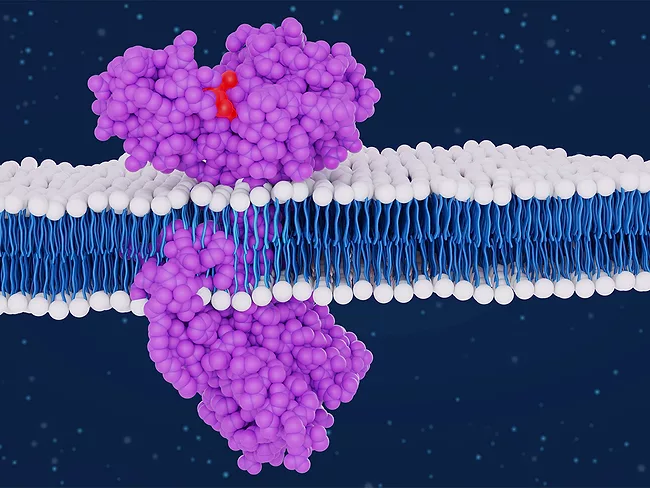
Modulating G protein-coupled receptors (GPCRs) is one of the major challenges in biomedicine. These are flexible proteins with small, deep binding pockets. The scientific community has explored small molecules, antibodies and nanobodies to develop ligands. Skape Bio Inc. is betting on creating miniproteins, a strategy that brings precise solutions for different functions.
Previous work found that certain short RNAs can induce cell death in a RISC-dependent fashion by targeting several networks of survival genes simultaneously, therefore triggering multiple cell death pathways. This form of cell death was named death induced by survival gene elimination, or DISE, an effect that depends on a toxic 6-mer seed.
About 90% of brain metastases are often limited therapeutically speaking due to the impermeable blood-brain barrier (BBB). Nanocarry Therapeutics Ltd. has presented AxS007, a novel insulin-mediated nanocarrier that delivers multiple copies of trastuzumab and pertuzumab across the BBB, using native insulin as a brain transporter and increasing brain exposure.
Conexeu Sciences Inc. has launched a preclinical development program for B.R.E.A.S.T. (Bio-Regenerative Ergonomically Architected Smart Tissue), its 3D-printed bioregenerative breast matrix, at the Wake Forest Institute for Regenerative Medicine (WFIRM), a leading regenerative medicine research organization.
Protuoso Biosciences has announced the close of an oversubscribed $9.5 million seed financing round, the proceeds of which will be used to advance its multifunctional protein engineering platform and broad pipeline across cardiometabolic, oncology and autoimmune diseases.
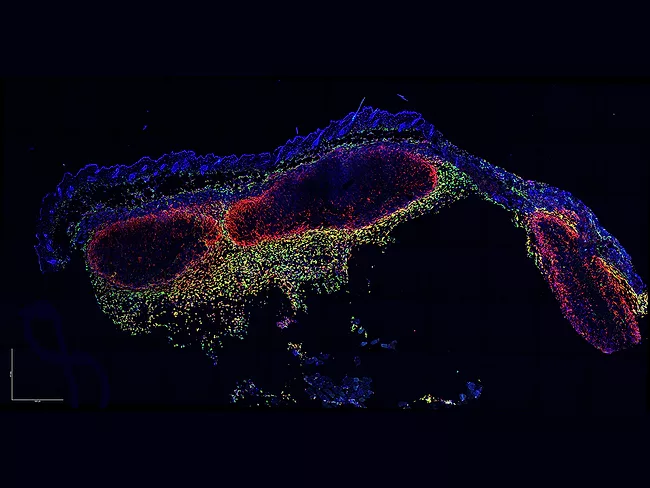
Australian researchers have identified a previously overlooked population of immune cells in the skin that physically restrain melanoma growth by engulfing live melanoma cells, and the discovery could reshape thinking around macrophage-targeted cancer therapies and innate immunity in oncology.
A new strategy aims to improve gene therapy for Pompe disease by optimizing both the genetic component that restores the function of a deficient lysosomal enzyme and the vector that delivers it to the target tissue while avoiding the liver. The findings suggest that combining an optimized transgene with a targeted capsid could significantly enhance the effectiveness of gene therapy for Pompe disease.
The American Society of Gene & Cell Therapy (ASGCT) and Orphan Therapeutics Accelerator (OTXL) have announced the public launch of CGTxchange, an AI-enhanced clearinghouse and marketplace built to help reactivate cell and gene therapy programs that have been shelved despite strong scientific and clinical evidence.
Directed evolution has become a central pillar in gene therapy. This engineering strategy enables the generation of more efficient variants of genetic editors and delivery vectors. Molecular diversification methods are increasingly sophisticated and are now accelerated by machine learning and AI tools, as showcased at the 29th Annual Meeting of the American Society of Gene and Cell Therapy (ASGCT) held in Boston this week.
Gene therapies rely on vectors to reach the target tissue where they act, such as adeno-associated viruses (AAVs) or lipid nanoparticles (LNPs), among other delivery strategies. Each combination is optimized for a specific cell type and indication, aiming to overcome challenges such as efficacy, specificity and toxicity. On May 13, 2026, two sessions included in the scientific symposia of the 29th Annual Meeting of the American Society of Gene and Cell Therapy (ASGCT), being held in Boston this week, addressed AAV-related toxicities, which have led to fatal cases in clinical trials and remain an area for improvement in approved therapies.

 RSS
RSS