Vivatides Therapeutics Inc. has closed an oversubscribed $54 million series A financing to advance its work in extrahepatic RNA delivery technologies. Proceeds from the financing will be used to further advance the company’s extrahepatic delivery platform and accelerate pipeline programs.
More than four decades on from the approval of the first biologic drug, the industry has reached a tipping point, and biotech drugs now outnumber small molecules in the global R&D pipeline. At the start of the biotech industry, progress was slow. Between 1983 and 1995, the U.S. FDA approved an average of two biologics each year. Now, biologics have taken the lead by the smallest of margins, accounting for 50.1% of drugs in development at the start of 2026, according to the Pharma Annual Review 2026, published by Pharmaprojects, a firm that tracks global pharma R&D.
A smart polymer contact lens measures intraocular pressure (IOP) in real time and automatically releases medication into the eye when IOP goes beyond a critical limit. This technological advance, developed by scientists at the Terasaki Institute for Biomedical Innovation (TIBI), could enable personalized glaucoma therapy, avoiding poor patient adherence to their prescribed regimen and eliminating the need for bulky electronic devices. Animal models tolerate it well and, although the load is concentrated at the edges of the lens, it is still unknown how it could affect visual acuity.
Alloy Therapeutics Inc. has entered into a collaboration and license agreement with Biogen Inc. for the use of Alloy’s Anticlastic ASO platform to accelerate the development of innovative oligonucleotide therapeutics.
In previous work, researchers from the University of Georgia developed liposomes loaded with antifungal drugs and coated with the carbohydrate recognition domains of mouse dectin-1 and/or dectin-2, called Dectisomes. The murine Dectisomes efficiently bound and killed pathogenic fungi in vitro and in mouse disease models. In a new study, the team aimed to explore how to potentially move Dectisomes into the clinic with human dectin orthologues.
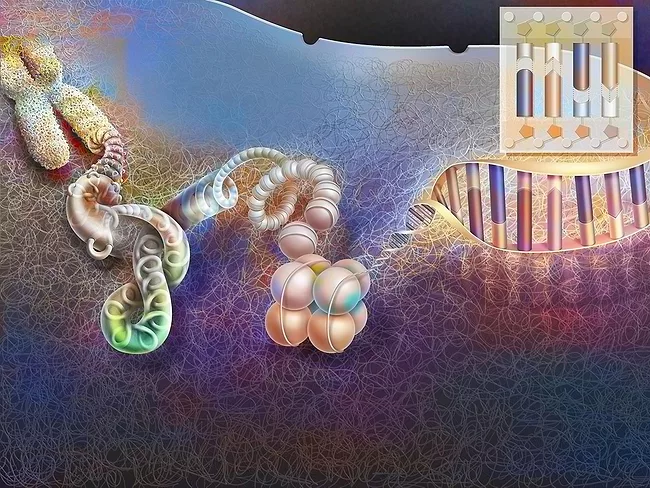
Tippingpoint Biosciences Inc. has closed an oversubscribed $4.5 million seed financing. The company, spun out of a lab at University of California, San Francisco (UCSF), is advancing its novel drug discovery platform designed to identify first-in-class drugs to treat diseases related to dysfunctional DNA packaging (chromatin).
Rybodyn Inc. has announced the initial close of a $10 million seed financing to support its work decoding the dark proteome using an AI-powered novel sequencing and discovery platform. The financing will accelerate the company’s transition from foundational discovery into scaled platform execution and progress early-stage programs into IND-enabling studies.
PerturbAI has emerged from stealth mode with the release of the world’s largest in vivo CRISPR atlas as described in a preprint on Biorxiv. The study profiled over 7.7 million cells from the brains of 74 mice with different cellular knockouts of 1,947 disease-associated genes. The San Francisco-based company’s Perturb-seq platform combines CRISPR perturbations with single nucleus RNA sequencing to look at gene expression.
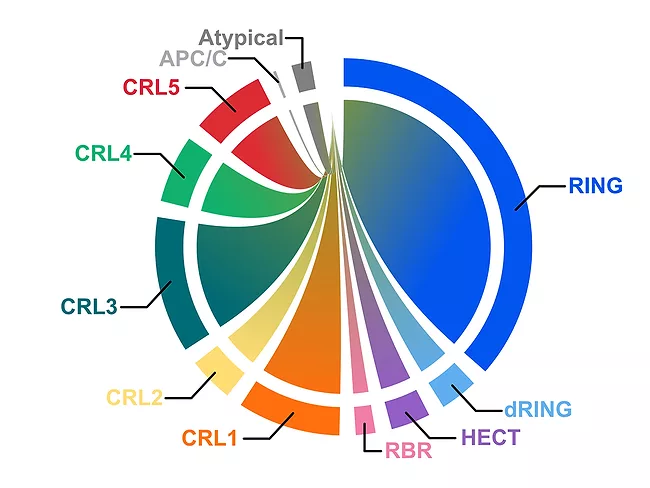
An international team led by Australia’s Walter and Eliza Hall Institute (WEHI) has created the first authoritative atlas for a class of enzymes that regulate almost every cellular process in the human body. The new atlas identifies 672 high-confidence E3 ligases and provides a new reference framework for disease biology and targeted protein degradation research.

 RSS
RSS