RNA Therapeutics Inc. has received a written response from the FDA to its pre-IND application questions regarding the development of its lead asset, RNAT-89 (BLA-761423), an mRNA LNP formulation to express darbepoetin.
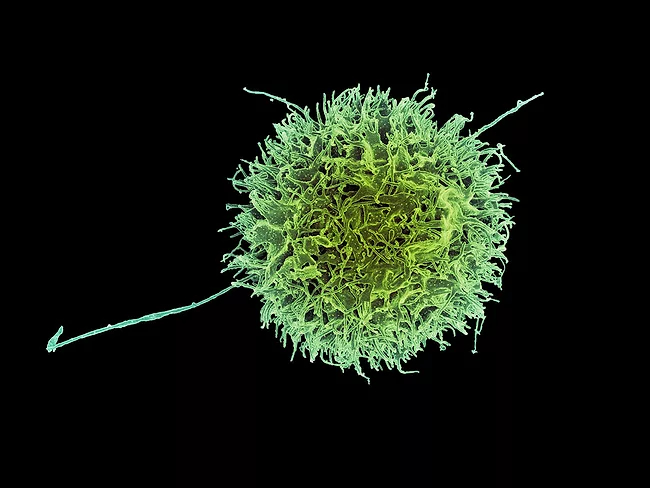
Kytopen Corp. has received a phase II Small Business Innovation Research (SBIR) grant of $1.6 million from the NIAID/NIH to support preclinical studies of its engineered natural killer (NK) cells. The funding will be used to conduct in vivo preclinical studies, which will be conducted by Charles River Laboratories
A strategy inspired by deficient HIV replication could be used as a treatment to reduce viral load in patients living with HIV and help control the pandemic of the retrovirus. Scientists from the University of California San Francisco want to use HIV against itself by using a parasitic version of the pathogen.
Infection or cure? Scientists from Tel Aviv University and the University of Glasgow genetically modified the Toxoplasma gondii to bring a protein inside neurons. The novelty of using a protozoan that can travel from the gut to parasitize the CNS contrasts with the possibility of causing a disease. The scientists are already working on how to avoid it.
Scientists from Abbvie Inc. and the Department of Lymphoma and Myeloma, University of Texas MD Anderson Cancer Center have discovered a new allosteric MALT1 inhibitor, ABBV-MALT1, for the treatment of certain types of diffuse large B-cell lymphoma (DLBCL).
Montara Therapeutics Inc. has received $8 million seed financing from several investors to further its development of its ’binary pharmacology’ for diseases of the brain.
Triastek Inc. and Biontech SE have entered into a research collaboration and platform technology license agreement for the development of RNA therapeutics for oral delivery based on Triastek’s Melt Extrusion Deposition (MED) 3D printing technology.
Epigenetic silencing could prevent the production of proteins that cause pathologies. CHARM (coupled histone tail for autoinhibition release of methyltransferase), a DNA methylation-based editor, suppressed transcription of prion proteins in the brains of mice.
Epigenetic desilence of the paternal allele of the gene that causes Angelman syndrome (AS) could be used to treat this disease for which there are currently no approved therapies.
The big advantage of cell culture to model diseases is its throughput. “You can play the disease over and over again in the dish,” Clive Svendsen told the audience at the International Society of Stem Cell Research (ISSCR) Annual Meeting held in Hamburg last week. That high throughput, however, is not particularly useful if the cell lines themselves do not accurately model the disease. Cancer cell lines are used in many cell culture experiments far beyond cancer for their ability to grow. But they are “highly abnormal,” Bill Skarnes told the audience at an innovation showcase, as well as quite unstable. “I don’t think the [HEK-293] cell line is the same in your lab as it is in the lab next door,” Skarnes said.
 RSS
RSS