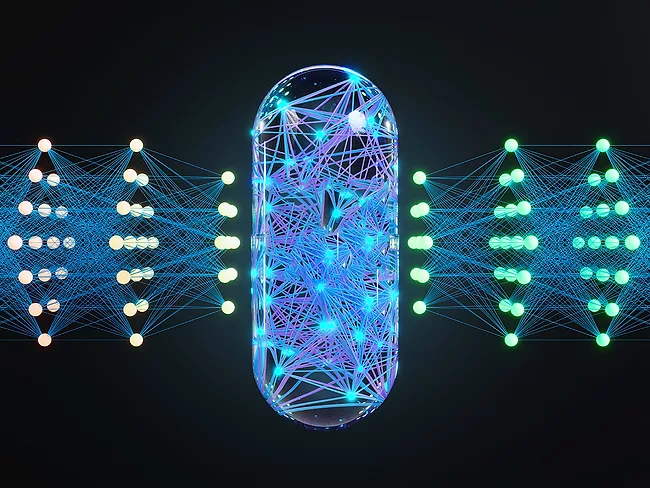
Artificial intelligence tools are springing up at multiple points along drug discovery and development, but despite the hype, as yet there is minimal return on investment (ROI). “I would say a lot of companies sort of get this big excitement about AI, but then when you look at how much ROI they get, it’s actually very little. And that’s because the workflow and the process, end-to-end, isn’t mapped to really understand where AI can truly make an impact,” said Laura Matz, chief science and technology officer at Merck KGaA.
A new metasurface design strategy that replaces rigid order with “engineered disorder” could significantly increase how many optical functions can be integrated into a single ultra-thin device without increasing size or complexity, according to a study published in Nature Communications. The study challenges a longstanding assumption in optical engineering that highly ordered, periodic structures are required to precisely control light.
A new metasurface design strategy that replaces rigid order with “engineered disorder” could significantly increase how many optical functions can be integrated into a single ultra-thin device without increasing size or complexity, according to a study published in Nature Communications. The study challenges a longstanding assumption in optical engineering that highly ordered, periodic structures are required to precisely control light.
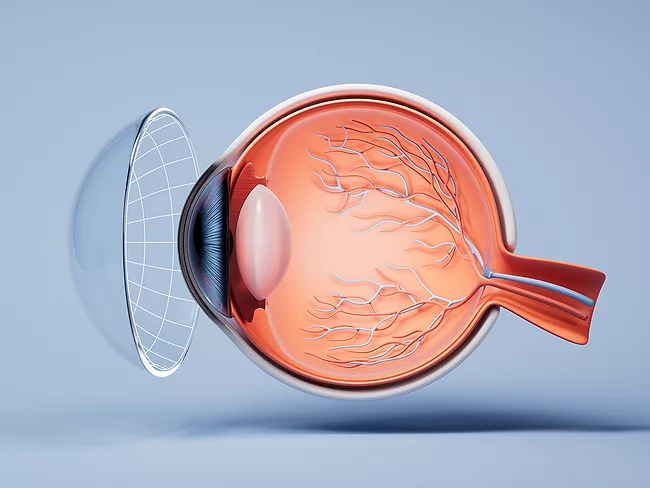
A smart polymer contact lens measures intraocular pressure (IOP) in real time and automatically releases medication into the eye when IOP goes beyond a critical limit. This technological advance, developed by scientists at the Terasaki Institute for Biomedical Innovation (TIBI), could enable personalized glaucoma therapy, avoiding poor patient adherence to their prescribed regimen and eliminating the need for bulky electronic devices. Animal models tolerate it well and, although the load is concentrated at the edges of the lens, it is still unknown how it could affect visual acuity.
A smart polymer contact lens measures intraocular pressure (IOP) in real time and automatically releases medication into the eye when IOP goes beyond a critical limit. This technological advance, developed by scientists at the Terasaki Institute for Biomedical Innovation, could enable personalized glaucoma therapy.
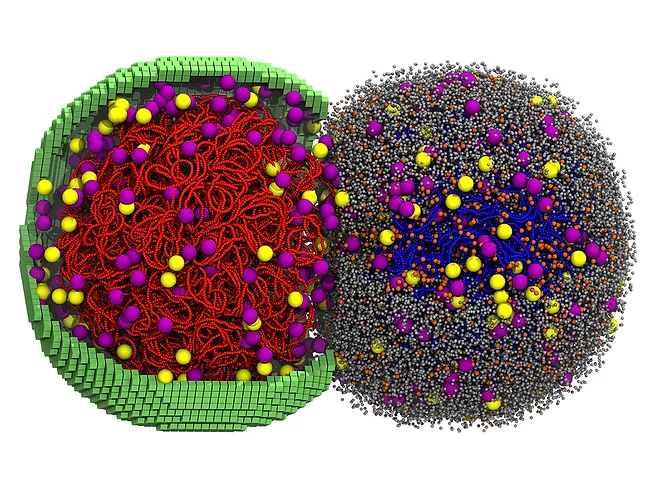
Entering a cell and watching its entire inner machinery at work, how DNA is copied, how proteins are assembled, or how it splits in two, has been, for decades, an impossible dream. Now, scientists at the University of Illinois have recreated everything that happens inside a cell at molecular scale in an unprecedented computational model. Syn3A is the first 4D digital cell, capable of combining time and space to simultaneously represent all the internal processes that drive the life cycle of a minimal prokaryotic organism.
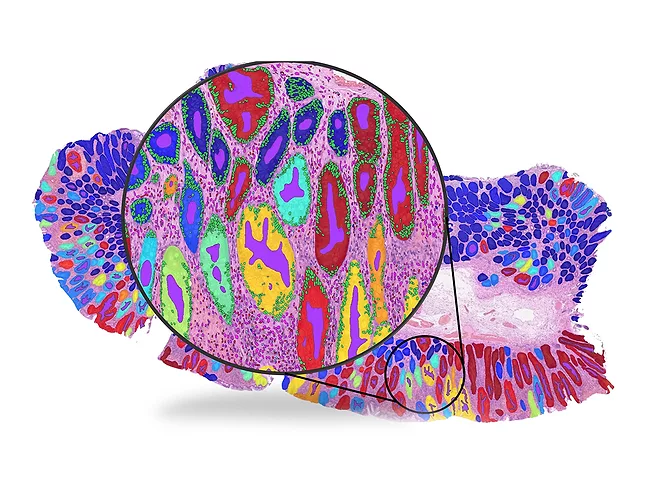
Computational pathology, which assesses molecular-level features of diseases directly from tissue images (rather than testing the tissue via methods such as staining or sequencing) is making rapid strides.
Google Deepmind is shedding light on the dark genome with its latest AI model, which is trained to decipher the 98% of DNA that does not code for proteins. Alphagenome is designed to predict how variants in the regulatory genome exert their effects on the expression of the genes they control.
Zylox-Tonbridge Medical Technology Co. Ltd. plans to expand globally with M&As, company chairman and CEO Jonathon Zhong Zhao told BioWorld, starting with a stepwise acquisition of Optimed Holding GmbH and its subsidiaries, including Optimed Medizinische Instrumente GmbH.
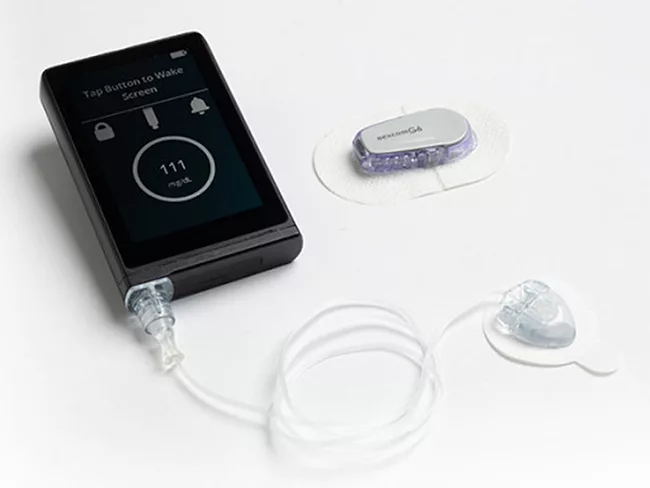
Beta Bionics Inc.’s preliminary results for its first full year as a public company offered an early read on developments and market positioning in the insulin pump and patch market, with analysts pointing to steady growth, rising pharmacy channel penetration and intensifying pressure as more products target both type 1 and type 2 diabetes.

 RSS
RSS