Pharma companies are collaborating to boost the power of artificial intelligence (AI) in drug discovery by allowing access to proprietary structural data to train a large language model. Each of the partners is contributing data from several thousand experimentally determined protein:ligand interactions, creating one of the most diverse datasets and the richest chemistry assembled to date for model training.
About five months after the U.S. FDA disclosed its roadmap to move away from animal testing in favor of new approaches for biopharma drug development, the U.S. National Institutes of Health (NIH) said it is awarding $87 million in contracts over three years to launch the Standardized Organoid Modeling Center.
Researchers at the Massachusetts Institute of Technology have developed a generative AI model that was able to generate novel antibiotic structures from either chemical fragments or de novo, starting from ammonia, methane, water or no starting point at all. In a study that was published online in Cell, the team tested two dozen of more than 10 million structures that were proposed as potential antibiotics by the model.
Daewoong Pharmaceutical Co. Ltd. and Daewoong Therapeutics Inc. reported that their self-developed microneedle patch loaded with semaglutide demonstrated 80% relative bioavailability compared to an injectable subcutaneous formulation of semaglutide in a pilot human pharmacokinetic study. That far exceeds rates seen in other patches or oral formulations.
The first filing in the name of Grand Rapids, Mich.-headquartered Corium Innovations Inc. confirms the company formerly known as Corium Pharma Solutions Inc. is developing treatments for multiple sclerosis and ulcerative colitis that employ its proprietary Corplex transdermal patch technology.
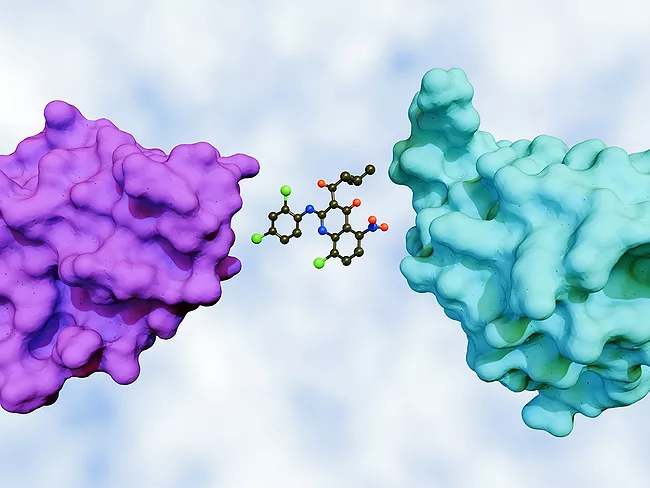
Degradation is a therapeutic strategy that could offer possibilities to get at currently undruggable target proteins. In targeted degradation, compounds induce interactions between a target protein and a protein that can tag the target for degradation. In principle, there are several pathways that could be used for such tagging; the most attention has gone to ubiquitin ligases, in particular cereblon, a protein that is part of a ubiquitin ligase complex and the target of several approved drugs.
Degradation is a therapeutic strategy that could offer possibilities to get at currently undruggable target proteins. In targeted degradation, compounds induce interactions between a target protein and a protein that can tag the target for degradation. In principle, there are several pathways that could be used for such tagging; the most attention has gone to ubiquitin ligases, in particular cereblon, a protein that is part of a ubiquitin ligase complex and the target of several approved drugs.
Chinese researchers are preparing the details for the publication of another scientific milestone, the creation of a chimera with a human heart and a kidney developed from human stem cells in pig embryos.
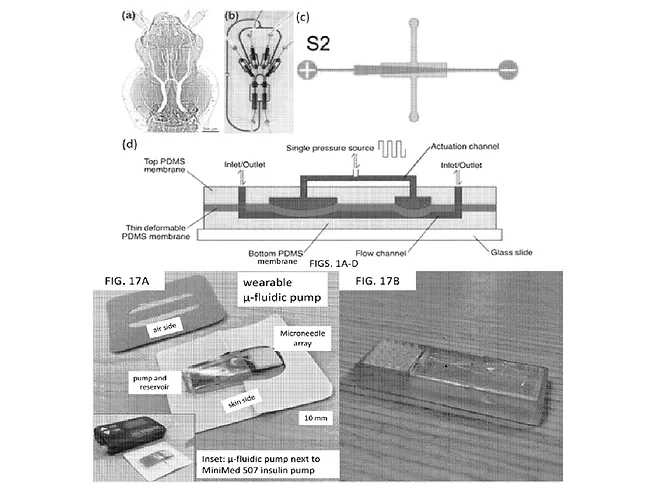
Researchers from Virginia Polytechnic Institute and State University filed for protection of their development of a slim, painless, and affordable microfluidic infusion pump device for the continuous transdermal delivery of drugs.
Microneedle technology could help simplify vaccine delivery to better support global immunization efforts, and Australia is leading the way in this innovative technology.

 RSS
RSS