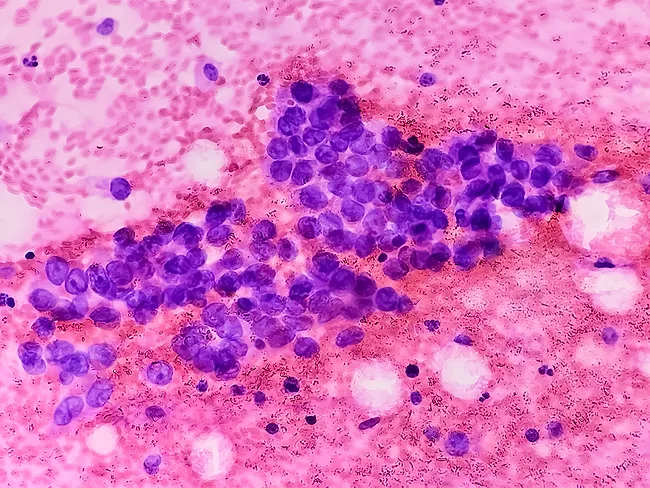
A new approach against non-small-cell lung cancer (NSCLC) has combined immunotherapy with molecularly targeted therapy to activate the immune response and inhibit oncogenic pathways, which prevented tumor progression and eliminated cancer cells. Brigham and Women’s Hospital scientists have developed nanoparticles loaded with antibody conjugates that could deliver large amounts of treatment to the tumor tissue. This new strategy could improve the results of conventional immunotherapy in these patients and reduce toxicity of existing treatments.
In what represents its first patenting Demon Curonix BV is seeking protection for a system for providing microvesicles to be used in combination with focused ultrasound for drug delivery to the brain.
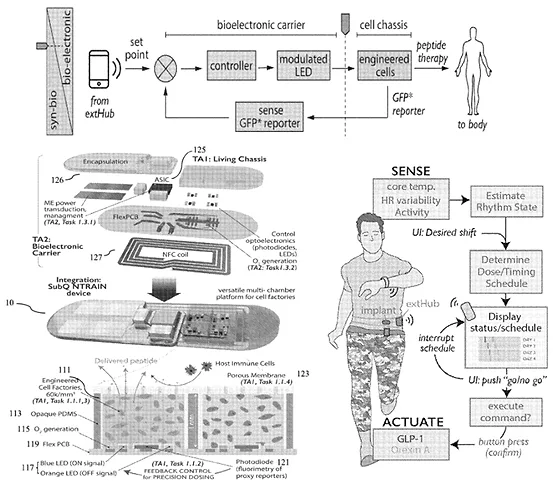
A collaborating team of researchers from Northwestern University and Rice University continue to build intellectual property for an implanted biohybrid (bioelectronic/engineered cell) device that has been likened to an implantable pharmacy on a chip that never runs out.
The latest patent filing from Cranius LLC describes a reservoir for its implanted drug delivery devices which is shaped and formed to empty and fill reliably without any concern for neighboring organ impingement or compression, and which can precisely control and monitor exactly just how much of a medicine is being delivered.
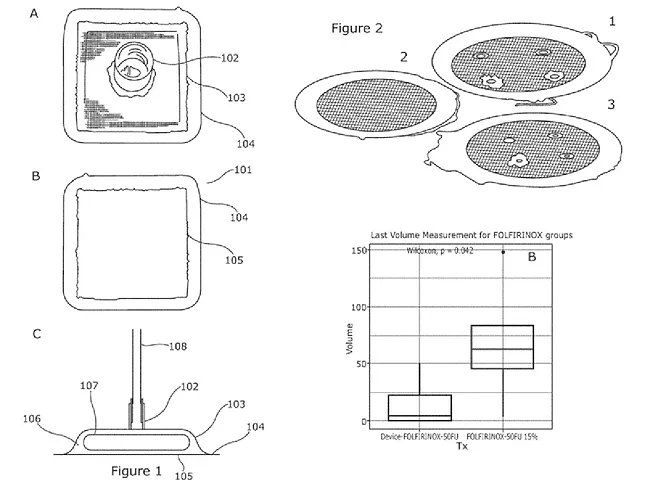
Researchers from the U.K.’s University of Birmingham have filed for protection of an implantable device for targeted drug delivery in patients who have undergone surgery, particularly surgery to remove one or more tumors.
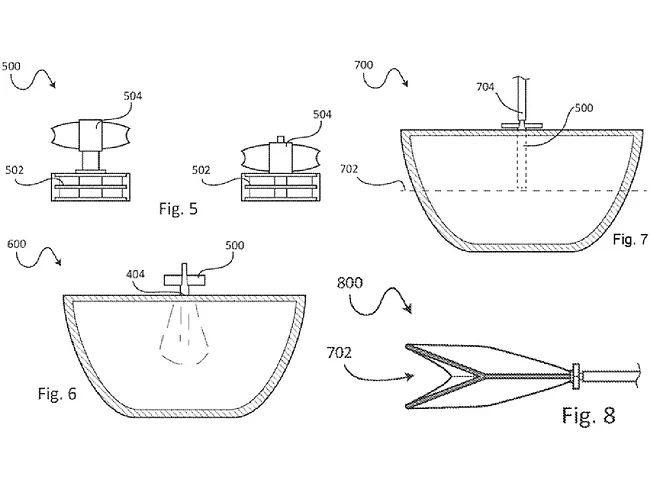
Eli Lilly and Co. continues its development of an oral drug delivery device that can successfully deliver a drug that would otherwise be ineffective when taken orally.
Watertown, Mass.-based Lyndra Therapeutics Inc. is seeking patent protection for gastric residence drug delivery systems with improved shelf lives through their inclusion of a metal core.
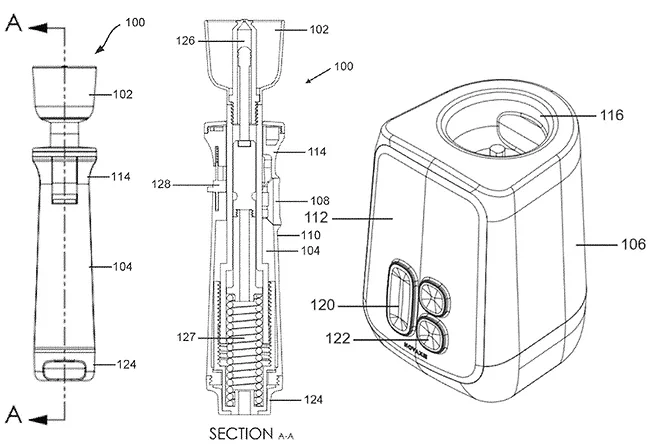
In the first patenting from Chicago-based Novaxs Biotech Corp., its co-founders, Alina Rui Su and Jonathan Tianyi Xing, describe an injection system for needle-free, high-pressure drug delivery.
Since its founding by the National Institutes of Health (NIH), the scientists of the All of Us Research Program have set the goal to analyze the largest diversity of the genomic population in the country and end the under-representation of its different groups. The project has expanded the vision of several pathologies, discovered thousands of new genetic variants, redefined the risk genes for common diseases, and stratified them, uncovering eight different forms in the case of type 2 diabetes (T2D). Their results create a pathway for a new age of precision medicine.
 RSS
RSS