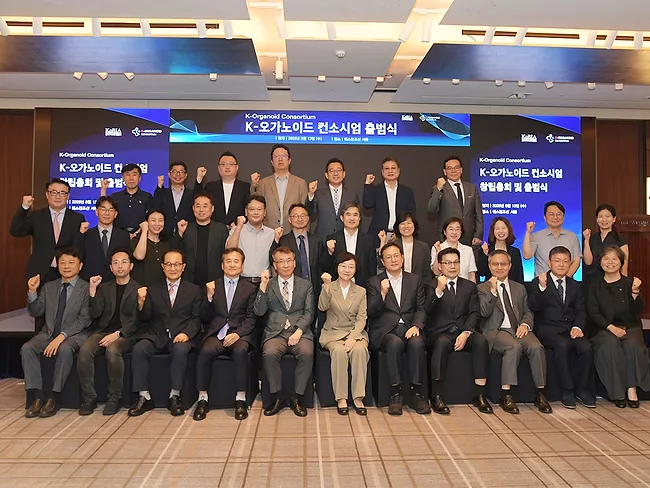
South Korea’s Ministry of Food and Drug Safety (MFDS) launched a new industry-academia-research consortium to support the nation’s organoid industry, expected to grow in light of the U.S. FDA’s shift away from animal testing in the development of novel drugs.
Researchers at the Massachusetts Institute of Technology have developed a generative AI model that was able to generate novel antibiotic structures from either chemical fragments or de novo, starting from ammonia, methane, water or no starting point at all. In a study that was published online in Cell, the team tested two dozen of more than 10 million structures that were proposed as potential antibiotics by the model.
Researchers at the Massachusetts Institute of Technology have developed a generative AI model that was able to generate novel antibiotic structures from either chemical fragments or de novo, starting from ammonia, methane, water or no starting point at all. In a study that was published online in Cell, the team tested two dozen of more than 10 million structures that were proposed as potential antibiotics by the model.
Daewoong Pharmaceutical Co. Ltd. and Daewoong Therapeutics Inc. reported that their self-developed microneedle patch loaded with semaglutide demonstrated 80% relative bioavailability compared to an injectable subcutaneous formulation of semaglutide in a pilot human pharmacokinetic study. That far exceeds rates seen in other patches or oral formulations.
One of the major obstacles to treating neurological disorders such as Alzheimer’s disease is the blood-brain barrier: drugs that are injected into the circulation usually do not enter the brain effectively. Researchers at Denali Therapeutics Inc., Biogen Inc. and the University of Minnesota have devised a vehicle for transporting antibodies against amyloid-β that can bypass the blood-brain barrier by binding to the transferrin receptor, which is expressed much more abundantly in capillaries than in arteries.
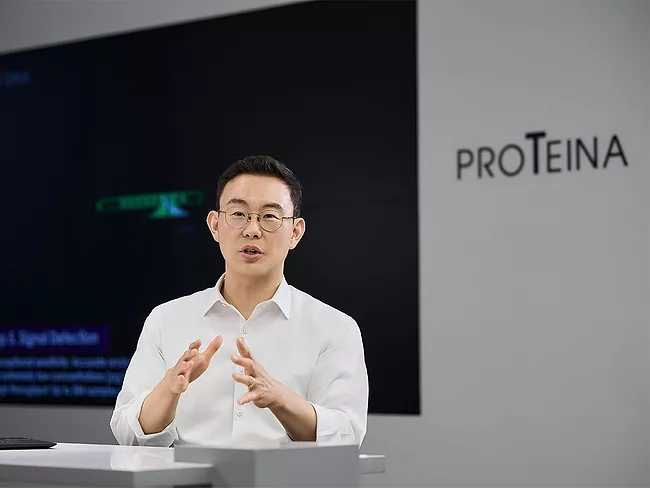
“Our mission is to apply our protein-protein interaction (PPI) big data-generation platform to create novel antibody therapeutics,” Proteina Co. Ltd. CEO Yoon Tae-young recently told BioWorld. “We have been working to build a proprietary technology platform for more than 15 years,” Yoon said, “and we take pride in the fact that we made our own technology platform, instead of running a company based on licensed-in technology.”
Daewoong Pharmaceutical Co. Ltd. and Daewoong Therapeutics Inc. reported that their self-developed microneedle patch loaded with semaglutide demonstrated 80% relative bioavailability compared to an injectable subcutaneous formulation of semaglutide in a pilot human pharmacokinetic study. That far exceeds rates seen in other patches or oral formulations.
Quantumpharm Inc., known as Xtalpi Inc., announced receiving $51 million up front from a potential $5.99 billion deal with Dovetree LLC on Aug. 6. The collaboration, first inked through a letter of intent between the two parties on June 23, will combine Shenzhen, China-based Xtalpi’s AI-based and robotics-driven discovery platform with Dovetree’s “biological insights.” The goal will be to select and validate potential first-in-class candidates for Dovetree across five areas of oncology, immunology and inflammatory diseases, neurological disorders and metabolic dysregulation.
Neucore Bio Inc. announced it has been awarded a US$304,000 National Science Foundation Small Business Technology Transfer grant to evaluate scalable manufacturing of exosome-based gene delivery methods.

 RSS
RSS