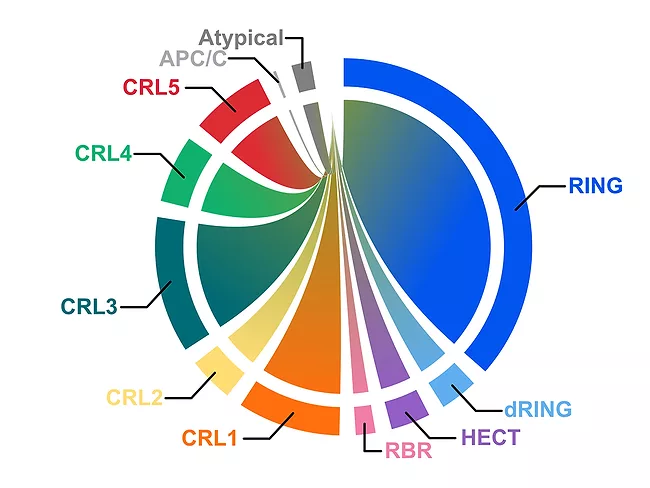
An international team led by Australia’s Walter and Eliza Hall Institute (WEHI) has created the first authoritative atlas for a class of enzymes that regulate almost every cellular process in the human body. The new atlas identifies 672 high-confidence E3 ligases and provides a new reference framework for disease biology and targeted protein degradation research.
In what the U.S. FDA has dubbed a milestone move toward fewer animal studies in drug development, the agency published a draft guidance to help sponsors validate new approach methodologies that can bring safe, effective drugs to market sooner based on human-centric data rather than starting off with nonclinical animal pharmacology and toxicology data.
Alloy Therapeutics Inc. has entered into an agreement with Abbvie Inc. to develop a new antibody platform to discover antibodies against targets that are difficult to address with current technologies.
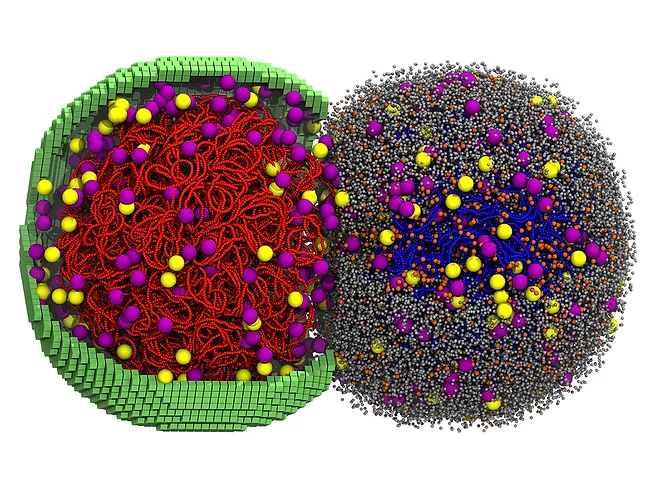
Entering a cell and watching its entire inner machinery at work, how DNA is copied, how proteins are assembled, or how it splits in two, has been, for decades, an impossible dream. Now, scientists at the University of Illinois have recreated everything that happens inside a cell at molecular scale in an unprecedented computational model. Syn3A is the first 4D digital cell, capable of combining time and space to simultaneously represent all the internal processes that drive the life cycle of a minimal prokaryotic organism.
Enodia Therapeutics SAS has acquired Kezar Life Sciences Inc.’s assets from its Sec61-based discovery and development program, including clinical-stage KZR-261. Insights from Kezar’s Sec61-based programs will further strengthen Enodia’s core focus on Sec61-driven selectivity for targeting protein degradation.
Similarities among three pediatric brain tumors that arise in different structures of the CNS – pineoblastoma, retinoblastoma and Group 3 medulloblastoma – have been linked to their shared origin during pineal gland development. Scientists at St. Jude Children’s Research Hospital have identified the molecular signatures that drive these tumors from pinealocyte progenitor cells that conserve a common differentiation program, providing a shared therapeutic target for these three cancer types.
If one could sweep the brain clean and send the toxic substances that drive neurodegeneration to the recycling bin, perhaps one could treat Alzheimer’s disease. Researchers at the Chinese Academy of Sciences propose a new therapeutic strategy that uses synthetic peptides that bind to amyloid-β (Aβ) and direct it toward lysosomes. In addition, researchers at the Washington University School of Medicine in St. Louis have genetically modified astrocytes in vivo to express chimeric antigen receptors (CARs) that recognize and phagocytose Aβ plaques.
Similarities among three pediatric brain tumors that arise in different structures of the CNS – pineoblastoma, retinoblastoma and Group 3 medulloblastoma – have been linked to their shared origin during pineal gland development. Scientists at St. Jude Children’s Research Hospital have identified the molecular signatures that drive these tumors from pinealocyte progenitor cells that conserve a common differentiation program, providing a shared therapeutic target for these three cancer types.
If one could sweep the brain clean and send the toxic substances that drive neurodegeneration to the recycling bin, perhaps one could treat Alzheimer’s disease (AD). Researchers at the Chinese Academy of Sciences propose a new therapeutic strategy that uses synthetic peptides that bind to amyloid-β (Aβ) and direct it toward lysosomes. In addition, researchers at the Washington University School of Medicine in St. Louis have genetically modified astrocytes in vivo to express chimeric antigen receptors (CARs) that recognize and phagocytose Aβ plaques.

 RSS
RSS