ADEL Inc. closed a year-end licensing deal worth up to $1.04 billion with Sanofi SA for ADEL-Y01, a specific tau-targeting Alzheimer’s disease drug candidate in a U.S. phase I study.
Could GLP-1 receptor agonists (GLP-1RAs), already used in obesity and diabetes, be repurposed as drugs to slow aging? Hong Kong, one of the places in the world with the highest human longevity, is also home to a scientific study on the effects of GLP-1RAs. For the first time, scientists at the Chinese University of Hong Kong (CUHK) have assessed their pharmacological potential in later life using a multiomics preclinical approach.
South Korean researchers led by Lee In-suk of Yonsei University have reported the most complete oral microbiome catalog to date, with more than 72,000 genomes. Detailed in Cell Host & Microbe on Nov. 12, 2025, the database is expected to serve as a universal platform for academia and enable “precision microbiome medicine” for the industry, Lee told BioWorld.
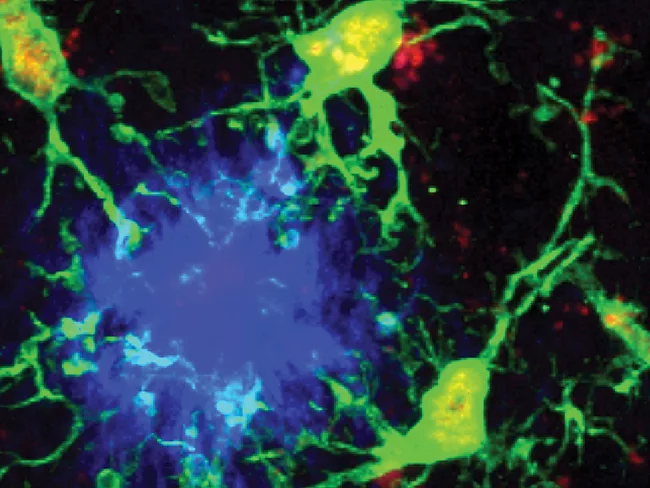
In Alzheimer’s disease, microglia act as a double-edged sword. They can either protect the brain or worsen the damage, depending on their activation state. Inflammatory activation harms healthy neurons. However, a study reveals that a special type of microglia expressing specific receptors and behaving like T cells may help mitigate this neurodegenerative condition.
Bowhead whales (Balaena mysticetus) live year-round in the icy or near-icy waters of the Arctic and sub-Arctic. Although they migrate with the seasonal cycles of ice formation and melting, they never reach the warmer waters visited by other large marine mammals. Their adaptation to low temperatures may have also enabled them to live longer and avoid cancer, a disease closely linked to aging.
Stem cells are a promising therapeutic modality to fight aging and age-related disease, speakers at the Bio-Plus Interphex Korea 2025 said. Progress in cell-based longevity medicine is being made, they added, although safety, ethical and regulatory issues are ongoing challenges.
Takeda Pharmaceutical Co. Ltd. agreed to codevelop and commercialize up to three of Innovent Biologics Co. Ltd.’s immuno-oncology (I-O) and antibody-drug conjugate (ADC) candidates with the signing of a $11.4 billion deal, including $1.2 billion paid up front.
A team of U.S. and South Korean researchers have developed an AI model called MSI-SEER that can not only predict microsatellite instability-high (MSI-H) tumors based on tissue slides, but also flag “what it does not know.” “Have you ever asked ChatGPT anything, and the response was, ‘I don’t know?’” Cheong Jae-ho asked during an interview with BioWorld. “Probably not, and that is the problem with AI now.”
Taho Pharmaceuticals Ltd. announced an NDA submission to the U.S. FDA for TAH-3311, developed as the world’s first oral dissolving film formulation of apixaban, marking a regulatory milestone for the Taipei-based biotech.
Renewing hopes of restoring the rare pediatric disease priority review voucher (RPD PRV) program that expired at the end of 2024, the House Energy and Commerce Committee voted 47-0 Sept. 17 to advance the Give Kids a Chance Act of 2025 (H.R. 1262), one of six pieces of legislation slated to move to the full U.S. House for consideration.
 RSS
RSS