“The impoverished laboratory environment in which mice and rats are maintained has been very good at increasing experimental replicability,” Steven Austad told the audience at the 12th Aging Research & Drug Discovery Meeting (ARDD) in Copenhagen last week. “But at the cost of sacrificing translational relevance.”
At the 12th Aging Research & Drug Discovery (ARDD) Meeting, which is being held this week in Copenhagen, Life Biosciences Inc. announced that it is developing its partial epigenetic reprogramming technology for liver disease as well as optic neuropathies. The company’s chief scientific officer Sharon Rosenzweig-Lipson estimated that its ER-100 would enter clinical trials in early 2026, putting it on track to be the first application of partial epigenetic reprogramming to enter the clinic.
G2Gbio Inc. debuted on the Korea Exchange with a ₩52.2 billion (US$37.7 million) IPO Aug. 14. Nearly half of the funds raised will be used to expand Cheongju-si, South Korea-based G2Gbio’s manufacturing plants and help mass produce sustained-release injectable drug products such as GB-5001, its lead candidate in development as a once-monthly formulation of donepezil (Aricept; Eisai Co. Ltd.) for Alzheimer’s disease.
After a 10-year project and a £60 million (US$80 million) investment, the UK Biobank has completed the whole body scans of 100,000 volunteers and is making the 1 billion images available for researchers worldwide.
The switch will be flicked today to make the world’s largest dementia-related proteomics dataset freely available to researchers, at the same time as members of the consortium which compiled it publish the proteomics signatures of major neurodegenerative diseases that they uncovered in a first trawl of the data.
Roche AG subsidiary Chugai Pharmaceutical Co. Ltd. and Singapore’s Gero Pte. Ltd. plan to tackle age-related diseases by collaborating to identify drug targets through Gero’s AI-driven human data-first platform.
Aribio Co. Ltd. signed a $600 million license deal with Acino International AG, an Arcera Life Sciences subsidiary, granting the latter commercial rights to its oral Alzheimer’s disease therapy, AR-1001, in select countries including the Middle East.
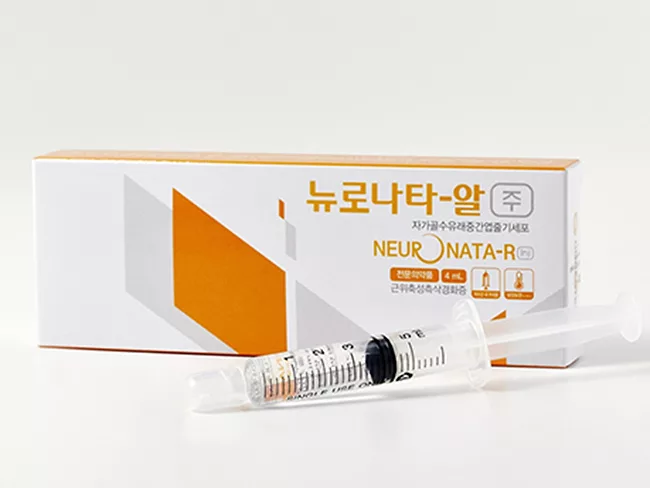
Corestemchemon Inc. is planning to file a BLA for Neuronata-R (lenzumestrocel) by the end of 2025 to gain accelerated approval from the U.S. FDA, company officials confirmed to BioWorld during a June 2 interview. Neuronata-R is an autologous bone marrow-derived mesenchymal stem cell therapy that first gained approval in South Korea in 2014 to delay the progression of amyotrophic lateral sclerosis (ALS), a progressive neurodegenerative disorder also known as Lou Gehrig’s disease.
A publication based on longitudinal and cross sectional data and led by researchers at the U.S. NIH’s National Institute on Aging published on June 5, 2025 in Science has stated that the impact of taurine supplementation at delaying aging or treating aging-related conditions is context-dependent, and that the circulating levels of taurine are impacted by factors unique to each individual rather than declining with age. To qualify taurine as a true marker of aging, it should change with age across diverse populations over time and ideally supported by longitudinal data.
Samsung Medical Center spinoff Aimedbio Inc. announced raising ₩51.1 billion (US$37.15 million) in pre-IPO funding to advance its portfolio of clinical and preclinical antibody-drug conjugate (ADC) candidates.

 RSS
RSS