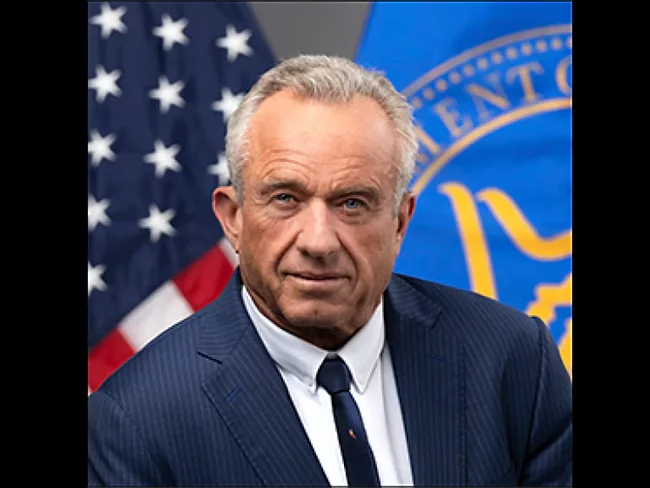
As the U.S. Department of Health and Human Services begins implementing its reorganization and reduction-in-force plan by sending out termination notices this week to 10,000 more employees across its agencies, top Democrats in Congress are demanding details about the plan.
Australia’s top universities are looking more to Asia for research collaborations following threats from the Trump administration to stop funding research at institutions that don’t comply with U.S. narratives.
The U.S. Department of Health and Human Services HHS reported a plan to reduce staffing by 10,000 in an immediate reduction, which when paired with retirement initiatives will drop staffing by as many as 20,000.
A survey of members of the Bioindustry Innovation Organization (BIO) has exposed what is at stake for the sector, on both sides of the Atlantic, if proposed tariffs are imposed on pharmaceutical imports to the U.S. "A staggering 94% of biotech firms anticipate surging manufacturing costs if tariffs are placed on imports from the EU,” according to BIO.
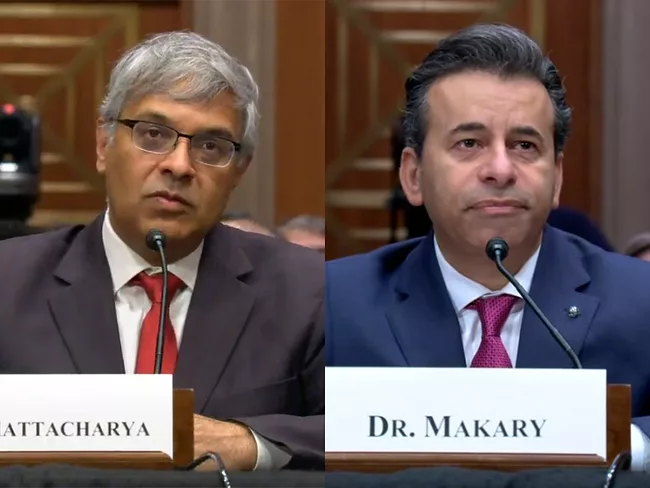
The U.S. Senate has approved the nominations of two key members of the Trump administration, Marty Makary as FDA commissioner and Jay Bhattacharya as NIH director. While these are two of the most critical appointments for the Trump administration, the Senate still has two other important appointments in queue, including the directors of the Centers for Medicare & Medicaid Services and the CDC.
In a move that echoes tariff threats from U.S. President Donald Trump, the Pharmaceutical Research and Manufacturers of America (PhRMA) lobby is taking aim at most of the world for unfair trade practices in its special 2025 Special 301 Report to the U.S. Trade Representative.
The obesity market is driving pharma’s return on investment (ROI) upward, with the projected return rising to 5.9% overall in 2024, but only reaching 3.8% if GLP-1 assets are excluded. At the same time, the average cost of developing a drug continues to rise and now stands at $2.23 billion, compared to $2.12 billion in 2023, according to Deloitte’s 15th annual analysis of the ROI from pharmaceutical innovation.
Mehmet Oz, the Trump administration’s pick to lead the U.S. Centers for Medicare & Medicaid Services (CMS), appeared for a second time in the Senate for the CMS administrator’s job.
The unrelenting pressure on medical practice in the U.S. has sparked some innovations, but a legislative innovation is now in the works that would fundamentally shift how at least some drugs are prescribed. The Healthy Technology Act of 2025 (H.R. 238) would allow AI and machine learning algorithms to write prescriptions for pharmaceuticals, although the lack of co-sponsors for H.R. 238 suggests that this bill is not ready for prime time just yet.
The politicization of the U.S. FTC continued March 18 with President Donald Trump firing the two remaining Democratic commissioners, Rebecca Kelly Slaughter and Alvaro Bedoya. The action leaves what’s supposed to be a five-member bipartisan panel with just two members, both of whom are Republicans. The commission already was down one member, as former Chair Lina Khan’s term expired last year and Trump’s appointee, Mark Meador, is awaiting Senate confirmation with a vote expected yet this month.
 RSS
RSS