In the wake of the pandemic, many leading med-tech companies took steps to on-shore and near-shore manufacturing, a move that could protect significant numbers of players from the worst of the effects of the tariffs announced by the Trump administration last week.
The April 8 Senate hearing on the Trump administration’s tariffs generated some heated debate, although U.S. Trade Representative Jamieson Greer parried some of the criticism by pointing to the yawing trade deficit.
Med tech and diagnostic companies in Europe are considering strategies to navigate the U.S. market following President Trump’s introduction of reciprocal tariffs on imports. While some companies are more exposed than others, there’s no doubt that many will feel the pain.
Following news of U.S. President Donald Trump’s 10% across-the-board tariffs on Australian exports to the U.S., Australia’s Securities Exchange shed nearly AU$55 billion in losses Thursday morning. Even so, pharmaceuticals have escaped the tariffs for now. In China, Trump’s tariffs are not a big concern for China’s health care because drugs and active pharmaceutical ingredients are exempted from the tariffs. Even if tariffs are imposed in the future, Chinese pharmaceutical companies have already significantly de-risked themselves in recent months by increasing out-licensing models with U.S. partners.
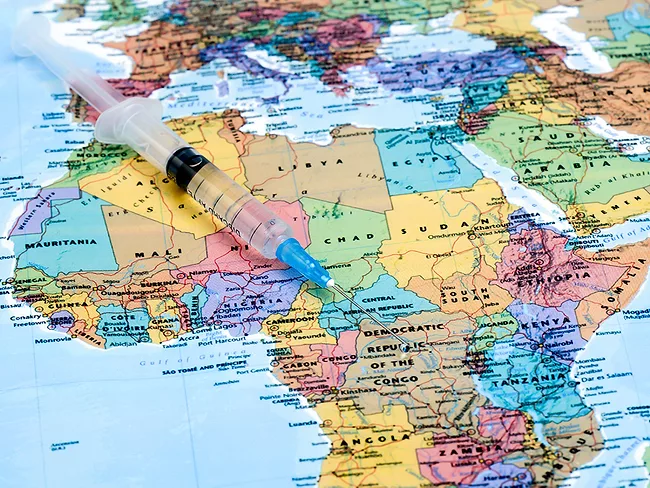
The extent of the damage that will be caused if the U.S. overseas aid program, the President’s Emergency Plan for AIDS Relief (PEPFAR), is axed or has its funding cut, is laid out in an expert analysis published in The Lancet April 8, which estimates nearly 500,000 children could die from AIDS-related causes by 2030, while 1 million children will be infected with the virus.
Ill-considered government policies, pharmacy benefit manager market abuses and an unpredictable future are casting doubt on the long-term sustainability of the U.S. biosimilar market, Craig Burton, the executive director of the Biosimilars Council, told a House Ways & Means subcommittee April 8.
The nationwide preliminary injunction keeping the U.S. NIH from slashing its indirect cost rate to a flat 15% has become permanent. In issuing the permanent injunction and final judgment April 4 in three challenges to the rate change, Judge Angel Kelley, of the U.S. District Court for the District of Massachusetts, said the NIH’s Feb. 7 notice that it would begin imposing the 15% rate Feb. 10 to all existing and future grants violated the Administrative Procedure Act, as the action was arbitrary and capricious, was impermissibly retroactive and failed to follow notice-and-comment procedures.
“The nation’s scientific enterprise is being decimated.” That statement in an open letter “to the American people” signed by 1,800 members of the U.S. National Academies, is made concrete in a list of 709 NIH grants – and counting – that have been axed since President Donald Trump was inaugurated on Jan. 20.
Biomedical research seems like it should be the ultimate bipartisan issue. But under the Trump administration, unless and until Congress regains its will to make use of its constitutional powers, bipartisan support for research seems to be a thing of the past.
Biomedical research seems like it should be the ultimate bipartisan issue. But under the Trump administration, unless and until Congress regains its will to make use of its constitutional powers, bipartisan support for research seems to be a thing of the past. On March 3, members of the National Academies of Science, Engineering and Medicine warned that the second Trump administration has been waging a “wholesale assault” on American research.
 RSS
RSS