The politicization of the U.S. FTC continued March 18 with President Donald Trump firing the two remaining Democratic commissioners, Rebecca Kelly Slaughter and Alvaro Bedoya. The action leaves what’s supposed to be a five-member bipartisan panel with just two members, both of whom are Republicans. The commission already was down one member, as former Chair Lina Khan’s term expired last year and Trump’s appointee, Mark Meador, is awaiting Senate confirmation with a vote expected yet this month.
The U.S. foreign aid cuts and freezes that are taking place under President Donald Trump are putting at risk the global public health gains that have been made against diseases such as malaria, HIV and tuberculosis over the past two decades, World Health Organization (WHO) Director-General Tedros Adhanom Ghebreyesus said at a March 17 media briefing, as he called on other countries to step up and fill the gap.
The unrelenting pressure on medical practice in the U.S. has sparked some innovations, but a legislative innovation is now in the works that would fundamentally shift how at least some drugs are prescribed. The Healthy Technology Act of 2025 (H.R. 238) would allow AI and machine learning algorithms to write prescriptions for pharmaceuticals, although the lack of co-sponsors for H.R. 238 suggests that this bill is not ready for prime time just yet.
The latest continuing resolution (CR) for the U.S. budget funds government operations through the end of the fiscal year, which in modern times may come across as an achievement. However, Medicare telehealth also won in the CR, which extends some temporary measures for telehealth as Congress continues to mull over the question of a permanent expansion of Medicare telehealth benefits.
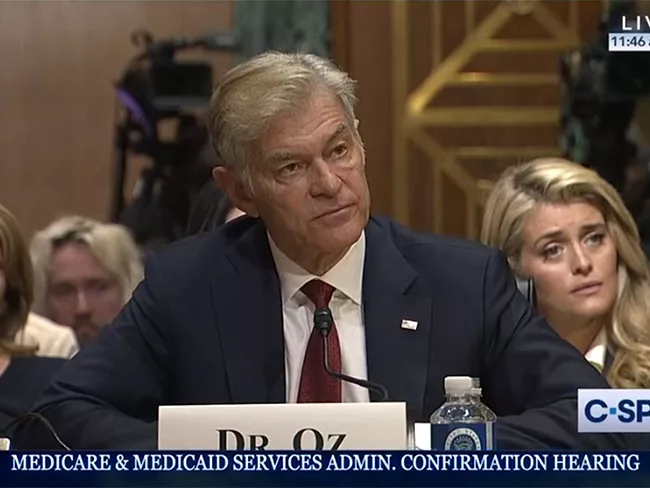
Cardiothoracic surgeon and television personality Mehmet Oz, President Donald Trump’s nominee for administrator of the Centers for Medicare & Medicaid Services (CMS), faced the U.S. Senate’s finance committee on March 14, suggesting the implementation of artificial intelligence (AI) technologies and the reduction of drug prices would be among his top priorities, if confirmed.
Looking to shave $65 million from its annual expenditures while streamlining the first stage of its two-level grant review process, the U.S. NIH is proposing to centralize the peer review of all applications for grants, cooperative agreements and R&D contracts within its Center for Scientific Review.
In what it says is the biggest obesity deal to date, Zealand Pharma A/S has signed up Roche AG to a potential $5.3 billion global collaboration and license agreement to develop petrelintide, an amylin analog that is currently in phase IIb development. The two companies will co-develop and co-commercialize petrelintide and combination products, including a fixed-dose combination of petrelintide and CT-388, Roche’s dual GLP-1/GIP receptor agonist.
While the U.S. has historically led the global pharmaceutical industry by pursuing both continual innovation and high quality, those strengths could become areas of weakness in times of political uncertainty, according to PA Consulting expert Andy Prinz.
Finnish cancer immunotherapy specialist Valo Therapeutics Oy has raised €19 million (US$20.7 million) in a round that attracted Italian and Australian investors, and funding the company to the completion of the ongoing phase Ib trial of its lead program in the treatment of solid tumors.
Getting the Ensuring Pathways to Innovative Cures (EPIC) Act through the U.S. Congress to do away with the “pill penalty” in the Medicare drug price negotiations could require an epic effort, given the current politically fueled atmosphere on the Hill. With the Inflation Reduction Act (IRA), which created the negotiations, considered a signature achievement of the Biden administration, the negotiations have become, for many lawmakers, almost a sacred cow that can’t be touched. If anything, some of them want to expand the negotiations to more drugs and to the commercial market.
 RSS
RSS