While the U.S. has historically led the global pharmaceutical industry by pursuing both continual innovation and high quality, those strengths could become areas of weakness in times of political uncertainty, according to PA Consulting expert Andy Prinz.
Several drugs already selected for Medicare price negotiations, including Novo Nordisk A/S’ mega-blockbuster diabetes/weight-loss franchise, could see up to a three-year reprieve if a bipartisan bill recently introduced in the U.S. House and Senate becomes law.
On March 1, 2025, former NIH director Francis Collins’ announced that he had fully resigned from the NIH, where he continued to lead a laboratory after his resignation as director. Collins gave no reason for his resignation, but it comes just before this week’s confirmation hearings for Jay Bhattacharya, who is U.S. President Donald Trump’s nominee to lead the NIH and who Collins called a “fringe epidemiologist” during the COVID pandemic. It is a bitter irony that when Collins resigned as NIH director in 2021, then-President Joe Biden said that “countless researchers will aspire to follow in his footsteps.”
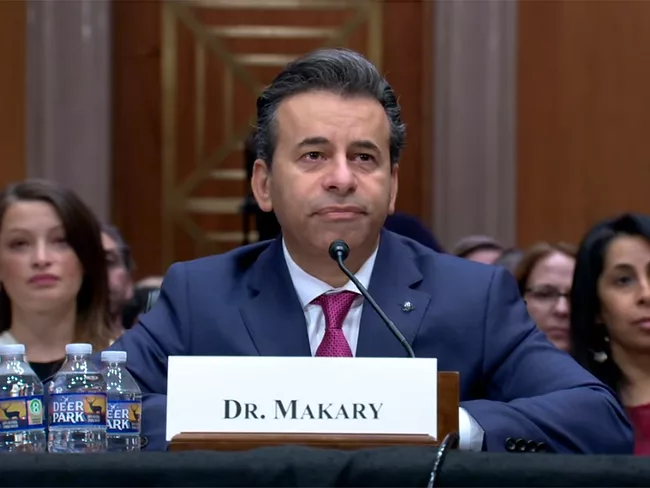
Martin Makary, President Donald Trump’s pick to head the U.S. FDA, took his turn before the Senate Health, Education, Labor and Pensions (HELP) Committee March 6, a week ahead of the committee’s confirmation votes on both him and Jay Bhattacharya as the next NIH director. The committee votes will set the stage for the full Senate to vote on confirming both nominees later this month.
Jay Bhattacharya will have his work cut out for him if he wins confirmation as the next director of the U.S. NIH. Besides getting NIH committees back on track to evaluate grant applications and calming the fears of researchers and other staff who have seen about 1,200 colleagues cut from their ranks in recent weeks, Bhattacharya will face the task of rebuilding public trust in the NIH itself.
The executive orders (EOs) pouring out of the Trump White House, and the resulting court challenges, continue to pile up, deepening the uncertainty hanging over the life sciences sector and the U.S. economy in general.
On March 1, 2025, former NIH director Francis Collins’ announced that he had fully resigned from the NIH, where he continued to lead a laboratory after his resignation as director. Collins gave no reason for his resignation, but it comes just before this week’s confirmation hearings for Jay Bhattacharya, who is U.S. President Donald Trump’s nominee to lead the NIH and who Collins called a “fringe epidemiologist” during the COVID pandemic. It is a bitter irony that when Collins resigned as NIH director in 2021, then-President Joe Biden said that “countless researchers will aspire to follow in his footsteps.”
The rash of firings at agencies of the Department of Health and Human Services has provoked a Feb. 28 letter from Reps. Dianna DeGette (D-Colo.) and Frank Pallone (D-N.J.), blasting the dismissals and insinuating that the dismissals were politically motivated.
Nick Decker, directory of global regulatory policy for Roch Holding AG’s Roche Diagnostics division, said the FDA is moving carefully into the PCCP space, and industry, too, is taking a measured approach in adopting the PCCP concept.
A number of regulatory agencies have signed on to the Medical Device Single Audit Program (MDSAP) for postmarket uses, but the U.S, FDA cannot use these audits for premarket purposes.
 RSS
RSS