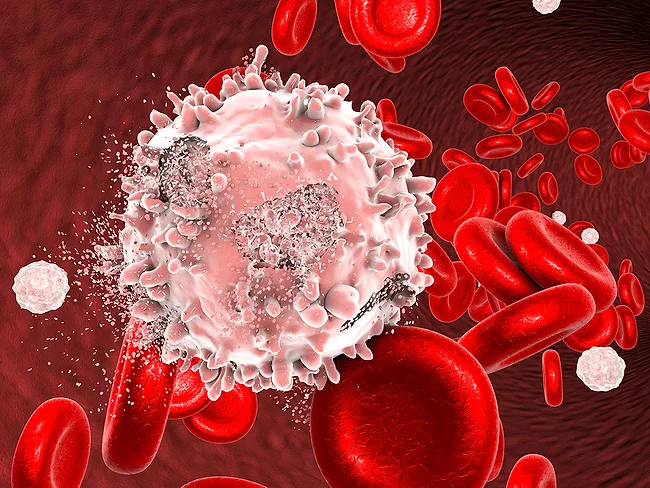
Payoff for the November 2023 buyout of Immunogen Inc. came for Abbvie Inc. in the form of U.S. FDA clearance for the CD123-targeting antibody-drug conjugate Decnupaz (pivekimab sunirine) to treat adults with blastic plasmacytoid dendritic cell neoplasm (BPDCN), an ultra-rare, aggressive and quick-killing hematologic malignancy.
New regulations tighten regulatory oversight of China’s investigator-initiated trials (IITs) but legitimize the pathway that will be open to other modalities beyond cell and gene therapies.
New regulations tighten regulatory oversight of China’s investigator-initiated trials (IITs) but legitimize the pathway that will be open to other modalities beyond cell and gene therapies.
Showing a significant efficacy signal in a phase II trial, Relay Therapeutics Inc.’s zovegalisib (RLY-2608) achieved a 60% volumetric response in patients with PIK3CA-driven vascular anomalies (VAs). The isoform-selective PI3Ka inhibitor is in late-stage clinical trials with various combinations for P13Ka-mutated, HR+/HER2- advanced breast cancer, with VAs representing a second indication for which Leerink Partners analyst Andrew Berens forecasts $2.8 billion in peak revenues.
In further fallout from the COVID-19 pandemic, the EU has now reached agreement on the Critical Medicines Act, which aims to boost European manufacturing capacity for drugs and their active ingredients, and enable member states to organize joint procurement to improve access to orphan drugs.
Italian family-owned Angelini Pharma SpA is making its first move into the U.S. market, acquiring rare diseases specialist Catalyst Pharma Inc. in an all-cash deal worth $4.1 billion. The acquisition gives Angelini ownership of three marketed drugs for treating epilepsy and neuromuscular diseases that had combined sales of $589 million in 2025, a 19.8% increase over 2024.
Entering what Mirum Pharmaceuticals Inc. CEO Chris Peetz called “a new phase of growth and value creation,” the company plans to submit an NDA to the U.S. FDA in the second half of this year, based on phase IIb data from the Vistas trial with oral ileal bile acid transporter (IBAT) inhibitor volixibat in primary sclerosing cholangitis (PSC).
Eli Lilly and Co. is acquiring Ajax Therapeutics Inc. for up to $2.3 billion in cash, gaining access to next-generation JAK inhibitors for patients with myeloproliferative neoplasms.
Becoming the first and only fully FDA-approved treatment for focal segmental glomerulosclerosis (FSGS), Travere Therapeutics Inc.’s Filspari (sparsentan) has gained access to a second lucrative market with a regulatory package that validates proteinuria as a surrogate endpoint.
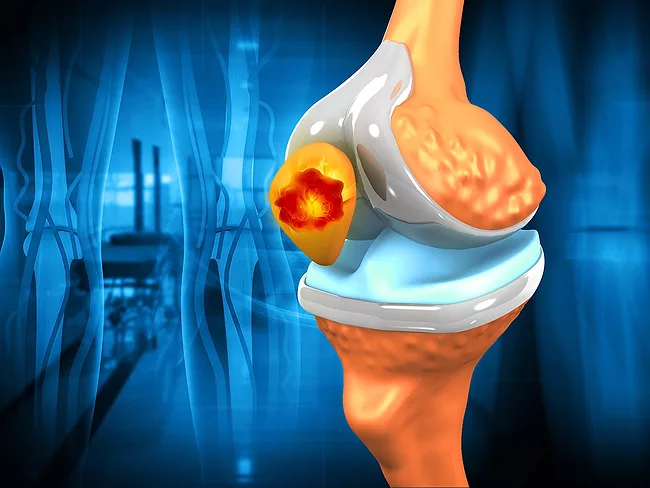
Synox Therapeutics Ltd. is preparing to file for FDA approval of emactuzumab in treating tenosynovial giant cell tumor (TGCT), after announcing positive top-line phase III results.
 RSS
RSS