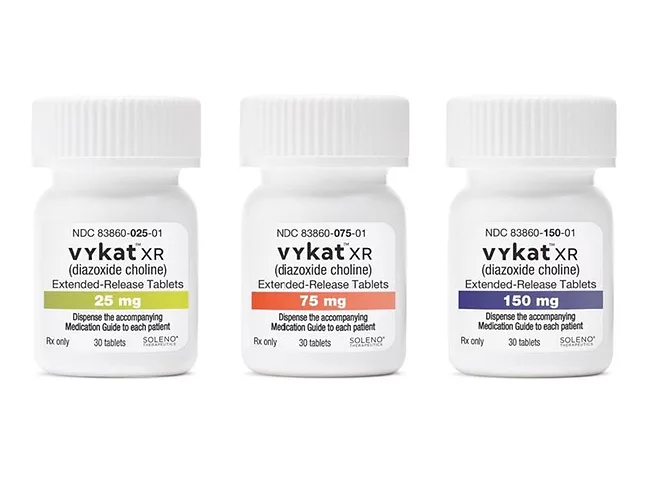
Becoming the first treatment for rare genetic disorder Prader-Willi syndrome, breakthrough therapy drug DCCR (diazoxide choline) gained U.S. FDA approval as Vykat XR the evening before its March 27 PDUFA date, sending shares of developer Soleno Therapeutics Inc. up 38%.
Jazz Pharmaceuticals plc is buying Chimerix Inc. for $8.55 a share in cash, bringing the deal in at about $935 million. Jazz expands its cancer pipeline with the new acquisition’s lead candidate, dordaviprone, a small molecule for treating a rare, aggressive glioma that’s often found in children and young adults.
Whole genome sequencing has substantially accelerated the pace of discovery of genes that cause rare diseases, but while this has brought the diagnostic odyssey of some patients to a conclusion, 50% to 80% remain undiagnosed after initial analysis.
Whole genome sequencing has substantially accelerated the pace of discovery of genes that cause rare diseases, but while this has brought the diagnostic odyssey of some patients to a conclusion, 50% to 80% remain undiagnosed after initial analysis. Researchers in the U.K. have now developed a new framework for analyzing sequence data at a cohort level. Applying this method to almost 35,000 undiagnosed rare disease patients led to the identification of 141 new disease-gene associations.
Whole genome sequencing has substantially accelerated the pace of discovery of genes that cause rare diseases, but while this has brought the diagnostic odyssey of some patients to a conclusion, 50% to 80% remain undiagnosed after initial analysis.
While Spruce Biosciences Inc.’s tildacerfont missed its phase II primary endpoint in classic congenital adrenal hyperplasia (CAH) last March, the U.S. FDA approved Crenessity (crinecerfont) from Neurocrine Biosciences Inc. for treating pediatric and adult CAH patients. The nod could lead the drug to become a blockbuster, analysts said.
Artificial intelligence-powered rare disease diagnostics firm 3billion Inc. debuted on the tech-heavy Kosdaq board of the Korea Exchange Nov. 14 with its IPO raising about ₩14.4 billion (US$10.25 million) via an offering of about 3.2 million shares at ₩4,500 per share, the low end of its offering price range.
For Inocras Inc., the benefits of whole genome sequencing are two-fold. First is its explicit usefulness in diagnosing and treating hard-to-treat diseases like cancer and rare diseases. The second, less apparent, benefit lies in the data generated in the process, and its applications to current and future generations of cancer patients.
Backed by AI technology, Aigen Sciences Inc. raised ₩12 billion (US$8.8 million) in a series A financing round to further advance its cancer and rare disease drug pipelines. Aigen said Oct. 16 that the series A round was joined by existing investors Partners Investment, Quad Investment Management and Medytox Venture Investment, as well new investors Premier Partners, K2 Investment Partners and Scale Up Partners.
Backed by AI technology, Aigen Sciences Inc. raised ₩12 billion (US$8.8 million) in a series A financing round to further advance its cancer and rare disease drug pipelines.
 RSS
RSS