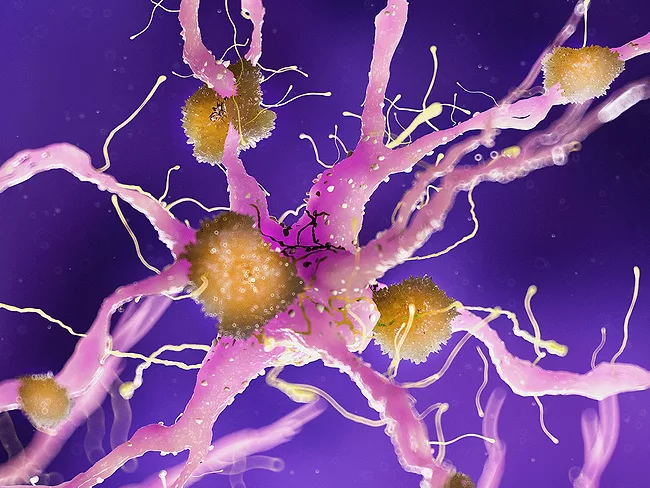
Exercise is a powerful way to keep the elderly brain working well, not just in individuals that are healthy, but also in those with neurodegenerative disease. Even individuals with familial Alzheimer’s, though they will develop dementia regardless of whether they exercise or not, will have relatively better cognitive function if they exercise than if they don’t.
Forty years after HIV became a global pandemic, there are now more than 30 drugs approved to treat it. The National Institute of Allergy and Infectious Diseases’ director, Anthony Fauci, and clinical director, Clifford Lane, opined in the July 2, 2020, issue of The New England Journal of Medicine that “considering the spectacular scientific advances that have been made over nearly four decades, it is conceivable that with optimal implementation of available prevention strategies and treatments, the end of HIV/AIDS as a global pandemic will be attainable.”
A large epidemiological study published in the July 6, 2020, advance online issue of The Lancet found that most individuals who became infected with SARS-CoV-2 developed antibodies to the virus, confirming that infection usually results in at least a short-term immune response.
The checkpoint molecule CD47 has high hopes riding on it in oncology as being the innate immune equivalent of PD-1. Multiple companies are developing blockers against CD47 and/or its ligand, SIRPa, for the treatment of various tumors.
BioWorld looks at translational medicine, including: Potassium channel distancing fights stroke; ASO approach fixes myelin; FMF is Mediterranean’s SCD; Calpain-2 in common, rare neurodegeneration; Antitoxin vaccine fights S. aureus; Noncoding mutations contribute to heart disease; Good vs. evil in the synovial joint; Necrosis has role in post-flu bacterial infections; Macrophage crosstalk inflames fat.
Two separate groups have recently shown that in mouse models, inactivation of a single gene was enough to directly convert other cell types in the brain into neurons.
LONDON – Scientists investigating the impact of SARS-CoV-19 on protein expression in human cells have shown that infected cells develop virus-laden membrane protrusions, or filopodia, which may explain the rapidity of viral spread through the body.
Technical challenges at the annual meeting of the International Society for Stem Cell Research (ISSCR) meeting led to at least one lively exchange of stem cell jokes in the chat box as the audience waited for talks to resume, including stem cell parental advice: “You can be anything you want when you grow up!”
BioWorld looks at translational medicine, including: A Tau-sand forms of tau?; P53 ‘glue’ gums up cancer cells; Shock and kill with less toxicity; Placental attachment theory.
On June 17, the FDA approved checkpoint blocker Keytruda (pembrolizumab, Merck & Co. Inc.) “for the treatment of adult and pediatric patients with unresectable or metastatic tumor mutational burden-high (TMB-H) [?10 mutations/megabase (mut/Mb)] solid tumors, as determined by an FDA-approved test, that have progressed following prior treatment and who have no satisfactory alternative treatment options.”