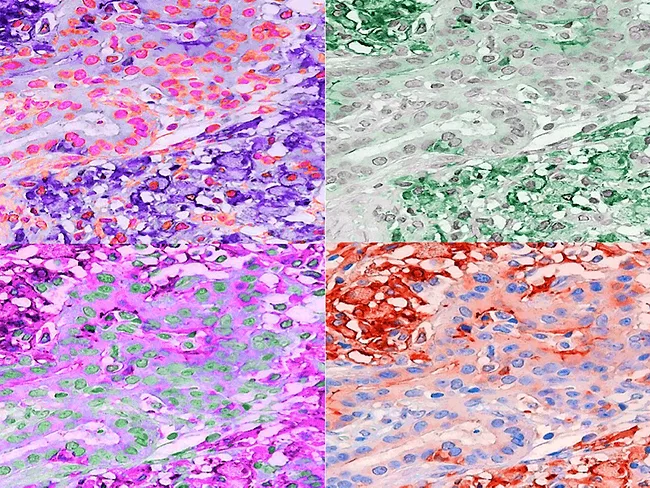
BioWorld looks at translational medicine, including: Oxygen therapy harms lungs via lung, gut microbiome; Turning flexibility into toxicity; Gaining insights into loss of function; Stromal cell subtypes identified in TNBC.
Triggering receptor expressed on myeloid cells 2 (TREM2) was first discovered because variants affect the risk of developing late-onset Alzheimer’s disease (AD).
Investigators have developed a new approach to classifying neurodegenerative disorders that used the overall patterns of protein aggregation, rather than specific proteins, to define six clusters of patients that crossed traditional diagnostic categories.
BioWorld looks at translational medicine, including: PRC member affects blood formation during aging; Localized bile acid improves systemic blood glucose control; After injury, astrocytes can make interneurons; In AML, collapse prevents relapse; Starving out Chlamydia.
Researchers from the Encyclopedia of DNA Elements (ENCODE) consortium reported data from the third phase of the project. Phase III data, which were published in more than a dozen papers in Nature and its sister journals on July 29, 2020, consisted of 6,000 experiments performed on around 1,300 samples.
CYBERSPACE – Data presented at the virtual 2020 Alzheimer's Association International Conference (AAIC) and reported in the July 28, 2020, online issue of the Journal of the American Medical Association (JAMA) demonstrated that blood levels of phosphorylated tau-217 (Ptau-217) did as well as cerebrospinal (CSF)- and PET-based biomarkers, and significantly better than other blood-based biomarkers, at discriminating individuals with Alzheimer’s disease (AD) from those with other neurodegenerative disorders.
BioWorld looks at translational medicine, including: Structural study gives insight into plaque formation; Studying labor identifies new pain mechanism; AHR inhibition suppresses Zika infection; iPSCs find best therapy for Best disease.
Cancer treatment has been transformed, at its root, by a transformational change in how it is classified. These days, which organ a tumor arises in is often less important than its molecular drivers, which can be sensitive either to specific targeted treatments, or increase the chance that a tumor will respond to immunotherapy. Those successes have not escaped the notice of researchers in other areas of biomedicine, and diseases including heart failure, asthma and polycystic ovarian syndrome are being looked at with an eye to subdividing them in ways that brings diagnostics into the molecular era. Nowhere do those changes have greater potential than in disorders of the brain – in part because there is nowhere much to go but up as far as classifying neurological diseases goes.

 RSS
RSS