BioWorld. Link to homepage.

Clarivate
  • BioWorld
  • BioWorld Science
  • BioWorld Asia
  • Data Snapshots
    • Biopharma
    • Medical technology
    • Infographics: Dynamic digital data analysis
    • Index insights
    • NME Digest
  • Special reports
    • Infographics: Dynamic digital data analysis
    • Trump administration impacts
    • Med-tech outlook 2026
    • Under threat: mRNA vaccine research
    • BioWorld at 35
    • Biopharma M&A scorecard
    • Bioworld 2025 review
    • BioWorld MedTech 2025 review
    • BioWorld Science 2025 review
    • Women's health
    • China's GLP-1 landscape
    • PFA re-energizes afib market
    • China CAR T
    • Alzheimer's disease
    • Coronavirus
    • More reports can be found here

BioWorld. Link to homepage.

  • Sign In
  • Sign Out
  • My Account
Subscribe
BioWorld - Saturday, March 21, 2026
Breaking News: Trump administration impacts continue to roil the life sciences sectorBreaking News: Trump administration impacts continue to roil the life sciences sector
Home » Topics » BioWorld, Science

BioWorld, Science
BioWorld, Science RSS Feed RSS

WSU researchers weaponize nanoparticles to combat inflammatory diseases

Nov. 19, 2019
By Annette Boyle
A team led by researchers at Washington State University (WSU) has developed a nanoparticle technology to deliver cell-killing drugs to shut down the overactive immune response that can cause damage or death in diseases like stroke and sepsis without affecting other cell types or compromising the immune system.  
Read More
Hands holding petri dish

Researchers develop CAR T cells tagged with bacterial enzyme that can be imaged

Nov. 19, 2019
By Stacy Lawrence
There are a pair of approved CAR T drugs, Yescarta (axicabtagene ciloleucel) from Gilead Sciences Inc. and Kymriah (tisagenlecleucel) from Novartis AG, that have been available since 2017 for a few hematological cancers, including some lymphomas and leukemias.
Read More
Chromosomes

Bench Press for Nov. 18, 2019

Nov. 18, 2019
The discovery that thalidomide and its analogues work by inducing the degradation of transcription factors demonstrated both that protein degradation is a viable mechanism of action for therapeutic small molecules, and that it could be used to target transcription factors, which are undruggable by both biologics and traditional inhibitors.
Read More
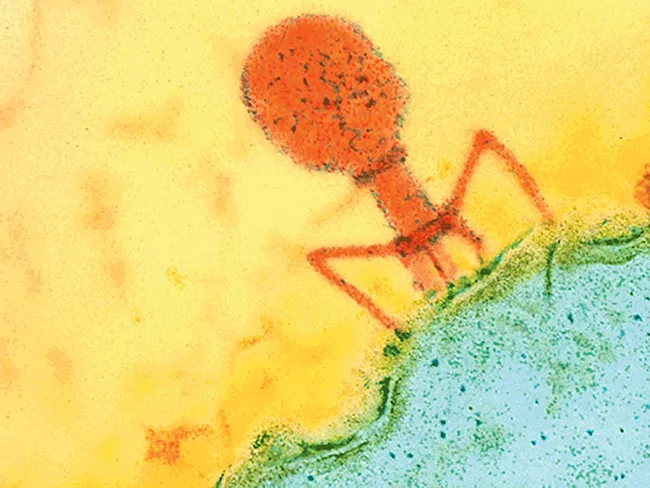
Bacteriophage attaches to bacterial cell membrane
AASLD 2019

Bacteriophage 'cocktails' can be good for the liver

Nov. 14, 2019
By Anette Breindl
BOSTON – Researchers presented data at The Liver Meeting 2019 and in Nature this week demonstrating that bacteriophages targeted to specific members of the microbiome could be useful in fighting two different liver diseases.
Read More
AASLD 2019

DUR-928 results: Break out the sparkling cider

Nov. 13, 2019
By Anette Breindl
BOSTON – In a late-breaking oral presentation on the last day of The Liver Meeting 2019, Durect Corp. reported results from its phase IIa trial of DUR-928 for the treatment of alcoholic hepatitis. All 19 patients enrolled in the study survived for 28 days after treatment with DUR-928 , and all but two responded to the drug as measured by Lille scores, which is used for predicting risk of death.
Read More
Doctor pointing at liver
AASLD 2019

With NASH drugs on the cusp of arrival, noninvasive diagnostics are 'second pillar of need'

Nov. 12, 2019
By Anette Breindl

BOSTON – For diagnosing nonalcoholic steatohepatitis (NASH), liver biopsy is "the reference standard," Dean Hum, president of Genfit Corp., told BioWorld. "I'm not going to call it the gold standard." Some of the reasons for denying biopsies a gold sticker are obvious. Biopsies are invasive, which makes them risky, expensive and loathed by patients and doctors alike. "In the real world, doctors don't always do biopsies – many say they very rarely do biopsies unless other data points in several directions and they need that for clarity," Gail Cawkwell told BioWorld.


Read More

Bench Press for Nov. 11, 2019

Nov. 11, 2019
Researchers at Harvard Medical School and The Banner Alzheimer's Institute have identified a potential protective variant that appears to have delayed the onset of clinical symptoms by several decades in one individual with a presenilin mutation. Presenilin mutations cause an autosomal dominant, early onset form of AD that usually leads to clinically noticeable cognitive impairments in one's 40s.
Read More

Bench Press for Nov. 4, 2019

Nov. 4, 2019
By Anette Breindl
BioWorld looks at translational medicine.
Read More
Sulfide stress as new target?

Schizophrenia biomarker can be detected in human hair

Nov. 4, 2019
By John Fox
A subtype of schizophrenia is related to abnormally high brain levels of hydrogen sulfide (H2S), which has important implications for the development of new treatments, according to a study by researchers at the RIKEN Center for Brain Science (CBS) in Japan.
Read More
Small and selective

Small molecules clear mutant Huntingtin protein

Oct. 31, 2019
By John Fox
A Chinese study has identified small-molecule compounds that can selectively reduce levels of the mutant Huntingtin (HTT) protein involved in the pathogenesis of Huntington's disease (HD), and possibly other neurodegenerative diseases involving mutant protein accumulation.

Read More
Previous 1 2 … 78 79 80 81 82 83 84 85 86 87 Next

Popular Stories

  • Today's news in brief

    BioWorld
  • Art concept for targeting the brain

    Precision psychiatry beyond, or before, biomarkers

    BioWorld
    There is broad agreement that psychiatric diagnoses in their current form are not reflective of any underlying biology, and that this is one of the things...
  • MRI image brain on black background

    ADPD 2026: Can we prevent dementia? Scientists quantify it

    BioWorld
    Neurodegenerative disease and cognitive decline cannot be explained by a single process. Beta-amyloid plaques, hyperphosphorylated tau, alpha-synuclein, activated...
  • Illustration of a motor neuron

    Keros reports beneficial effects of RKER-065 in ALS model

    BioWorld Science
    Keros Therapeutics Inc. has presented data regarding their activin receptor ligand trap, RKER-065, for the inhibition of the activin/myostatin signaling axis.
  • First-in-class POLG activator restores mtDNA across mutations

    BioWorld Science
    Researchers from Pretzel Therapeutics Inc. presented preclinical data of PX-578, a first-in-class POLG activator aimed at restoring mtDNA replication and...
  • BioWorld
    • Today's news
    • Analysis and data insight
    • Clinical
    • Data Snapshots
    • Deals and M&A
    • Financings
    • Medical technology
    • Newco news
    • Opinion
    • Regulatory
  • BioWorld Science
    • Today's news
    • Biomarkers
    • Cancer
    • Conferences
    • Endocrine/metabolic
    • Immune
    • Infection
    • Neurology/psychiatric
    • NME Digest
    • Patents
  • BioWorld Asia
    • Today's news
    • Analysis and data insight
    • Australia
    • China
    • Clinical
    • Deals and M&A
    • Financings
    • Newco news
    • Regulatory
    • Science
  • More
    • About
    • Advertise with BioWorld
    • Archives
    • Article reprints and permissions
    • Contact us
    • Cookie policy
    • Copyright notice
    • Data methodology
    • Infographics: Dynamic digital data analysis
    • Index insights
    • Podcasts
    • Privacy policy
    • Share your news with BioWorld
    • Staff
    • Terms of use
    • Topic alerts
Follow Us

Copyright ©2026. All Rights Reserved. Design, CMS, Hosting & Web Development :: ePublishing