BioWorld. Link to homepage.

Clarivate
  • BioWorld
  • BioWorld Science
  • BioWorld Asia
  • Data Snapshots
    • Biopharma
    • Medical technology
    • Infographics: Dynamic digital data analysis
    • Index insights
    • NME Digest
  • Special reports
    • Infographics: Dynamic digital data analysis
    • Hantavirus
    • Trump administration impacts
    • Med-tech outlook 2026
    • Under threat: mRNA vaccine research
    • BioWorld at 35
    • Biopharma M&A scorecard
    • Bioworld 2025 review
    • BioWorld MedTech 2025 review
    • BioWorld Science 2025 review
    • Women's health
    • China's GLP-1 landscape
    • PFA re-energizes afib market
    • China CAR T
    • Alzheimer's disease
    • Coronavirus
    • More reports can be found here

BioWorld. Link to homepage.

  • Sign In
  • Sign Out
  • My Account
Subscribe
BioWorld - Saturday, May 16, 2026
Home » Topics » Medical technology, Science

Medical technology, Science
Medical technology, Science RSS Feed RSS

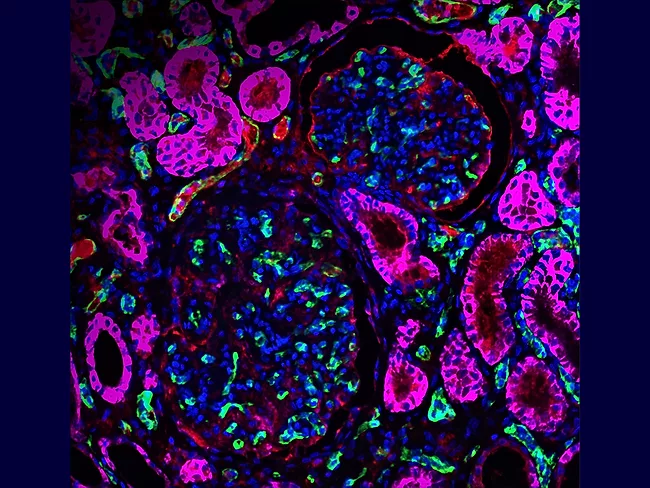
CRISPR-edited kidney under microscope
Immune

Most-edited-ever donor genomes lead to 2-year survival in porcine-to-primate kidney transplants

Oct. 11, 2023
By Anette Breindl and Mar de Miguel
Scientists at Egenesis Inc. have transplanted kidneys from genome-edited pigs into cynomolgus monkeys that remained functional for long periods after transplantation. The monkeys, whose own kidneys were removed during the surgery, survived for a median of 176 days after receiving one pig kidney. Maximal survival was just over 2 years. The data were published today in Nature. Egenesis CEO Mike Curtis told reporters that the study has achieved the longest survival to date “using clinically translatable immunosuppression … longer survival has been achieved using really aggressive immunosuppression that really isn’t clinically translatable.”
Read More
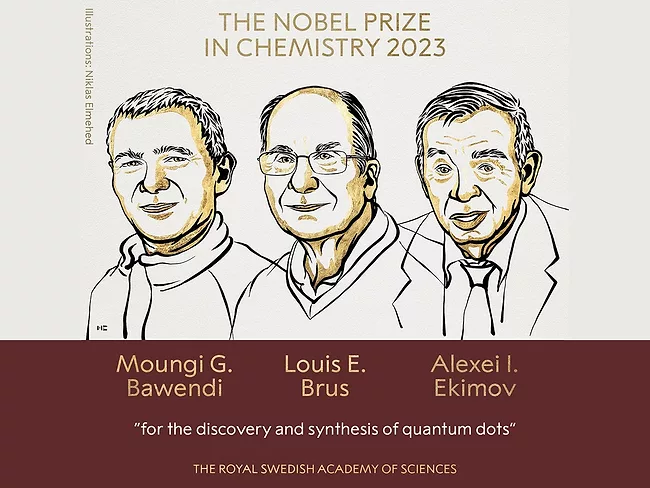
Nobel Prize graphic with illustrations of Moungi Bawendi, Louis Brus and Alexei Ekimov
Drug Design, Drug Delivery & Technologies

Nobel Prize in Chemistry 2023 goes to quantum dots, which illuminated the path to nanotechnology

Oct. 4, 2023
By Mar de Miguel
Quantum dots, a phenomenon in quantum physics that alters the energy of electrons and changes the properties of particles, caught the attention of the Royal Swedish Academy of Sciences (KVA) for the 2023 Nobel Prize in Chemistry. Alexei Ekimov and Louis Brus received the award for their discovery; Moungi Bawendi, for developing its applications. With their work, “in equal shares,” said the Secretary General of KVA Hans Ellegren, the three scientists have laid the foundations of nanotechnology, a tool that we see today in our homes, on televisions and LED lamps, or in laboratories and hospitals for designing new drugs or new strategies against cancer.
Read More
Mosaic illustration of a mouse
Neurology/Psychiatric

Genetic editing of individual cells points to late targets for developmental disorders

Sep. 28, 2023
By Mar de Miguel
A new gene editing method uses the CRISPR technique to modify the cells of an organ in vivo, creating a mosaic used to identify the effects of each altered gene. Scientists from the Swiss Federal Institute of Technology (ETH) in Zürich developed this technology called AAV-Perturb-seq, based on adeno-associated virus (AAV) to target, edit and analyze single-cell genetic perturbations.
Read More
Art concept for gene therapy research

Machine learning tool Alphamissense analyzes human mutations to predict diseases

Sep. 19, 2023
By Mar de Miguel
Proteome analysis with artificial intelligence has made it possible to create a catalog of all possible missense mutations in the human genome to predict diseases.
Read More
AI-generated art of people at a dining table on the beach
Neurology/Psychiatric

EAN 2023: Answer to AI’s big data pitfalls is more data

July 3, 2023
By Anette Breindl
Artificial intelligence (AI) continues to entice. On the exhibition floor at the 2023 Congress of the European Academy of Neurology, one company’s booth featured “Mindart” technology. A passersby could answer a short series of prompts, and get a unique image based on the input made by generative AI. Entertainment aside, medically speaking, AI applications “are still research,” Riccardo Soffietti told his audience at one of several sessions devoted to AI. “But obviously, research is the future.”
Read More
PET imaging of RELN-COLBOS (H3447R) carrier brain showing limited aggregation of tau
Neurology/Psychiatric

Reelin’ in druggable protective pathways with second Alzheimer’s ‘escapee’

May 15, 2023
By Anette Breindl
Investigators have identified a second individual who remained cognitively normal into his late 60s despite having the PSEN1 E280A mutation, which causes a familial version of early-onset Alzheimer’s disease (AD). The likely source of protection, a mutation in a gene called Reelin, is distinct from the protective mechanism identified in the first case of an individual who was protected from the effects of PSEN1 E280A. That case was reported in 2019.
Read More
Illustration of animals, DNA double helix
Genetic/Congenital

In Zoonomia project, evolutionary lens hones search for functional genomic variants

May 1, 2023
By Nuala Moran
A base-by-base comparison of the genome sequences of 240 species of mammals has pinpointed sites in the human genome where mutations are likely to cause disease. The sites are all perfectly conserved across the mammalian family tree over 100 million years of evolution, indicating they underlie fundamental biological processes that do not tolerate diversity or change very well.
Read More
Reindeer in snow
Dermatologic

Path to scarless healing could be among the gifts reindeer bring

Jan. 5, 2023
By Anette Breindl
Unlike amphibians, mammals do not regenerate appendages. Except when they do. “If you amputate one of the branches off of the antler [of a reindeer], it will also regenerate,” Jeff Biernaskie told BioWorld. Even without amputation, the antlers of both male and female reindeer regenerate annually, including their skin. That regeneration is “the only large mammal model of true skin regeneration,” he said.
Read More
Fat targeting illustration
Endocrine/Metabolic

Nanomaterial allows location-specific fat targeting

Dec. 7, 2022
By Anette Breindl
The positively charged nanoparticle polyamidoamine generation 3 (P-G3) can be specifically targeted to either visceral or subcutaneous fat, and affects both types of fat in different ways, researchers from Columbia University reported in two papers recently published. The studies, published online in Nature Nanotechnology on Dec. 1, 2022, and in Biomaterials on Nov. 28, 2022, are both “a conceptual advance” and “quite amenable to translation,” co-corresponding author Kam Leong told BioWorld.
Read More
Scanning electron micrograph of a macrophage.
Cancer

Innate immunity can drive radiation-induced abscopal effect

Nov. 23, 2022
By Anette Breindl
A combination of radiation therapy and CD47 blockade induced an abscopal effect in animal studies even in animals that lacked T cells, researchers reported in the Nov. 21, 2022, online issue of Nature Cancer. The findings are “the first demonstration of T-cell-independent abscopal response,” co-corresponding author Edward Graves told BioWorld. “We’re not trying to say that all abscopal responses are macrophage-mediated. There are plenty that require T cells,” Graves clarified. But “there is another avenue of abscopal responses that has not been reported. ... All the abscopal literature is about stimulating an adaptive response.”
Read More
Previous 1 2 … 6 7 8 9 10 11 12 13 14 … 69 70 Next

Popular Stories

  • Today's news in brief

    BioWorld
    BioWorld briefs for May 15, 2026.
  • Illustration of a glowing circle to represent circRNA

    ASGCT 2026: Circular RNA, the new beast in gene and cell therapy

    BioWorld
    Circular RNA (circRNA) is not a new concept, but it is a novel strategy in the field of gene and cell therapy. While mRNA vaccines have revolutionized medicine,...
  • Test tubes, dropper and capsules

    Advancing the 'best of both' – BMS, Hengrui enter $15.2B deal

    BioWorld
    In a deal potentially worth up to $15.2 billion, Jiangsu Hengrui Pharmaceuticals Co. Ltd. is joining efforts with Bristol Myers Squibb Co. to advance 13 early...
  • News in brief

    BioWorld Asia
    BioWorld Asia briefs for May 12, 2026
  • 3D illustration of adeno-associated viruses

    ASGCT 2026: Uncovering the mechanisms of AAV toxicity

    BioWorld
    Gene therapies rely on vectors to reach the target tissue where they act, such as adeno-associated viruses (AAVs) or lipid nanoparticles (LNPs), among other...
  • BioWorld
    • Today's news
    • Analysis and data insight
    • Clinical
    • Data Snapshots
    • Deals and M&A
    • Financings
    • Medical technology
    • Newco news
    • Opinion
    • Regulatory
  • BioWorld Science
    • Today's news
    • Biomarkers
    • Cancer
    • Conferences
    • Endocrine/metabolic
    • Immune
    • Infection
    • Neurology/psychiatric
    • NME Digest
    • Patents
  • BioWorld Asia
    • Today's news
    • Analysis and data insight
    • Australia
    • China
    • Clinical
    • Deals and M&A
    • Financings
    • Newco news
    • Regulatory
    • Science
  • More
    • About
    • Advertise with BioWorld
    • Archives
    • Article reprints and permissions
    • Contact us
    • Cookie policy
    • Copyright notice
    • Data methodology
    • Infographics: Dynamic digital data analysis
    • Index insights
    • Podcasts
    • Privacy policy
    • Share your news with BioWorld
    • Staff
    • Terms of use
    • Topic alerts
Follow Us

Copyright ©2026. All Rights Reserved. Design, CMS, Hosting & Web Development :: ePublishing