Grail LLC has presented data showing that when added to standard screening procedures for breast, cervical, colorectal and lung cancers, its Galleri circulating tumor DNA test led to a sevenfold increase in the number of cancers detected.
Boston Scientific Corp. moved to acquire the balance of Nalu Medical Inc. in a $533 million cash deal, expanding its chronic pain portfolio with the addition of peripheral nerve stimulation. The Nalu neurostimulation system delivers mild electrical impulses to interrupt aberrant pain signals from nerves in the shoulder, knee and lower back before they reach the brain.
Total arterial revascularization (TAR) might not be the most popular approach to coronary artery bypass grafting (CABG), but it is gaining in popularity according to a new study appearing in the Journal of the American College of Cardiology. The authors said that TAR provides superior mortality outcomes compared to bypass grafting that relies on both veins and arteries for graft materials, a finding that might suggest lower rates of downstream angioplasty and stenting.
Genedx LLC partnered with Illumina Inc. to test whether Illumina's constellation map read technology could shed light on hard-to-detect variants that appear in rare diseases. Constellation met or exceeded the ability of other sequencing methods to detect variants implicated in multiple disorders and worked across a range of sample types, a study presented at the American Society for Human Genetics (ASHG) Annual Meeting in Boston on Oct. 15 found.
Pulse Biosciences Inc. presented late-breaking results from its successful first-in-human study of its nanosecond pulsed field ablation technology in treating atrial fibrillation at the 39th European Association for Cardio-Thoracic Surgery Annual Meeting in Copenhagen, Denmark. The Hayward, Calif.-based company’s Npulse cardiac surgical system takes PFA technology into the cardiac surgery setting.
ARC (Accelerate, Redesign, Collaborate), the innovation arm of Israel’s Sheba Medical Center is looking to use the principles of gaming and simulation to create smarter, more scalable solutions that will benefit both patients and providers.
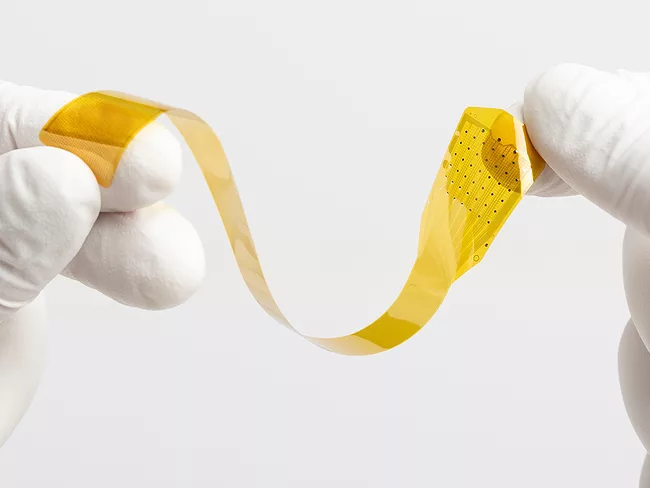
The brain-computer interface (BCI) system being developed by Precision Neuroscience Corp. is capable of capturing high-resolution brain signals and stimulating areas without damaging the cortical surface, according to a study published in Nature Biomedical Engineering.
Medtronic plc’s Brainsense adaptive deep brain stimulation system has been shown to be tolerable, effective and safe for long-term use at home in people with Parkinson’s disease. A study published in the Journal of the American Medical Association (JAMA) Neurology found that the majority of participants who received aDBS with the Percept neurostimulator achieved good ‘on-time’ without troublesome dyskinesia compared to standard continuous DBS therapy.
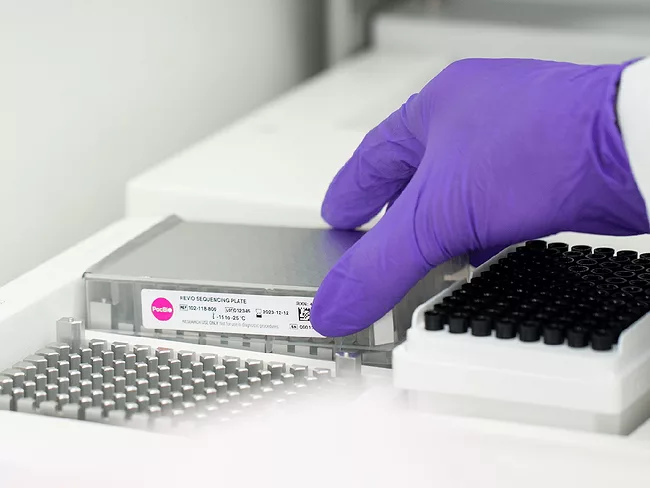
Up to 71% of people carry at least one pathogenic variant that could contribute to development of a heritable disorder in offspring, but until now, prospective parents often had to undergo multiple tests to understand their risks. Pacific Biosciences of California Inc. (Pacbio)’s expanded Puretarget portfolio provides a quicker and more streamlined solution as it covers all challenging tier 3 genes identified in the American College of Medical Genetics technical standard.
A month after raising $55 million to advance its AI-enhanced ultrasound diagnostics for cardiovascular disease, Ultromics Ltd. presented strong results for its U.S. FDA-cleared AI analysis of echocardiograms at the American Society of Echocardiography's 2025 Scientific Sessions in Nashville, Tenn. Ultromics' Echogo Amyloidosis was able to detect cardiac amyloidosis earlier and more accurately than traditional methods, missing fewer cases without increasing unnecessary testing.
 RSS
RSS