Regulatory snapshots, including global submissions and approvals, clinical trial approvals and other regulatory decisions and designations: Clew, Pulse Biosciences.
BERLIN – The German government has just made $3.6 billion available to the Future of Hospitals Act (Krankenhauszukunftsgesetz, KHZG), through the liquidity reserve of the health fund in order to support public hospitals with digital transformation. Besides this government cash injection, an additional $1.6 billion will be made available through co-funding by the German federal states, the 16 Länder. In total, German hospitals will get a $5.2 billion funding to boost digitization.
The latest global regulatory news, changes and updates affecting medical devices and technologies, including: CDC reports on cases, sequencing; NICE says savings seen with Cytosorb; IP at issue as WTO pushes for global pandemic effort; Researcher gets prison time for trade secret theft; USPTO responds to COVID-19 challenge.
Regulatory snapshots, including global submissions and approvals, clinical trial approvals and other regulatory decisions and designations: Inovytec, Johnson & Johnson Vision.
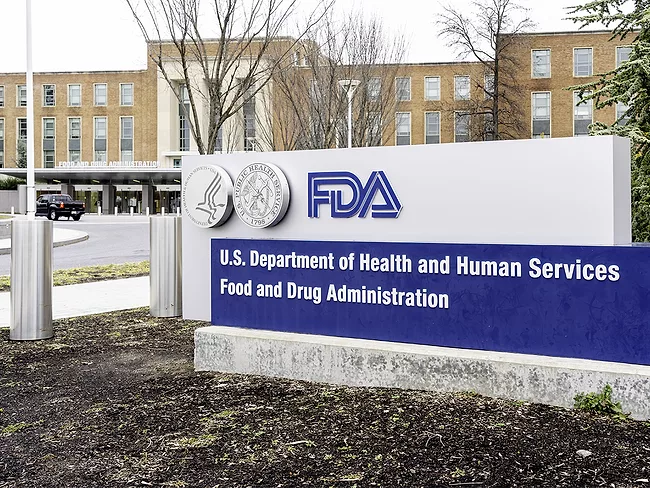
The U.S. FDA’s safer technologies program, or STeP, may seem uncontroversial, but agency staff said on a Feb. 1 conference call that the program could be delayed by the change in administration at the White House. This is possibly an artifact of the Biden administration’s Jan. 20 executive order (EO) that applies a freeze to federal agency activities for 60 days, an EO that could affect a wide swath of federal agency activity.
LONDON – The U.K. National Institute for Health and Care Excellence (NICE) has published new advice on how and when artificial intelligence (AI) could be applied to the interpretation of mammograms and chest computer tomography images, in a move that is intended to set the ground rules for the uptake of these technologies. In population breast screening, NICE looked at how five AI systems could be used to pick out mammography images that need further assessment, supporting qualified radiologists in their interpretation.
The latest global regulatory news, changes and updates affecting medical devices and technologies, including: MITA unveils policy concerns for 2021; NRC seeks nominees for medical isotopes adcomm; Senators: More protection needed for genomic data; Veterans’ genomic data put at risk; DNA sequencing claims struck down.
Regulatory snapshots, including global submissions and approvals, clinical trial approvals and other regulatory decisions and designations: Galderma, Soliton.
Medtronic plc received U.S. FDA premarket approval of its Diamondtemp Ablation (DTA) system for treatment of patients with recurrent, symptomatic paroxysmal atrial fibrillation. The temperature-controlled radiofrequency (RF) ablation system features industrial-grade diamonds, which provide 200 to 400 times the thermal conductivity seen in conventional ablation and enable more efficient delivery of energy to regions of the heart responsible for the erratic electrical signals underlying atrial fibrillation (AF).
The U.S. Centers for Medicare & Medicaid Services (CMS) had packaged a proposal to redefine the term “reasonable and necessary” along with the proposal to cover FDA-designated breakthrough devices, but ultimately punted on the definitional question until the end of this year. Mark Leahey, president and CEO of the Medical Device Manufacturers Association (MDMA), told BioWorld that it may be just as well that the agency didn’t expeditiously push through the reasonable and necessary question because of the enormous complexity of the proposal.

 RSS
RSS