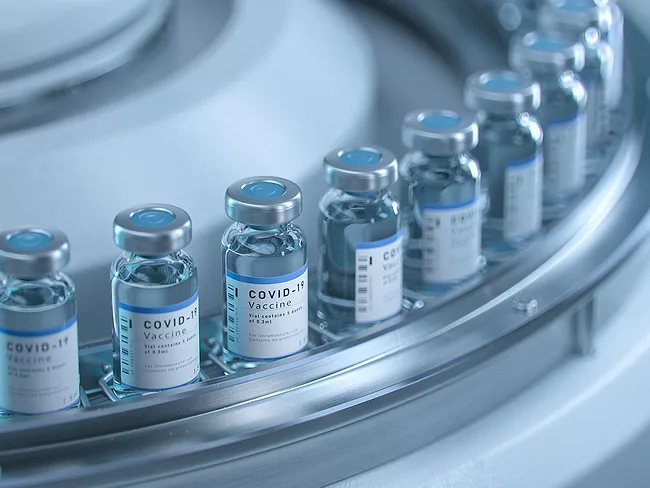
Noticeably lacking in the G7 communique following its recent U.K. summit is support for a proposed World Trade Organization waiver on intellectual property related to drugs and other medical products used to prevent, contain or treat COVID-19 infections.
TORONTO – Nanology Labs Inc. has raised C$3 million (US$2.49 million) in seed funding to advance development of a polymer-lipid platform that transports nanoparticles into human cells where they “reprogram” hypoxic or oxygen-deprived cancer tumors.
Researchers at the University of Washington reported in the May 31, 2021, issue of Nature Medicine that artificial intelligence (AI) algorithms meant to recognize COVID-19 infections based on chest X-rays picked up on confounders, selecting “shortcuts” such as patient age or positioning in the X-ray as a basis for their predictions.
Of all the controversies surrounding the FDA, the agency’s reliance on user fees and its use of accelerated review of therapies might be the most consistent sources of public angst. Coleen Klasmeier, a partner of Sidley Austin LLP, told BioWorld that while she is not particularly concerned about regulatory capture stemming from FDA reliance on user fees, it may be appropriate to ask whether the drug premarket review process leaves FDA staff with more confidence in a new drug application than the data would seem to suggest.
Heralded as a potential turning point for U.S. innovation in the 21st century, the U.S. Innovation and Competition Act, S. 1260, is a big step closer to becoming law. The Senate voted 68-32 June 8 to pass the sweeping $250 billion bipartisan bill intended to give the U.S. an edge over China when it comes to innovation and investment in several critical industries, including artificial intelligence, biotechnology and quantum computing.
The Guangzhou Sino-Israel Bio-industry Investment Fund (GIBF) has raised more than half of its proposed ¥2 billion (US$313 million) round. “The second fund, GIBF2, will focus on Israeli and European biotechnology companies, which are developing innovative drugs and are in phase II to III clinical trials,” Avner Lushi, the CEO and co-founder of the GIBF, told BioWorld.
The European Commission unveiled its third alternative to providing global access to COVID-19 vaccines and treatments just ahead of the June 8 meeting of the World Trade Organization’s Council for Trade Related Aspects of Intellectual Property Rights and the start of the G7 summit.
Two weeks ago, it was a grilling by the House Oversight Committee over the pricing of blockbuster drugs Humira and Imbruvica and a request for the FTC to launch an investigation into Abbvie Inc.’s patent settlements that delayed Humira biosimilar competition in the U.S. until 2023. This week, Abbvie became the face of a new investigation by the Senate Finance Committee over how multinational companies are shifting profits overseas as a way to avoid U.S. taxes.
Borrowing a chapter from venture capitalists, the U.S.’ Biomedical Advanced Research and Development Authority (BARDA) is partnering with the nonprofit Global Health Investment Corp. (GHIC) to accelerate the development and commercialization of medical technologies and products needed to respond to or prevent future pandemics and other public health emergencies.
 RSS
RSS