Med-tech happenings, including deals and partnerships, grants, preclinical data and other news in brief: Adaptive Biotechnologies, Astarte Medical, Evasc Neurovascular, Genesiscare, Icometrix, Labcorp, Medcura, Neuroone, Perkinelmer, Personal Genome Diagnostics, Pixcell, Soliton, Stevara, Transenterix, Zimmer Biomet.
Keeping you up to date on recent developments in oncology, including: MR touted as potential screening modality for prostate cancer; Classifying variants of unknown significance; Tumor neoantigens can inhibit immune response; MEK perhaps a useful target in some bladder cancers.
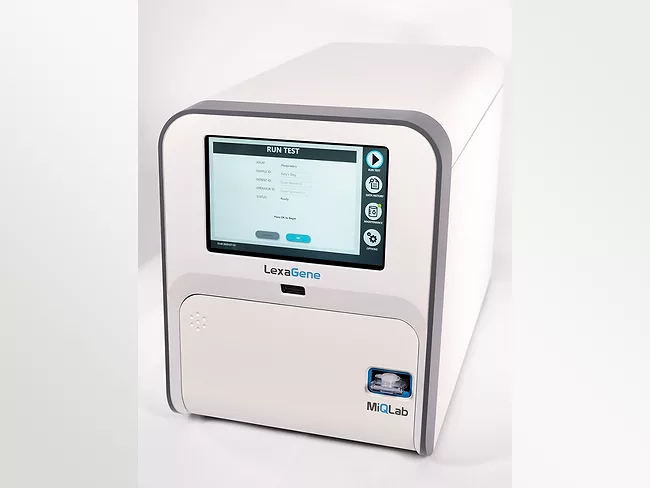
Lexagene Holdings Inc. has successfully configured its Miqlab system to detect the U.K. and South African variants of SARS-CoV-2. The open-access point-of-care system can simultaneously screen for multiple respiratory pathogens and identify COVID-19 strains. Lexagene started studies to support its filing for U.S. FDA emergency use authorization (EUA) in late December 2020. If authorized, it would be the first open-access point-of-care (POC) device to gain an EUA.
The U.S. FDA has given a green light to Brainlab AG for two new additions to its robotic surgery systems. The agency granted 510(k) clearances for the Loop-X mobile imaging robot and the Cirq Robotic Alignment module for spine procedures, paving the way for U.S. market entry.
The U.S. Centers for Medicare & Medicaid Services (CMS) has determined that the time has come to offer Medicare coverage for blood-based in vitro diagnostics as a screening tool for colorectal cancer (CRC), but there’s one catch: At present, there is no such test approved by the FDA that qualifies under the terms of the coverage memo, making this a null coverage proposition, at least for the time being.
COVID-19 vaccine developers should begin testing their vaccines against emerging variants now and assessing booster regimens, the FDA said in an update to its October guidance on emergency use authorizations (EUAs) for the vaccines.
Organoids grown from cholangiocytes – the epithelial cells of the bile duct – are poised to be used in ex vivo cell therapy to increase the number of donated livers that are suitable for transplant, and also for direct bile duct repairs. The organoids have been shown to be effective in correcting defects in mouse models and in perfused donated livers. They are now being tested in large animal models.

 RSS
RSS